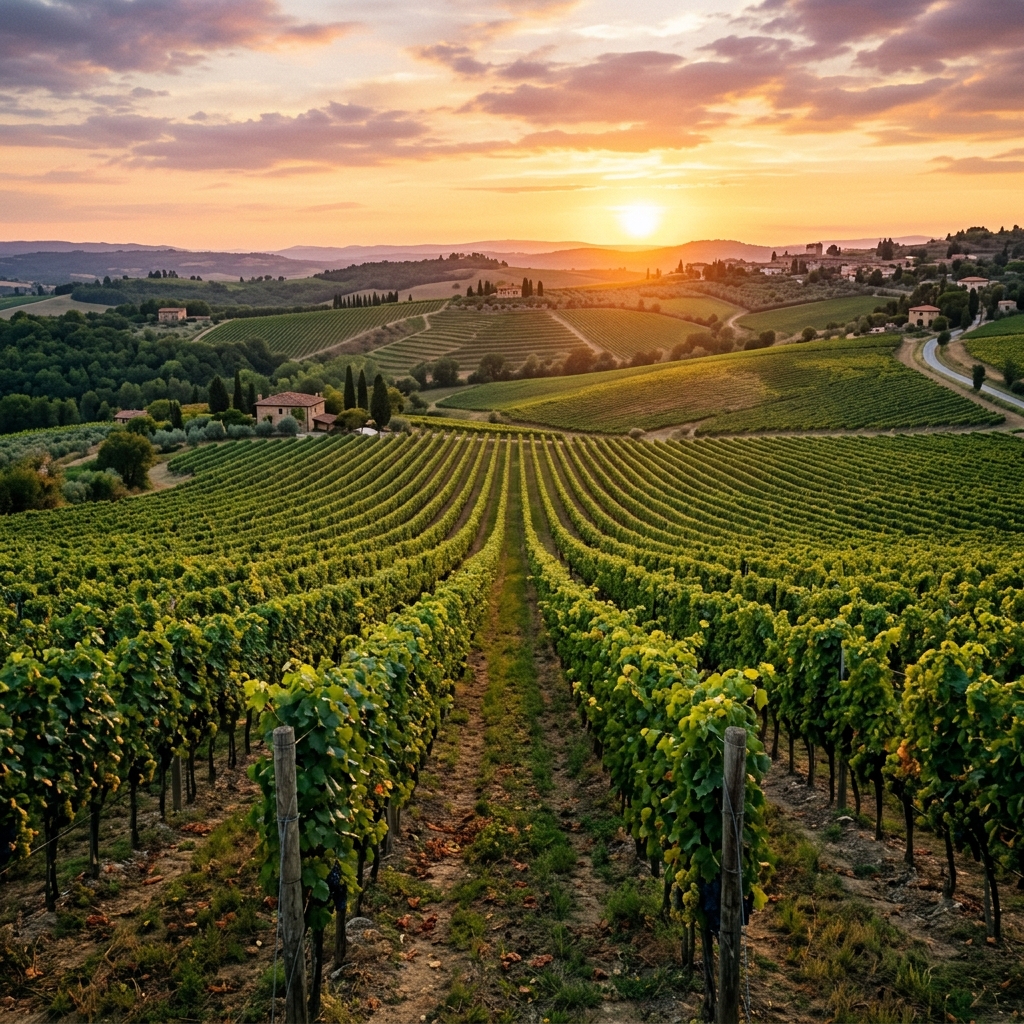
Grand Cru ('Great Growth') is the premier quality tier in French viticulture. However, its legal meaning varies radically by region: in Burgundy and Alsace it designates a specific classified vineyard plot; in Bordeaux it ranks an aristocratic estate (brand); and in Champagne it designates an entire village.
| Burgundy (Cru = Vineyard Plot) | Specific demarcated parcel of land; only 33 Grand Cru vineyards (1.4% of regional production) |
|---|---|
| Bordeaux 1855 (Cru = Estate Brand) | Status belongs to the Château; Premiers Grands Crus Classés comprises only 5 historic estates |
| Champagne (Cru = Village / Commune) | 17 elite villages rated 100% on the Échelle des crus |
| Alsace (Cru = Hillside Terroir) | 51 demarcated steep slopes restricted strictly to 4 noble grape varieties |
| Premier vs. Grand Cru | In Bordeaux, Premier Grand Cru is the highest 1st class; in Burgundy, Grand Cru sits above Premier Cru |
The term Grand Cru (literally: “Great Growth” or “Superior Terroir”) is the Holy Grail of the international fine wine market. Bottles bearing this inscription command hundreds to tens of thousands of dollars at auction. Yet the central pitfall for wine lovers is that Grand Cru possesses fundamentally different legal and philosophical meanings across French wine regions.
Grand Cru Comparative Matrix
| Region | What the Status Classifies | Hierarchy of Tiers | Legendary Examples |
|---|---|---|---|
| Burgundy | Demarcated Vineyard Plot (Climat) | Grand Cru > Premier Cru > Village > Regional | Romanée-Conti, Chambertin, Montrachet, Chablis Grand Cru |
| Bordeaux (1855 Médoc) | Château / Estate Brand | 1st Growth (Premier Cru) > 2nd > 3rd > 4th > 5th | Château Lafite Rothschild, Latour, Margaux, Haut-Brion |
| Bordeaux (Saint-Émilion) | Estate (Re-evaluated every 10 years) | Premier Grand Cru Classé (A & B) > Grand Cru Classé | Château Pavie, Figeac, Cheval Blanc |
| Champagne | Entire Village / Commune | Grand Cru (100%) > Premier Cru (90–99%) > Autre Cru | Le Mesnil-sur-Oger, Aÿ, Cramant, Bouzy, Ambonnay |
| Alsace | Steep Demarcated Hillside Plot | Alsace Grand Cru (Restricted to 4 noble grapes) | Schlossberg, Rangen de Thann, Geisberg, Brand |
1. Burgundy: The Terroir Cult & The 33 Golden Climats
In Burgundy, the classification system is strictly geological: only the land is classified.
Benedictine and Cistercian monks spent centuries observing where snow melted earliest, where Jurassic limestone strata surfaced, and how morning sun illuminated the slopes of the Côte d’Or:
- Only 33 Grand Cru vineyards exist across all Burgundy (32 in the Côte d’Or and 1 collective site in Chablis).
- They account for under 1.5% of all Burgundy wine produced.
- The label displays solely the vineyard name in prominent type (“Musigny” or “Montrachet”); the village name is omitted because the vineyard itself is universally world-renowned.
- Restricted to two benchmark grapes: Pinot Noir for reds and Chardonnay for whites.
2. Bordeaux (1855 Left Bank): Classification of Châteaux
In 1855, Emperor Napoleon III commissioned the Bordeaux Chamber of Commerce to rank the finest wines of the Médoc and Graves for the Exposition Universelle in Paris.
Brokers evaluated a century of auction transaction prices and established 5 tiers of Crus Classés:
- Premiers Grands Crus Classés (First Growths): Just 5 legendary châteaux — Château Lafite Rothschild, Château Latour, Château Margaux, Château Haut-Brion, and elevated in 1973, Château Mouton Rothschild.
- Deuxièmes to Cinquièmes Crus (Second through Fifth Growths): 56 distinguished estates (Château Pichon Longueville, Château Palmer, Château Lynch-Bages).
- Sweet Sauternes: The unique supreme rank Premier Cru Supérieur awarded to Château d’Yquem.
The Bordeaux Distinction: If Château Latour purchases an adjacent plot of land within the Pauillac appellation, wine from those vines legally carries the Grand Cru Classé label.
3. Bordeaux (Saint-Émilion): Dynamic Meritocracy
Unlike the immutable 1855 classification, the Right Bank’s Saint-Émilion classification is re-evaluated every 10 years via rigorous blind tastings and estate audits:
- Premier Grand Cru Classé “A”: The pinnacle (Château Pavie, Château Figeac).
- Premier Grand Cru Classé “B”: Super-elite estates (~12 châteaux).
- Grand Cru Classé: ~70 distinguished estates.
- Caution: Basic Saint-Émilion Grand Cru (without the word Classé) is merely an appellation tier with slightly lower yields, used by hundreds of producers.
4. Champagne: 17 Elite Communes
In Champagne, the classification is historically rooted in the Échelle des Crus (Scale of Growths), which fixed grape pricing:
- Grand Cru (100% price rating): 17 historic villages with peerless chalk soils.
- Premier Cru (90–99% price rating): 42 prestigious communes.
- A Champagne labeled Grand Cru guarantees that 100% of the grapes were harvested exclusively within these 17 historic communes.
5. Alsace: 51 Noble Hillside Terroirs
In Alsace, Alsace Grand Cru is awarded to 51 steep hillside sites along the Vosges mountains (e.g., Schlossberg, Rangen de Thann, Kastelberg).
- Must originate 100% from a single designated Grand Cru parcel.
- Restricted strictly to four noble varieties: Riesling, Gewürztraminer, Pinot Gris, and Muscat.
- Hand-harvested only, under rigorous yield ceilings.
Frequently Asked Questions
Why is Grand Cru in Burgundy revered above all others?
In Burgundy, the classification applies strictly to the physical soil and terroir (Climat), never to the owner. Only 33 legendary parcels (Romanée-Conti, Chambertin, Montrachet, Musigny) possess ideal Jurassic limestone, drainage, and morning sun exposure. Even if an estate changes hands, the Pinot Noir and Chardonnay vines rooted in that earth preserve unmatched greatness.
What is the difference between Grand Cru in Bordeaux and Burgundy?
In Bordeaux (the 1855 Classification), Grand Cru Classé belongs to the Château (brand). If Château Latour acquires an adjacent vineyard plot within the Pauillac appellation, wine from those new vines legally becomes Grand Cru Classé. In Burgundy, expanding a Grand Cru vineyard boundary by even a single meter is strictly illegal under French law.
What does Grand Cru mean on a Champagne bottle?
In Champagne, Grand Cru status is assigned to an entire village (commune). Out of 319 wine-producing villages in Champagne, only 17 hold Grand Cru status (100% rating on the historic Échelle des crus), including famous crus like Aÿ, Bouzy, Avize, and Le Mesnil-sur-Oger.
What is Premier Cru, and how do you avoid confusion?
Always check the regional context! In Burgundy, Grand Cru ranks above Premier Cru (Regional → Village → Premier Cru → Grand Cru). In the Bordeaux 1855 classification, however, Premier Grand Cru Classé is the 1st, highest tier (Lafite, Latour, Margaux, Haut-Brion, Mouton Rothschild), followed by Deuxièmes Crus (2nd Growth) down to 5th Growth.