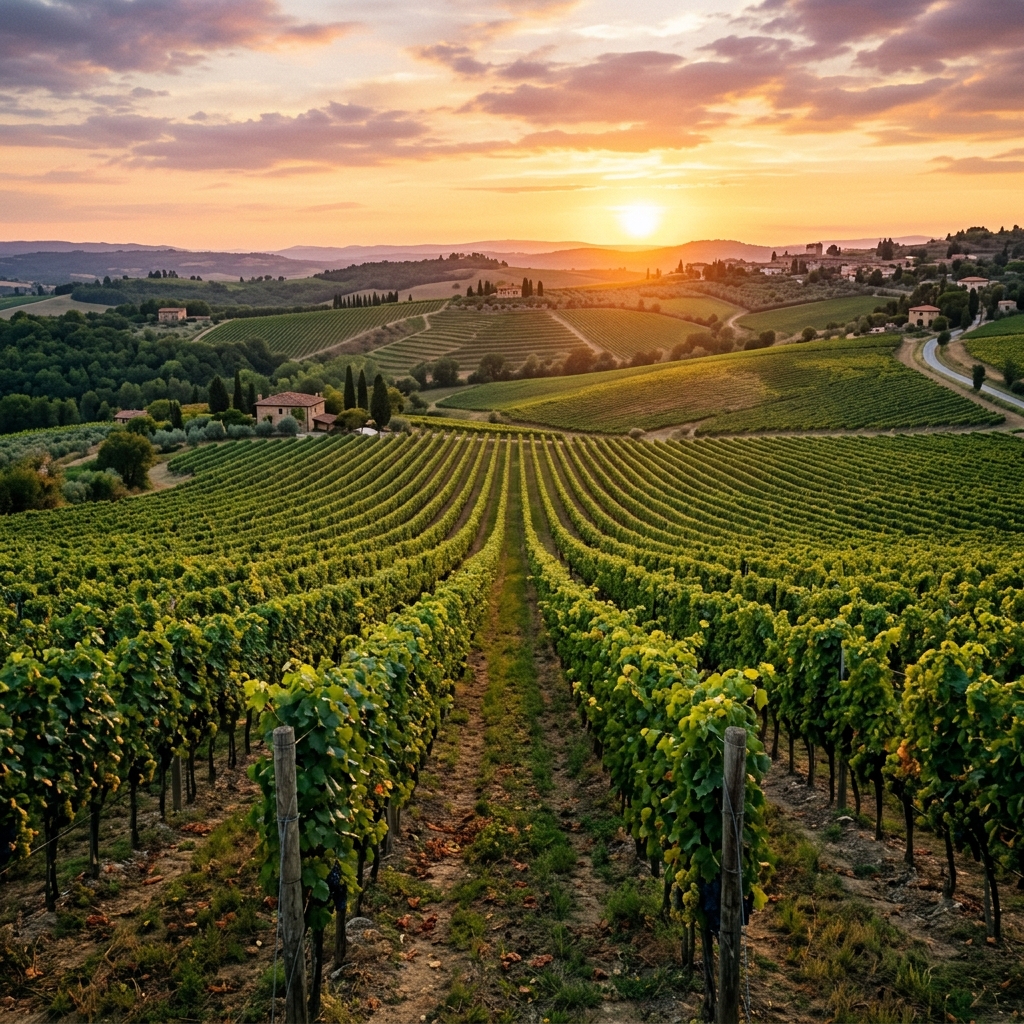
Alsace is the only major French wine region where the grape variety is displayed prominently on the front label. Its defining styles are bone-dry Riesling, opulent Gewurztraminer, and sparkling Crémant.
| Country | ✦ France |
|---|---|
| Key Grapes | ✦ Riesling ✦ Gewurztraminer ✦ Pinot Gris ✦ Pinot Blanc ✦ Muscat |
| Defining Feature | Displays grape variety prominently on the label (a rarity for France) |
| Geography & Climate | Sheltered by the Vosges from rain, one of France's driest and sunniest regions |
| Bottle Shape | Tall, slender 'Alsatian flute' (Flûte d'Alsace / Vin du Rhin) (bottle guide) |
| Grand Cru | 51 official vineyard sites with Grand Cru status (what is Grand Cru) |
| Serving Glass | Classic white wine glass with a tapered bowl (glassware guide) |
Alsace is the most distinctive, picturesque, and consumer-friendly region in France. Unlike Bordeaux and Burgundy, where collectors must decipher historical châteaux and single climats, Alsace places the grape variety front and center on the label: Riesling, Gewurztraminer, or Pinot Gris.
Alsace Wine Classification
The region’s appellation hierarchy is crystalline and divided into four core quality tiers:
Alsace Grand Cru
Pinnacle of quality: strictly manual harvest on steep slopes of the Vosges. Limited to 4 noble grapes: Riesling, Gewurztraminer, Pinot Gris, and Muscat.
👑 Grand Cru Guide →AOC Alsace
100% of the stated variety on the label. Traditional heritage blends are designated under historical names like Edelzwicker or Gentil.
🍇 Varietal Guide →Crémant d'Alsace
France's most popular traditional-method sparkling after Champagne. Secondary bottle fermentation and 12+ months on lees from Pinot Blanc, Auxerrois, and Chardonnay.
🥂 Sparkling Guide →Vendanges Tardives & SGN
Rare late-harvest (VT) and botrytized noble rot (SGN) dessert treasures. Handcrafted only in exceptional sunny vintages from the 4 noble grapes with monumental ageability.
🍯 Dessert Guide →The 4 Noble Grapes of Alsace (Cépages Nobles)
Only these 4 varieties are legally permitted across the 51 terroirs of top-tier Alsace Grand Cru:
Riesling
Fermented bone-dry: electric acidity, white peach, crushed flint, lime zest, and noble petrol minerality.
🍷 Riesling Guide →Gewurztraminer
Unmistakable bouquet: Turkish delight, fresh lychee, ginger, cinnamon, and a rich, oily, voluptuous texture.
🍷 Gewurztraminer Guide →Pinot Gris
Opulent buttery palate, roasted hazelnuts, yellow pear, dried apricot, forest mushrooms, and smoky spice.
🍷 Pinot Gris Guide →Muscat d'Alsace
Strictly dry and vibrant: an explosion of freshly crushed grapes, orange blossom, elderflower, and crisp spring freshness.
🍷 Muscat Guide →Terroir & Soils of Alsace: The Vosges Mountains, Granite & 51 Grands Crus
Shielded by the protective barrier of the Vosges Mountains and shaped by the Rhine Graben rift, Alsace features an extraordinary geological mosaic:
Principal Grape Varieties of Alsace
| Grape Variety | Vineyard Share | Aroma & Palate Profile | Role in the Region |
|---|---|---|---|
| Riesling | ~22% (King of Alsace) | White peach, green apple, flint, laser-sharp acidity, mineral steel | Premier Grand Cru grape, vinified bone-dry with immense aging stamina |
| Pinot Blanc / Auxerrois | ~21% (Fresh Everyday Core) | Yellow apple, white pear, meadow flowers, rounded gentle acidity | Reliable backbone for everyday dry whites and lively Crémant d’Alsace |
| Gewurztraminer | ~19% (Aromatic Powerhouse) | Rose petals, ripe lychee, candied ginger, cinnamon, opulent body | Spicy noble grape, legendary in dry Grand Cru and botrytized VT & SGN styles |
| Pinot Gris | ~16% (Richness & Muscle) | Baked pear, smoky stone, dried apricot, forest mushroom, rich texture | Historically called Tokay d’Alsace, offering profound gastronomic power |
| Pinot Noir | ~11% (Sole Red Gem) | Fresh red cherry, raspberry, forest berries, supple tannins, vibrancy | Region’s singular red grape, soaring in acclaim for Burgundian elegance |
Sommelier Food & Wine Pairing Guide
Traditional Alsatian cuisine and Asian culinary traditions are made for Alsace wines:
With Choucroute and Pork Knuckle
Dry, mineral-rich Riesling with bracing acidity effortlessly cuts through the richness of smoked meats and sauerkraut.
Riesling Guide →With Tarte Flambée (Flammekueche)
Refreshing Pinot Blanc or a glass of sparkling Crémant provides an ideal foil to the crispy flatbread with crème fraîche and lardons.
Crémant Glasses →With Pungent Munster Cheese
Spicy, viscous Gewurztraminer is the quintessential historical pairing for pungent washed-rind Alsatian Munster dusted with caraway.
Cheese Guide →With Thai Curry & Pan-Asian Fare
Lychee and ginger notes in Gewurztraminer and the gentle sweetness of Pinot Gris buffer fiery chili spices and lemongrass.
Spicy Food Wine Guide →Continue your journey through French terroirs: compare Alsace with Burgundy and Champagne, or test your skills in the Wine Academy Aspirant Level!
Frequently Asked Questions
Why is Alsace so culturally and viticulturally similar to Germany?
Over centuries, Alsace shifted repeatedly between French and German sovereignty. As a consequence, growers cultivate German varieties (Riesling, Gewurztraminer) and bottle in slender flutes, yet follow the French vinification philosophy: Alsatian wines are fermented bone-dry, showing more body, architectural tension, and gastronomic versatility than their German counterparts.
Are all Alsace wines sweet?
No, the vast majority of standard appellation wines are strictly dry! Only dedicated dessert classifications carry residual sugar: late-harvest Vendanges Tardives (VT) and botrytized Sélection de Grains Nobles (SGN). Learn more in our guide on the difference between dry and sweet wines.
What are the 'noble grapes' of Alsace?
There are exactly four: Riesling, Gewurztraminer, Pinot Gris, and Muscat. By law, only these four varieties may be planted across the 51 terroirs designated as Alsace Grand Cru.
How should Alsace wines be served and tasted?
Dry Alsace whites should be chilled to 8–10 °C, while aromatic Gewurztraminer and mature Grand Cru Riesling shine at 10–12 °C. Consult our serving temperature guide and master the sommelier tasting technique.
Related Guides
- RieslingKing of Alsatian vineyards and the gold standard of acidity
- GewurztraminerThe most aromatic grape, laden with rose petal and lychee notes
- How to Read a Wine LabelComplete breakdown of the French AOC appellation system
- Wine with Spicy FoodWhy Alsace wines are the ultimate match for Pan-Asian and curry
- 13 Essential Wine GlassesHow bowl geometry transforms the aromatics of white wine