Red Meat
Steak & Bold Reds
Why Cabernet Sauvignon and Malbec cut through marbled ribeye. The chemistry of animal protein and tannins.
Faculty of Gastronomy
A successful wine pairing isn't about rigid etiquette or snobbery — it's about ensuring neither the dish nor the glass overpowers the other. In reality, food and wine interact through three primary levers: weight (full-bodied wine for rich dishes), acidity (cutting through fat and cleansing the palate), and tannins (requiring protein and fat to soften).
All pairing axioms derive from these mechanics. Steak craves tannins because beef fat softens astringency. Oysters demand acidity because it functions like a fresh squeeze of lemon. Desserts require wine that is sweeter than the dish — otherwise the wine tastes aggressively tart.
Below is our comprehensive sommelier library for every dish: what to select, what to avoid, and which bottle will save dinner when guests are already at the table.
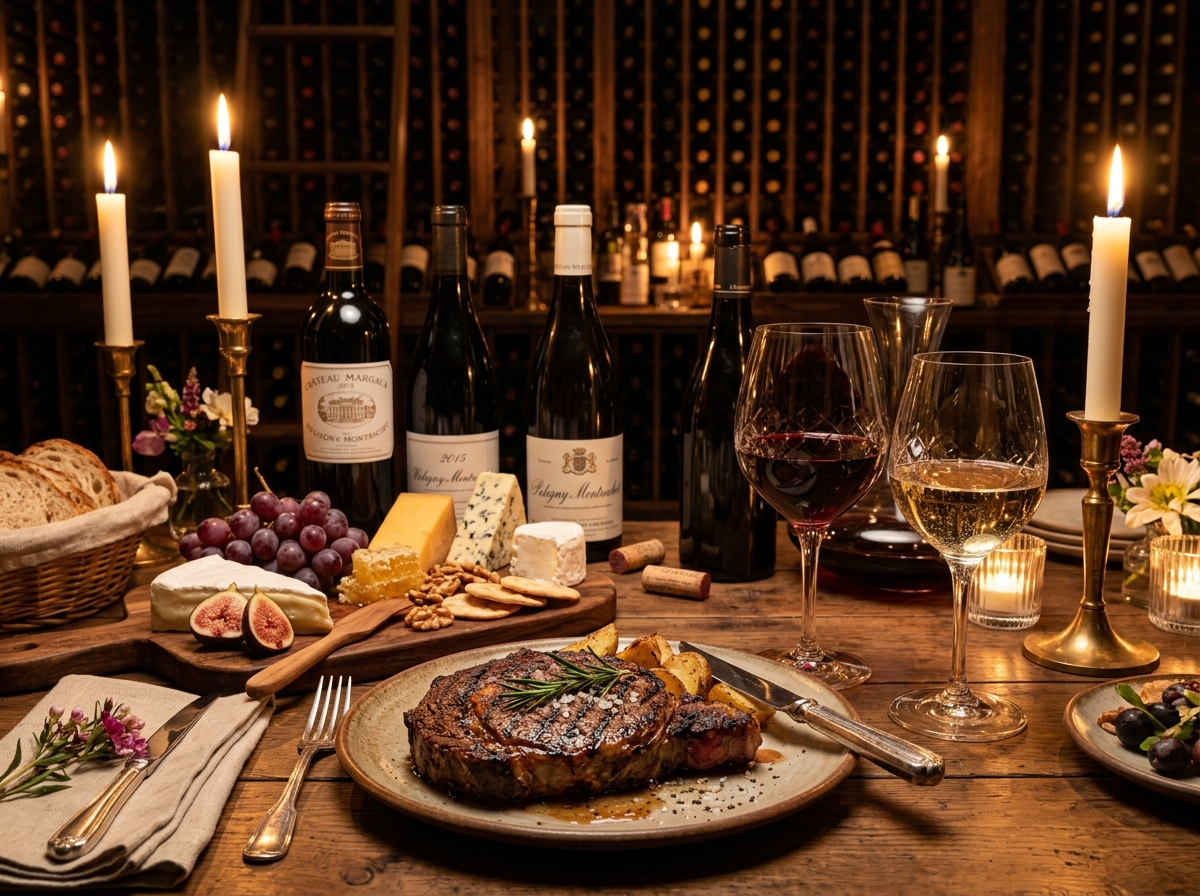
Food Pairing is the sensory science and culinary art of matching wine and cuisine, where neither flavor overpowers the other, combining into a harmonious synergy that elevates both glass and plate.
Light wines (Pinot Grigio, Sauvignon Blanc) suit delicate salads and raw fish. Full-bodied reds (Cabernet, Shiraz) pair with rich, grilled meats.
Acidity acts like a squeeze of fresh lemon: it resets the palate, cutting through rich creamy sauces, duck fat, or melted cheese.
Astringent red wine tannins bind with animal proteins in steak and lamb, transforming into silky, rounded, velvety textures.
"What grows together, goes together": Sancerre with goat Crottin, Chianti with Florentine T-bone, and dry Riesling with choucroute.