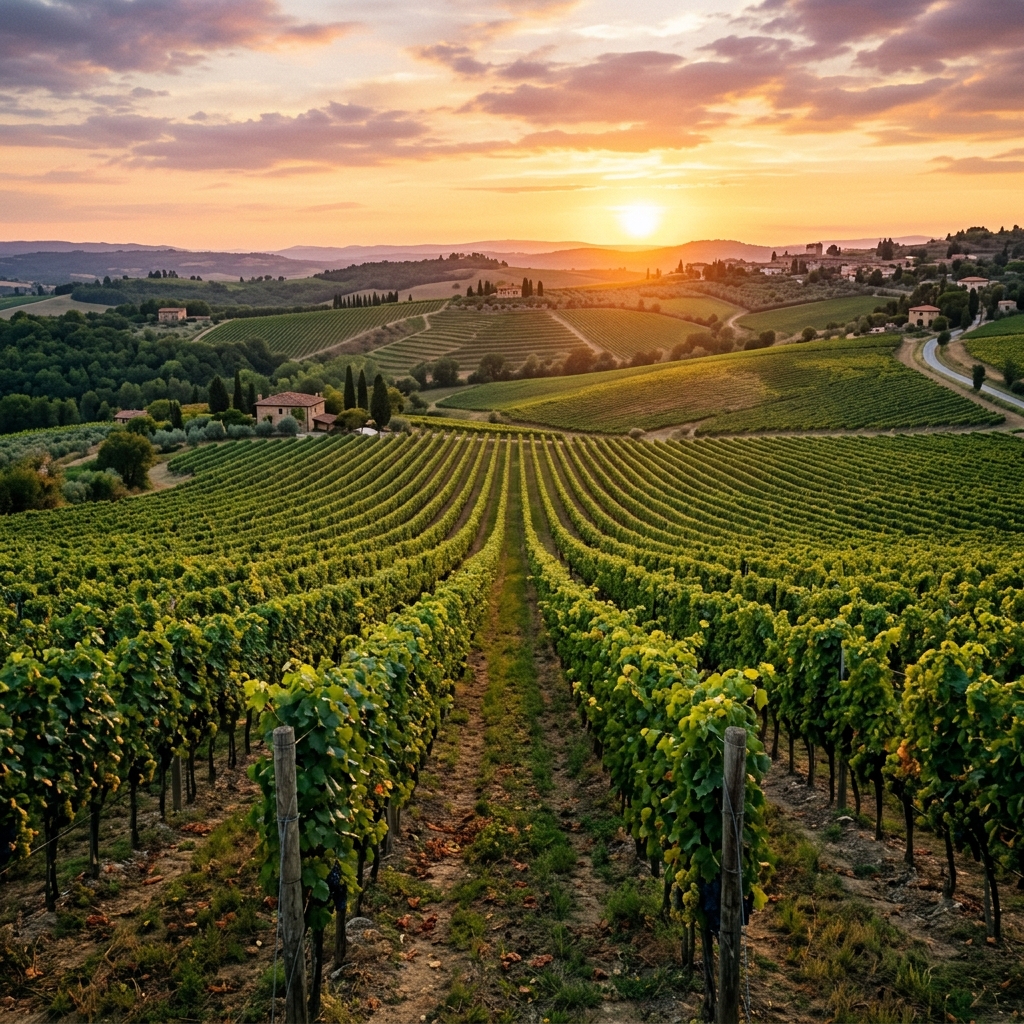
Pinot Grigio (known as Pinot Gris in France and Grauburgunder in Germany) is a grey-skinned mutation of Pinot Noir. In Northern Italy (Alto Adige, Friuli, Veneto), it crafts crisp, light, and thirst-quenching dry white wines with delicate notes of green pear, lemon zest, and almond, while in French Alsace it yields rich, honeyed, and full-bodied masterpieces.
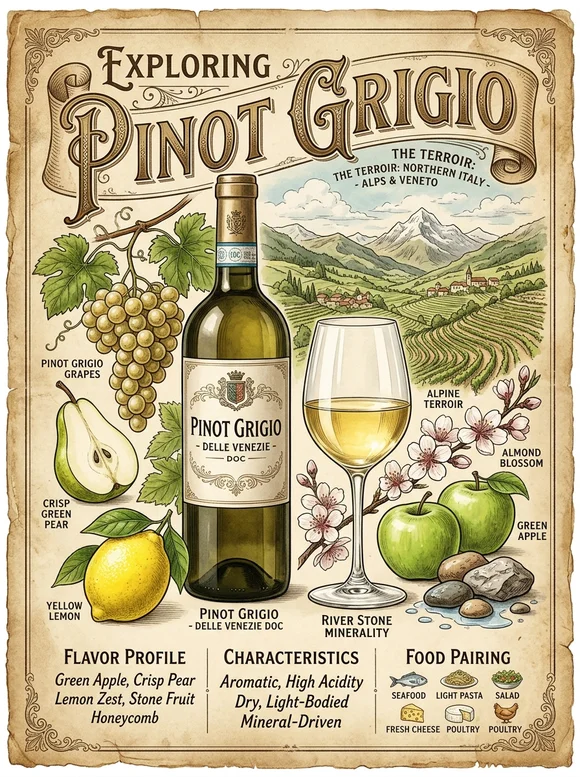
Taste Profile & Sensory Structure
Rating on 1–5 scaleKey Aromas & Flavor Descriptors
| Wine Style | White Wine |
|---|---|
| Origin / Homeland | Northern Italy (Alto Adige, Friuli) & Alsace, France |
| Other Names | Pinot Grigio, Pinot Gris, Grauburgunder, Ruländer |
| Pinot Grigio vs Pinot Gris | Genetically identical grape. The Italian style is crisp, light, and mineral; the Alsatian style is rich, opulent, and honeyed |
| Serving Temperature | 7–9 °C (45–48 °F) for light Italian styles; 10–12 °C for rich Alsace Pinot Gris |
| Cellar Longevity | Italian everyday styles are best within 1–2 years; Alto Adige Riserva and Alsace Grand Cru can mature 5–10 years |
| Universal Crowd-Pleaser | The world's supreme crowd-pleasing white wine — accessible, refreshing, and never polarizing |
Pinot Grigio is the undisputed champion of convivial, effortless refreshment. At its finest in the Alpine valleys of Alto Adige and Friuli, it offers pristine aromas of crisp green pear, Meyer lemon zest, and delicate crushed minerals that invigorate the palate and invite another sip.
Explore Pinot Grigio in Depth
Master Italy's favorite white wine through our four comprehensive Academy guides: sensory analysis, Alpine terroirs, culinary versatility, and smart buying strategies.
Frequently Asked Questions
What is the fundamental difference between Pinot Grigio and Pinot Gris?
They are the exact same grape variety harvested and vinified through two opposite philosophies. Italian Pinot Grigio is picked early to preserve energetic acidity and fermented cool in stainless steel, producing lean, neutral, crisp, and refreshing wine. French Pinot Gris (Alsace) is harvested late at full physiological ripeness, yielding opulent, viscous, honeyed, smoky wines with higher alcohol and frequent residual sugar.
Why do some critics dismiss Pinot Grigio as simple or boring?
Mass-market commercial production in the flat plains of Veneto (often labeled simple delle Venezie DOC) produces immense quantities of diluted, neutral wine designed for uncritical quaffing. However, artisan hillside estate bottlings from Alto Adige, Collio, and Colli Orientali del Friuli offer stunning depth, saline minerality, mountain tension, and genuine complexity.
What should I look for on the label to guarantee quality Pinot Grigio?
Always look for specific regional DOCs: Alto Adige (Südtirol), Friuli Grave, Collio, or Trentino rather than generic entry-level regional blends. These cooler Alpine hillside terroirs benefit from intense sunlight and dramatic diurnal temperature shifts, yielding vibrant aromatics and crisp structure.
Related Guides
- How to Recognize Pinot Grigio in the GlassCrisp pear, bitter almond, acidity balance, and blind tasting keys
- Where Pinot Grigio GrowsAlto Adige, Friuli, Veneto, Alsace, and Oregon
- Food Pairing with Pinot GrigioCalamari, fresh pasta with pesto, light appetizers, and fresh fish
- What to Buy (Pinot Grigio)Hillside Alto Adige vs Veneto plains, and top producer benchmarks
- ItalyThe magnificent mosaic of 500+ indigenous varieties from the Alps to Sicily
Last updated: September 19, 2026