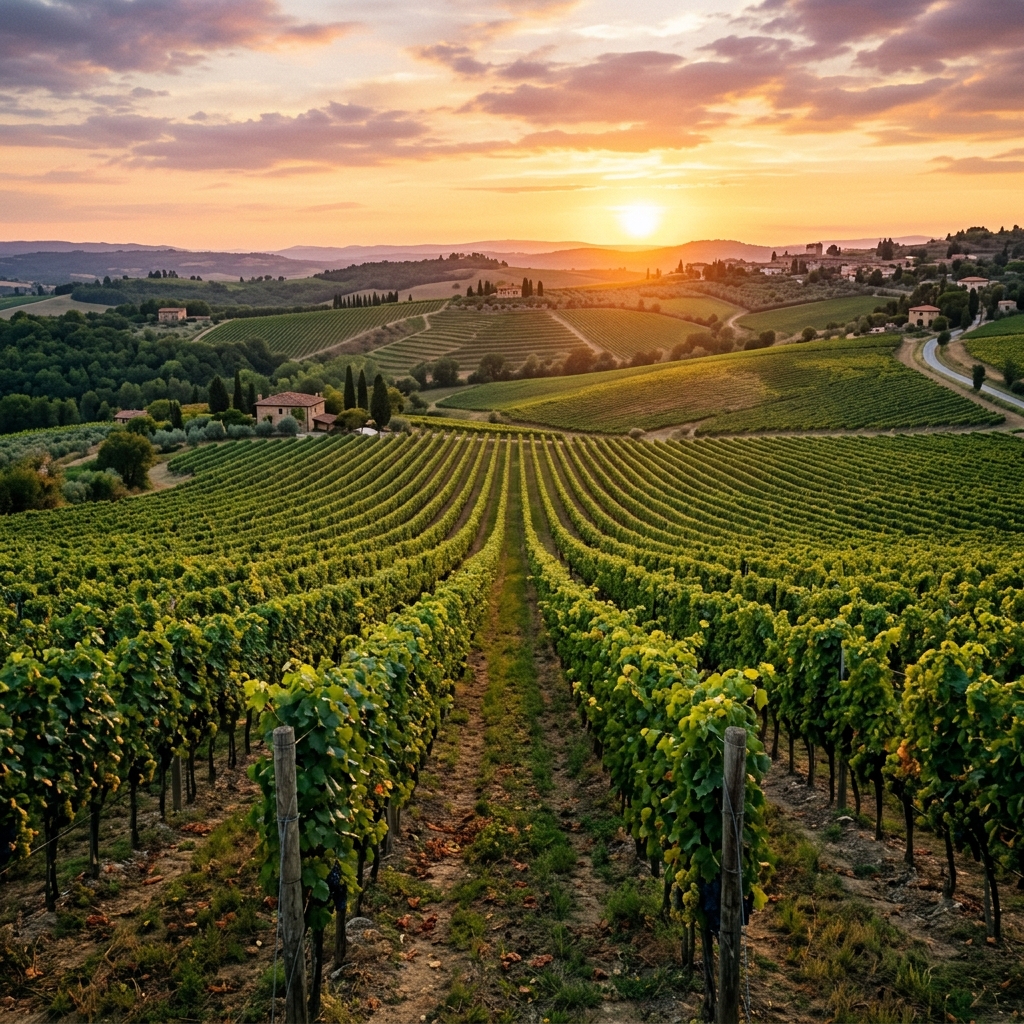
Champagne is the world's most iconic sparkling wine region, situated in northeastern France just 150 km from Paris. Grown on luminous white Belemnite chalk soils and cool northern slopes, three grapes — Chardonnay, Pinot Noir, and Meunier — are transformed via the traditional secondary bottle fermentation (*Méthode Champenoise*) into wines of peerless refinement, delicate bead, brioche complexity, and vibrating mineral tension.
| Country | ✦ France |
|---|---|
| Key Grapes | ✦ Chardonnay ✦ Pinot Noir ✦ Pinot Meunier |
| Permitted Key Grapes | Chardonnay (white), Pinot Noir, Meunier (reds) |
| Subsoil Composition | Deep Cretaceous Belemnite chalk with superior water regulation |
| Fermentation Method | Méthode Champenoise (traditional secondary fermentation in the bottle) |
| Minimum Lees Aging | 15 months for Non-Vintage (NV); 36 months for Vintage (Millésimé) |
| Ideal Glassware | Tulip-shaped sparkling wine glass (not narrow flute) (Glass Guide) |
Champagne is universal celebration captured in liquid form. The northernmost of France’s premier fine wine regions, its marginal climate and Cretaceous chalk soils force grapevines to struggle, building high natural acidity and intricate mineral nuance that come alive during patient secondary fermentation beneath the streets of Reims and Épernay.
The Four Signature Wine Styles of Champagne
Blanc de Blancs
Pure chalk and citrus crystalline elegance. Green apple, lemon blossom, sea spray oyster salinity, and shimmering, razor-sharp precision.
Chardonnay Profile →Blanc de Noirs
Structured, gastronomic, and vinous. Wild red raspberries, toasted brioche, almond paste, and savory depth tailored for fine dining tables.
Gastronomy Guide →Vintage Millésimé
Produced exclusively in stellar harvest years. Decades of lees aging impart roasted hazelnuts, praline, honeycomb, and magnificent aristocratic depth.
Serving 9-11°C →Rosé Champagne
Fragrant, alluring, and berry-kissed. Red currants, wild strawberries, orange zest, and a touch of rose petal spice with fine, persistent perlage.
All Regions →The Unique Champagne Terroir
The Chalk Engine: Belemnite Fossils, Crayères & Northern Latitude
Pure calcium carbonate soil acts as both thermal radiator and moisture sponge, giving base wines high acidity, low pH, and intense mineral spine.
Centuries-old underground limestone quarries maintain a permanent 10°C temperature and 90%+ humidity, optimal for ultra-slow autolysis.
Sitting right at the northern geographical limit of quality viticulture, cool weather preserves low potential alcohol and vivid freshness for sparkling base wines.
Terroir & Soils of Champagne: Belemnite Chalk, Kimmeridgian & Crayères Cellars
The northern geography at the 49th parallel combined with an ancient marine sedimentary basin creates Champagne’s one-of-a-kind terroir:
Principal Grape Varieties of Champagne
| Grape Variety | Regional Share | Aroma & Palate Profile | Role in the Region |
|---|---|---|---|
| Pinot Noir | ~38% (Structural Backbone) | Redcurrant, raspberry, cherry, full body, structural drive | Dominates Montagne de Reims and Côte des Bar, imparting power to blends |
| Meunier | ~32% (Juicy Fleshiness) | Ripe apple, yellow pear, plum, supple roundness, early accessibility | Frost-hardy grape reigning in the Marne Valley, lending fruitiness to NV cuvées |
| Chardonnay | ~30% (Mineral Elegance) | Lemon zest, white blossom, chalk, brioche, piercing linear acidity | The star of Côte des Blancs, crafting legendary 100% Blanc de Blancs |
Sommelier Food & Wine Pairings
The effervescence, creamy brioche autolysis, and chalk-driven acidity of Champagne make it the most versatile gastronomic wine on earth:
Belon Oysters & Caviar
Blanc de Blancs with laser chalk acidity and microscopic perlage creates an unforgettable saline explosion with fresh shellfish and sturgeon roe.
Seafood Guide →Crispy Fried Chicken & Fries
High natural acidity and effervescence cut effortlessly through crisp fried chicken batter and truffle oil while refreshing the palate.
Comfort Food →Roast Duck & Wild Salmon
Rosé or Blanc de Noirs Champagne offers Pinot Noir structural grip and wild strawberry aromatics that mirror rich oily fish and poultry.
Poultry Guide →Brie, Camembert & Brillat-Savarin
Lively carbon dioxide bubbles slice cleanly through decadent triple-cream bloomy rind cheese without metallic resonance.
Cheese & Wine →Continue exploring French viticultural benchmarks: compare Champagne with the still elegance of Burgundy, the grandeur of Bordeaux, or test your sparkling wine knowledge in the Wine Academy!
Frequently Asked Questions
What is the difference between Blanc de Blancs and Blanc de Noirs?
Blanc de Blancs ('white from whites') is crafted exclusively from 100% white grapes (almost always Chardonnay), centered in the Côte des Blancs. It is linear, chalky, citrus-driven, with white flowers and laser-sharp freshness.
Blanc de Noirs ('white from blacks') is made exclusively from red grapes (Pinot Noir and/or Meunier) pressed gently without skin contact. It is broader, fleshier, more vinous, boasting red berries, brioche, and structural weight.
Why is Belemnite chalk so celebrated in Champagne?
Originating from fossilized prehistoric squid-like cephalopods (*Belemnitella mucronata*), this porous white chalk retains 30% to 40% water like a subterranean sponge during summer droughts, while reflecting daytime sunlight back into the vine canopies and providing miles of humid 10°C Roman chalk quarries (crayères) for aging.
What do Brut, Extra Brut, and Brut Nature signify on the label?
These terms indicate residual sugar added during dosage (*liqueur d'expédition*):
• Brut Nature / Zero Dosage: 0–3 g/L sugar (bone-dry, pure terroir)
• Extra Brut: 0–6 g/L sugar (very dry, crystalline)
• Brut: 0–12 g/L sugar (the classic world standard)
• Demi-Sec: 32–50 g/L sugar (luscious dessert pairing).