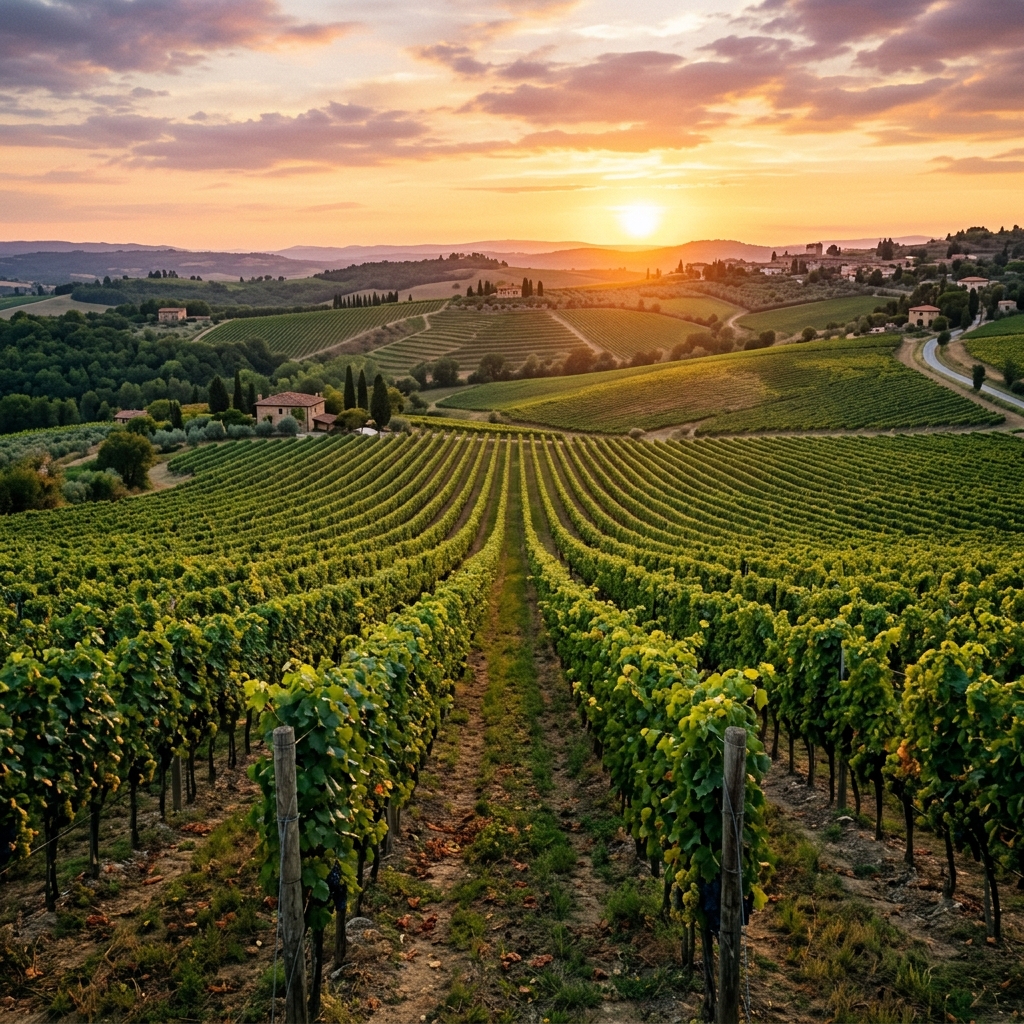
Bordeaux is the historic epicenter of global fine wine, shaped by the Gironde estuary into two contrasting worlds: the Left Bank gravels dominated by aristocratic Cabernet Sauvignon, and the Right Bank limestone-clays where velvety Merlot reigns. From the legendary 1855 Grand Cru Classé châteaux to sweet golden Sauternes, Bordeaux sets the benchmark for age-worthy architectural red blends.
| Country | ✦ France |
|---|---|
| Key Grapes | ✦ Cabernet Sauvignon ✦ Merlot ✦ Cabernet Franc ✦ Petit Verdot ✦ Sauvignon Blanc ✦ Sémillon |
| Left Bank (Rive Gauche) | Médoc, Pauillac, Margaux, Saint-Julien — dominated by Cabernet Sauvignon |
| Right Bank (Rive Droite) | Saint-Émilion, Pomerol — dominated by Merlot and Cabernet Franc |
| 1855 Classification | 5 tiers of Grand Cru Classé established for the Exposition Universelle de Paris |
| Dry Whites & Dessert | Pessac-Léognan (mineral dry whites), Sauternes & Barsac (botrytized liquid gold) |
| Signature Glassware | Tall Bordeaux glass with broad bowl and tapered rim (Glass Guide) |
Bordeaux is the monumental cathedral of the fine wine world. Anchored around the historic port city on the Atlantic coast of southwestern France, Bordeaux transformed ancient Roman vineyards into a global trading empire governed by châteaux dynasties, oceanic climates, and legendary gravel terroirs.
The Four Signature Wine Styles of Bordeaux
Cabernet Sauvignon Blend
Architectural power: blackcurrant, pencil lead (graphite), cedarwood, tobacco leaf, and firm, chiselled tannins built for 30+ years of aging.
Cabernet Guide →Merlot & Franc Opulence
Velvety hedonism: dark plum compote, black cherry, dark chocolate, black truffle, and supple, cashmere tannins of peerless grace.
Merlot Guide →Oaked White Graves
Aristocratic complexity: Sauvignon Blanc and Sémillon aged in French oak casks, boasting citrus blossom, wax, smoky flint, and lemon curd.
White Graves →Sauternes Liquid Gold
Legendary nectar: honeyed apricots, candied ginger, saffron, orange marmalade, and infinite fresh acidity from botrytized Sémillon.
Academy Dessert →Terroir & Soils of Bordeaux: Left Bank Gravels, Right Bank Clays & Limestone
The rare geosystem of the Gironde estuary and its two converging rivers (Garonne and Dordogne) creates ideal conditions for classic slow ripening:
Principal Grape Varieties of Bordeaux
| Grape Variety | Regional Share | Aroma & Palate Profile | Role in Blend |
|---|---|---|---|
| Merlot | ~66% (Planting Leader) | Ripe plum, black cherry, dark cocoa, supple velvety tannins | Heart of the Right Bank and fleshy structural softener in Left Bank blends |
| Cabernet Sauvignon | ~22% (King of Structure) | Cassis, cedarwood, pencil lead graphite, tobacco, firm ageworthy tannins | Spine of the Left Bank (Pauillac, Margaux, Saint-Julien) with 30+ year lifespan |
| Cabernet Franc | ~9% (Aromatic Finesse) | Wild raspberry, violet petal, pencil lead, red pepper, crisp acidity | Indispensable partner to Merlot across Saint-Émilion (Château Cheval Blanc) |
| Petit Verdot | ~2% (Spicy Accent) | Blueberry, violet, black pepper, deep color, firm chewy tannins | Left Bank châteaux’s secret weapon for color intensity and peppery structure |
Sommelier Food & Wine Pairings
The aristocratic structure, firm gravel tannins, and savory graphite minerality of Bordeaux wines find their greatest harmony at the dining table:
Prime Côte de Bœuf & Ribeye
Left Bank Pauillac and Saint-Julien tannins latch onto marbled beef protein, unlocking deep savory cassis and cedar notes.
Steak Pairings →Roast Duck & Pigeon
Right Bank Saint-Émilion and Pomerol provide plush black plum fruit and truffle undertones that elevate tender game birds.
Poultry Guide →Foie Gras & Roquefort
Honeyed apricot nectar and vibrant acidity of noble rot Sauternes effortlessly cut rich liver fat and contrast salty blue cheese.
Cheese & Wine →Pauillac Lamb with Rosemary
Agneau de Pauillac with garlic and thyme: the archetypal pairing where Cabernet cigar-box aromatics meld into delicate lamb jus.
Meat Pairings →Continue discovering historic French appellations: compare Bordeaux with the pinot noir elegance of Burgundy, the sparkling heritage of Champagne, or test your appellation knowledge in the Wine Academy!
Frequently Asked Questions
What is the fundamental difference between the Left Bank and Right Bank?
The division is governed by geology and river geography. On the Left Bank (western side of the Gironde estuary), deep, warm alluvial gravel soils radiate solar heat into the late-ripening Cabernet Sauvignon, creating structured, tannic wines with cassis, cedar, and graphite built to age for decades. On the Right Bank (northeastern side of the Dordogne), cool clay-limestone soils nurture early-ripening Merlot, yielding rounder, fleshier wines brimming with black plum, violet, cocoa, and velvet tannins.
What does Grand Cru Classé 1855 signify on a Bordeaux label?
In 1855, Emperor Napoleon III requested a definitive classification of Bordeaux's finest estates for the Paris World's Fair. Brokered by Courtiers based on market transaction prices over a century, 61 Médoc estates (plus Château Haut-Brion in Graves) were ranked into five growths (First through Fifth Crus). The coveted First Growths (*Premiers Grands Crus Classés*) are Lafite Rothschild, Latour, Margaux, Haut-Brion, and Mouton Rothschild (promoted in 1973).
Should young Bordeaux wines be decanted?
Yes. Young Bordeaux blends are packed with dense grape skin and oak tannins that require oxygen aeration. Decanting for 60 to 90 minutes softens the astringent grip and unfurls aromas of blackberry, tobacco leaf, and cigar box.