Riesling is a high-acid white grape variety capable of producing every style from bone-dry (Trocken) to unctuous dessert wines. Celebrated for dazzling aromas of green apple, white peach, lime zest, jasmine, and an iconic 'petrol' (TDN) complexity with bottle age, Riesling achieves peerless balance without ever relying on new oak.
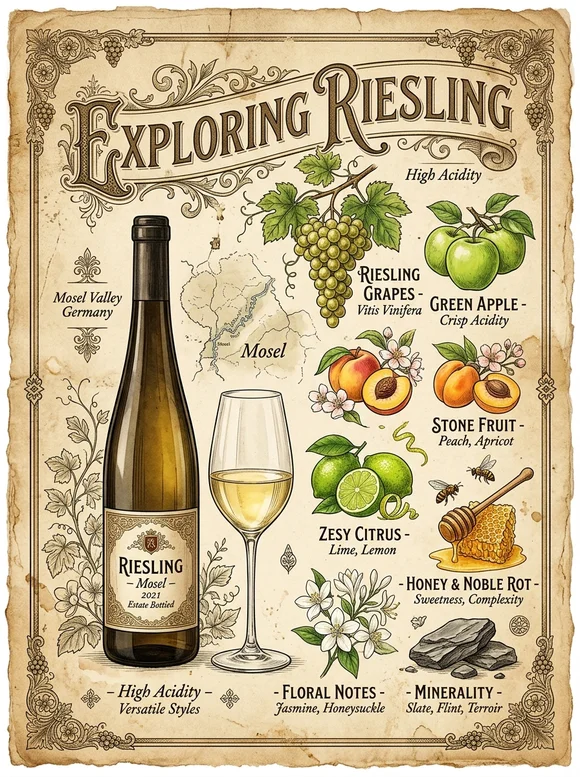
Taste Profile & Sensory Structure
Rating on 1–5 scaleKey Aromas & Flavor Descriptors
| Wine Style | White Wine |
|---|---|
| Origin / Homeland | Mosel & Rhine Valleys, Germany |
| Other Names | Riesling, White Riesling, Rheinriesling |
| Deciphering Sweetness | Trocken indicates dry (<9g/L sugar); Feinherb is off-dry; Kabinett and Spätlese can range from dry to gently sweet |
| Serving Temperature | 8–10 °C (46–50 °F) for dry styles; 10–12 °C for complex aged or sweet Prädikats |
| Alcohol Range | Often just 8–11.5% ABV in classic Mosel styles — light, refreshing, and invigorating |
| Aging Potential | Exceptional: premier German Grosses Gewächs and sweet Auslese effortlessly mature for 20–40+ years |
Riesling is widely considered by sommeliers, wine critics, and cellar collectors to be the noble aristocrat of white grape varieties. Never masked by heavy new oak, Riesling delivers pure, crystalline fruit, pulsating slate minerality, and an almost supernatural ability to age gracefully across decades.
Explore Riesling in Depth
Master Riesling through our four comprehensive Academy guides: sensory analysis, slate terroirs, culinary versatility, and buyer strategies.
Frequently Asked Questions
Is Riesling dry or sweet?
Riesling is made across the entire spectrum. In Germany, look for the word Trocken (bone dry) or the GG (Grosses Gewächs) crest. Without 'Trocken', wines labeled Kabinett or Spätlese typically carry delightful residual sugar balanced by electrifying natural acidity. In Alsace, Austria, and Australia (Clare & Eden Valleys), Rieslings are almost universally dry.
Why does aged Riesling smell like petrol or kerosene?
This captivating aroma is caused by an organic chemical compound called 1,1,6-trimethyl-1,2-dihydronaphthalene (TDN), which develops gradually as carotenoids in grape skins break down during bottle aging. Favored by sun exposure, warm vintages, and high natural acidity, this 'petrol' signature is revered by connoisseurs as an authentic hallmark of mature greatness.
Why is Riesling the absolute ultimate pairing for spicy Asian cuisine?
Alcohol amplifies chili heat and burns the palate, whereas oak clashes with delicate spices. Off-dry Riesling (such as a Mosel Kabinett) possesses low alcohol (~8–9%), gentle sweetness that coats and soothes capsaicin heat, and razor-sharp acidity that cuts through rich coconut milk and pork fat.
Related Guides
- How to Recognize Riesling in the GlassAcidity levels, residual sugar balance, and blind tasting petrol notes
- Where Riesling GrowsMosel, Rheingau, Alsace, Wachau, and Australia's Clare Valley
- Food Pairing with RieslingMaster combinations for spicy cuisine, pork roast, and duck
- What to Buy (Riesling)Prädikat classification, Grosses Gewächs, and top estates
- GermanyThe spiritual kingdom of steep slate vineyards and Prädikatswein
Last updated: September 19, 2026