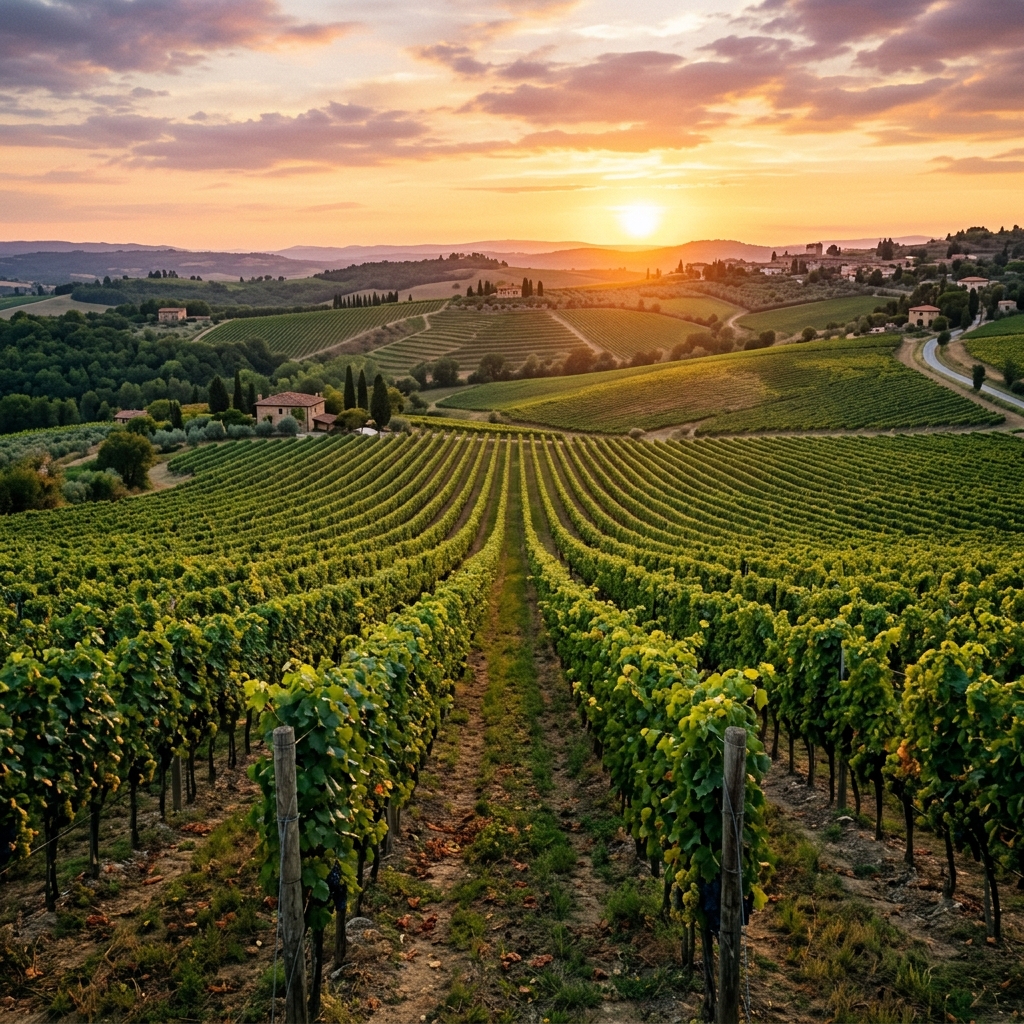
Moscato (Muscat Blanc à Petits Grains) is an ancient, overwhelmingly aromatic white grape variety and the only grape whose wine actually smells like freshly plucked table grapes. Famous across Piedmont for gently fizzy, low-alcohol Moscato d'Asti, it radiates aromas of orange blossom, yellow peach, honeysuckle, and candied ginger.
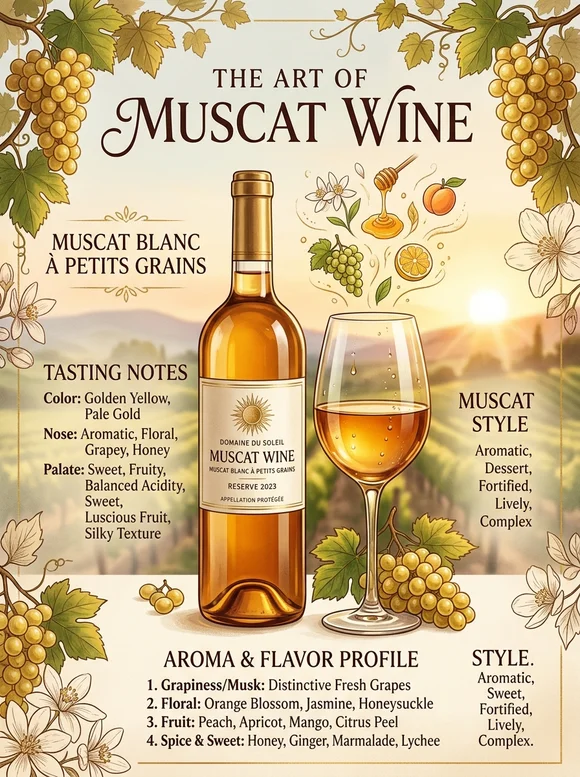
Taste Profile & Sensory Structure
Rating on 1–5 scaleKey Aromas & Flavor Descriptors
| Wine Style | White Wine |
|---|---|
| Origin / Homeland | Mediterranean Basin & Piedmont, Italy |
| Other Names | Moscato, Muscat Blanc à Petits Grains, Moscatel |
| Moscato d'Asti Style | Frizzante (gently fizzy ~1.7 atm), low alcohol (5.0–5.5% ABV), luscious residual sugar |
| Asti Spumante | Full sparkling (spumante ~5 atm), slightly higher alcohol (7–9% ABV), festive and frothy |
| Serving Temperature | 6–8 °C (43–46 °F) — chilled temperature sharpens freshness against sweet fruit |
| Dry Expressions | Bone-dry styles exist in Alsace (Muscat d'Alsace) and Austria, delivering intoxicating aroma without sugar |
Moscato is the oldest domesticated and most enchanting aromatic grape in viticultural history. Uniquely gifted with the unmistakable perfume of fresh, sun-warmed table grapes, orange blossoms, sweet yellow peaches, and delicate rose petals, it produces low-alcohol, gently effervescent nectars that charm both casual drinkers and seasoned connoisseurs alike.
Explore Moscato in Depth
Master the aromatic universe of Moscato through our four comprehensive Academy guides: sensory analysis, Piedmont terroirs, dessert gastronomy, and buyer recommendations.
Frequently Asked Questions
What is the difference between Moscato d'Asti and Asti Spumante?
Both hail from Piedmont's Asti province. Moscato d'Asti is gently fizzy (frizzante), bottled under a normal cork at lower pressure, possesses very low alcohol (5–5.5%), and showcases refined floral delicacy. Asti Spumante is fully sparkling (spumante) under a wire Champagne cage, holds higher alcohol (7–9%), and delivers bolder effervescence.
Why does Moscato smell like actual grapes while other wines do not?
Muscat grape skins possess extraordinarily high concentrations of aromatic chemical compounds called free monoterpenes (linalool, geraniol). In other grape varieties, aromas are created dynamically during alcoholic fermentation. In Moscato, these natural botanical perfume molecules survive fermentation intact, reproducing the exact sensory experience of biting into a fresh Muscat table grape.
Does dry Moscato exist?
Yes! In France's Alsace region, Muscat d'Alsace is vinified completely bone dry. Tasters experience an unforgettable sensory head-trip: an explosive, sweet-smelling perfume of orange blossom and grapes on the nose, followed by a bone-dry, crisp, and mineral palate finish. Dry Muscats are also celebrated in Austria and Greece.
Related Guides
- How to Recognize Moscato in the GlassFresh grape aroma, orange blossom, sweetness scale, and tasting keys
- Where Moscato GrowsAsti, Piedmont, Alsace, and Mediterranean coasts
- Food Pairing with MoscatoPanettone, fruit tarts, panna cotta, and spicy Thai appetizers
- What to Buy (Moscato)Moscato d'Asti DOCG benchmarks and dry Alsace selections
- PiedmontThe fog-shrouded cradle of Barolo, Barbaresco, and fragrant Moscato
Last updated: September 20, 2026