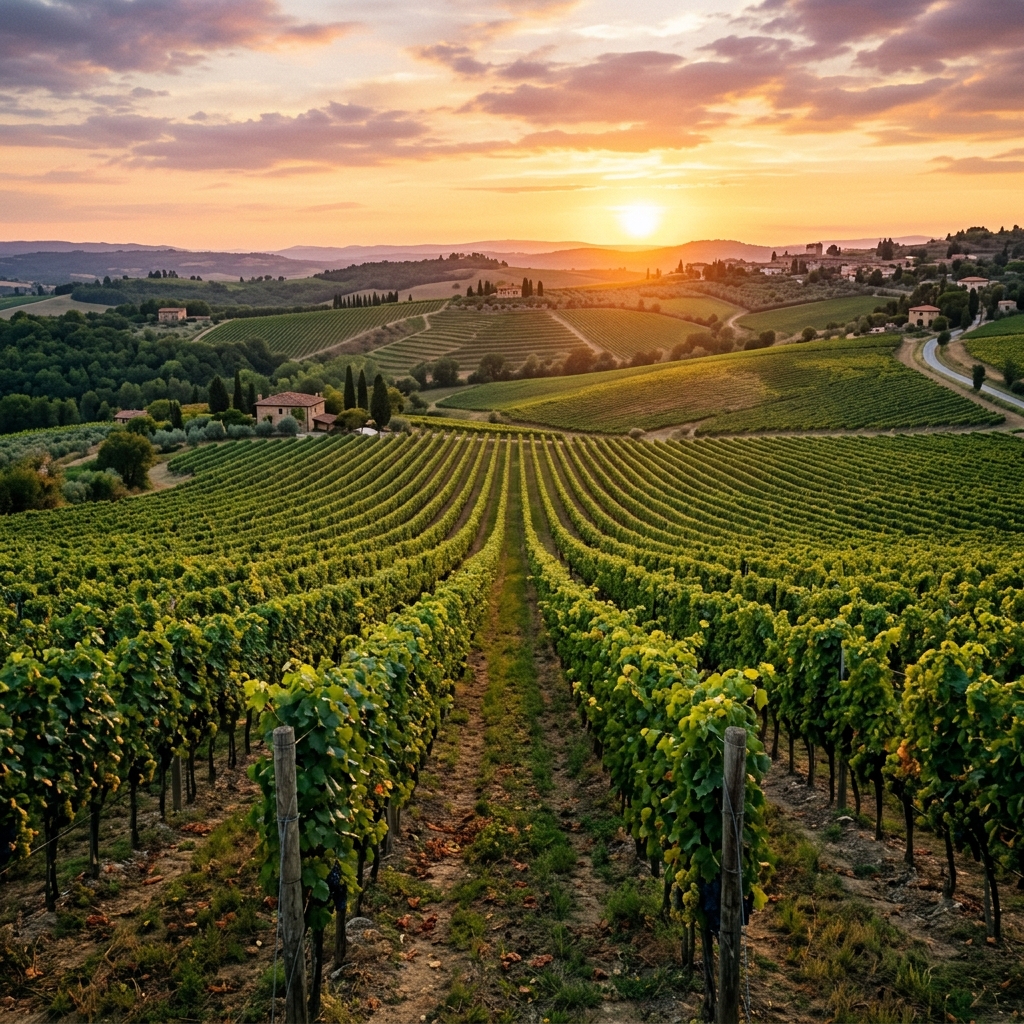
Sauternes is Bordeaux's legendary botrytized sweet white wine, celebrated across centuries as one of humanity's greatest wine achievements. Produced in the misty gravel valleys south of Graves from thin-skinned Sémillon blended with Sauvignon Blanc and Muscadelle, it owes its unctuous golden concentration to noble rot (Botrytis cinerea). The microscopic fungus pierces grape skins during autumn morning fogs, dehydrating the berries and concentrating natural sugars, lively acidity, and intoxicating flavors of honeycomb, dried apricot, saffron, and candied citrus.
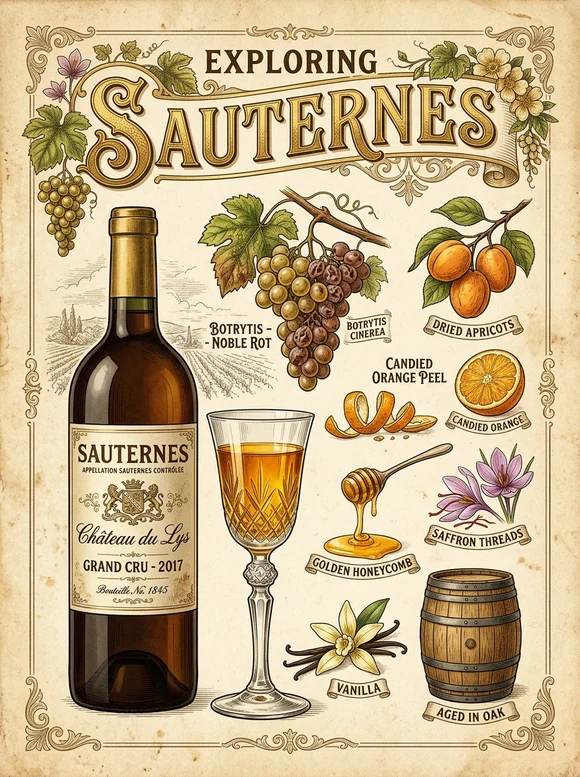
Taste Profile & Sensory Structure
Rating on 1–5 scaleKey Aromas & Flavor Descriptors
| Wine Style | White Wine |
|---|---|
| Origin / Homeland | Sauternes & Barsac, Bordeaux, France |
| Other Names | Sauternes, Barsac, Bordeaux Sweet Wine, Botrytized Bordeaux |
| Grape Composition | Sémillon (75–80% for body & honeyed richness), Sauvignon Blanc (for tension & acidity), Muscadelle (for floral lift) |
| The Secret of Noble Rot | Botrytis cinerea fungus dehydrates berries during morning fogs, reducing yields to a single glass per vine |
| Residual Sugar & Alcohol | 120–160 g/l residual sugar with 13.5–14.5% natural alcohol (unfortified) |
| Ideal Serving Temperature | 10–12 °C (50–54 °F) — allows honeyed aromatics to shine without numbing acidity |
Sauternes stands alongside Tokaji and Trockenbeerenauslese as one of the timeless triumphs of sweet winemaking. Born in misty river valleys south of Bordeaux, Sauternes owes its unctuous golden concentration to Botrytis cinerea (“noble rot”), transforming Sémillon and Sauvignon Blanc grapes into an immortal elixir of wild honey, dried apricots, saffron, and candied citrus.
Explore Sauternes in Depth
Discover the magic of noble rot through our four sommelier-curated Academy guides: sensory profile, Ciron river valley terroirs, foie gras & Roquefort pairings, and 1855 Grand Cru classifications.
Frequently Asked Questions
What is Botrytis cinerea ("Noble Rot") and how does it create Sauternes?
Botrytis cinerea is a microscopic fungus that flourishes under the unique microclimate of Sauternes, where the chilly waters of the Ciron stream meet the warmer Garonne River. In autumn, this creates morning mists followed by warm, dry sunny afternoons. The fungus punctures the grape skins, allowing water to evaporate without rotting the fruit. The grapes shrivel into raisin-like berries, concentrating sugar, acidity, and imparting extraordinary flavors of honey, saffron, and candied peel.
Why is Sauternes so expensive compared to dry Bordeaux?
Producing Sauternes involves extraordinary economic risk and labor. Because botrytis develops unevenly, harvesters must pass through the vineyards by hand multiple times (known as tries successives), picking berry by individual berry. The desiccated grapes yield minuscule quantities: at premier estates like Château d'Yquem, an entire vine yields merely one glass of wine, compared to a full bottle per vine in standard viticulture.
Why is Roquefort and Foie Gras the quintessential pairing for Sauternes?
It is one of gastronomy's greatest flavor harmonies. The intense salty, metallic bite and crumbly richness of Roquefort cheese cuts straight through the dense sweetness of Sauternes, while the wine's botrytis honey smooths the cheese's pungent sharpness. Similarly, the silky fat of pan-seared foie gras matches Sauternes' viscous glycerol body, elevated by the wine's vibrant underlying acidity.
Related Guides
- How to Recognize Sauternes in the GlassGolden amber hue, wild honey, dried apricot, and noble rot complexity
- Where Sauternes GrowsSauternes, Barsac, Bommes, Ciron river mists, and gravelly terroirs
- Food Pairing with SauternesPan-seared foie gras, Roquefort, fruit tarts, and savory contrasts
- What to Buy (Sauternes)1855 Classifications, Château d'Yquem, Premier Crus, and half-bottle values
- Bordeaux RegionExplore Left Bank, Right Bank, and the legendary Graves & Sauternais
Last updated: September 20, 2026