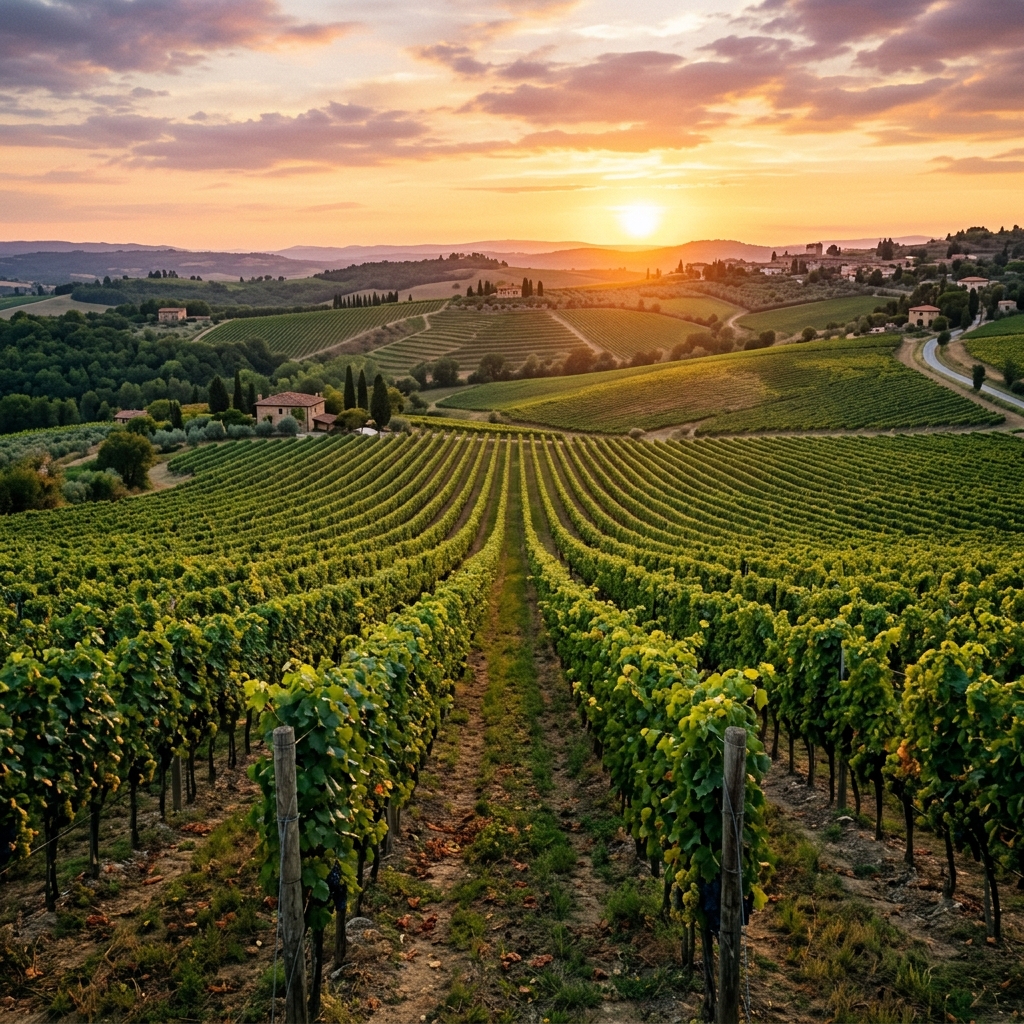
An appellation is a legally protected geographic designation of origin that guarantees the authentic provenance, authorized grape varieties, maximum yields, and vinification standards of a wine.
| Core Purpose | Protect authentic regional style, heritage, and unique terroir from fraud and industrial dilution |
|---|---|
| France (AOC / AOP) | Oldest system in the world (established 1935); over 360 strictly regulated appellations |
| Italy (DOCG / DOC / IGT) | Peak DOCG tier is sealed with a serialized governmental pink paper band on the bottleneck |
| Spain (DOCa / DO / Vino de Pago) | Only 2 regions hold supreme DOCa status: Rioja and Priorat, alongside single-estate Pagos |
| United States (AVA) | American Viticultural Areas delineate geographic boundaries (85%+ grapes), allowing winemaking freedom |
The word “Appellation” (from the French appeler, meaning “to name”) is the cornerstone of European wine culture. It is a legally demarcated geographical territory governed by strict statutory rules ensuring the wine inside the bottle honors the authentic traditions of that specific earth.
When you purchase a bottle marked Bordeaux AOC, Chianti Classico DOCG, or Rioja DOCa, every viticultural step — from vine planting density to barrel aging months — has been audited by state agricultural commissions.
The European Quality Pyramid
DOCG / Grand Cru / VDP.Grosse Lage
The elite echelon. Stringent yield ceilings (35–45 hL/ha), historic hillside vineyards only, and mandatory blind sensory approval before receiving state certification.
AOC / AOP / DOC / DO
The bedrock of Old World viticulture. Establishes communal boundaries, minimum harvest grape ripeness, mandated grape varieties, and cellar oak maturation times.
IGP / IGT / Vino de la Tierra
Regional designations with broader flexibility. Grants winemakers the right to plant international varieties and pioneer modern vinification styles (cradle of Super Tuscans).
Vin de France / Vino d'Italia
Approachable everyday wines without specific terroir claims. Blending across regions is permitted without mandatory vintage or varietal listings.
The 4 Pillars of Appellation Law
1. Geographic Demarcation
Appellation boundaries are drawn strictly along geological soil beds, elevation contours, and solar slope aspects, never along arbitrary political borders.
2. Authorized Grape Varieties
Random grape planting is forbidden. Chablis mandates 100% Chardonnay; Barolo requires 100% Nebbiolo; Rioja centers firmly around Tempranillo.
3. Maximum Yield Caps
Overburdening vines for volume is prohibited. Lower yields via green harvesting concentrate sugars, acids, and polyphenols in every grape.
4. Minimum Aging Periods
Bottles cannot be released commercially before statutory maturation times (e.g., Brunello di Montalcino must age 5 years prior to release).
Comparative National Classification Systems
| Country | Supreme Terroir Tier | Controlled Appellation | Protected Geographic Indication | System Philosophy |
|---|---|---|---|---|
| France | Grand Cru / Premier Cru | AOC / AOP (Appellation d’Origine Contrôlée) | IGP (Indication Géographique Protégée) | The global gold standard. Status applies either to a vineyard parcel (Burgundy) or château (Bordeaux). |
| Italy | DOCG (Denominazione di Origine Controllata e Garantita) | DOC (Denominazione di Origine Controllata) | IGT (Indicazione Geografica Tipica) | State guarantee: DOCG bottles carry serialized governmental pink paper seal bands around the capsule. |
| Spain | DOCa / Vino de Pago | DO (Denominación de Origen) | Vino de la Tierra (VT) | DOCa status awarded only to Rioja and Priorat; strong emphasis on oak aging tiers (Crianza, Reserva, Gran Reserva). |
| Germany | VDP.Grosse Lage (Grand Cru) | Prädikatswein (Kabinett, Spätlese, Auslese) | QbA / Landwein | Historical scale based on grape sugar density (Oechsle), with the elite VDP association classifying top vineyards. |
| United States | Single Vineyard Designate | AVA (American Viticultural Area) | County / Multi-county | AVAs regulate geographic boundaries (85%+ grapes from AVA), providing total freedom regarding grape varieties and oak. |
Iconic Gastronomic Pairings of World Appellations
Chablis AOC & Fresh Oysters
Northern Burgundy · France
Kimmeridgian limestone soils packed with prehistoric fossilized oyster shells impart a briny, saline tension that pairs immaculately with fresh Belon and Marennes-Oléron oysters.
Chianti Classico DOCG & Bistecca
Tuscany · Italy
Sangiovese's vibrant acidity and powdery tannins, sealed with the Black Rooster neckband, were born to slice through the charred richness of grilled Florentine T-bone steak.
Rioja DOCa Reserva & Jamón
Ebro River Valley · Spain
Silky American oak vanilla and dried dill notes elevate the nutty, savory fat of dry-cured Jamón Ibérico de Bellota.
Mosel VDP Riesling & Thai Spices
Mosel Valley · Germany
The residual orchard sweetness and slate minerality of an off-dry Mosel Riesling soothe the fiery burn of ginger, chili, and coconut red curry.
Frequently Asked Questions
What is the difference between the French acronyms AOC and AOP?
They represent the exact same legal status. AOC (Appellation d'Origine Contrôlée) is France's historic national designation, while AOP (Appellation d'Origine Protégée) is the unified pan-European standard adopted by the European Union in 2012. Both variants are legally valid on wine labels.
Why do Italian IGT wines sometimes cost more than elite DOCG bottles?
The IGT (Indicazione Geografica Tipica) classification provides winemakers creative freedom. Within IGT, iconic Super Tuscans (Sassicaia, Tignanello) were born: visionaries broke rigid historic Chianti formulas by introducing French Cabernet Sauvignon and small French oak barriques, yielding legendary world-class wines outside DOCG restrictions.
What does the Spanish status 'Vino de Pago' represent?
Vino de Pago is the absolute apex of the Spanish quality pyramid, awarded not to an entire region, but to a single, specific artisan estate with an exceptional microclimate, an on-site winery, and a multi-decade international pedigree of greatness.
How does knowing an appellation predict what the wine tastes like?
Appellation law strictly defines wine style. If a label reads Chablis AOC, you are 100% guaranteed to drink an unoaked, mineral-driven dry white wine made from Chardonnay without sweet additives or synthetic flavorings.