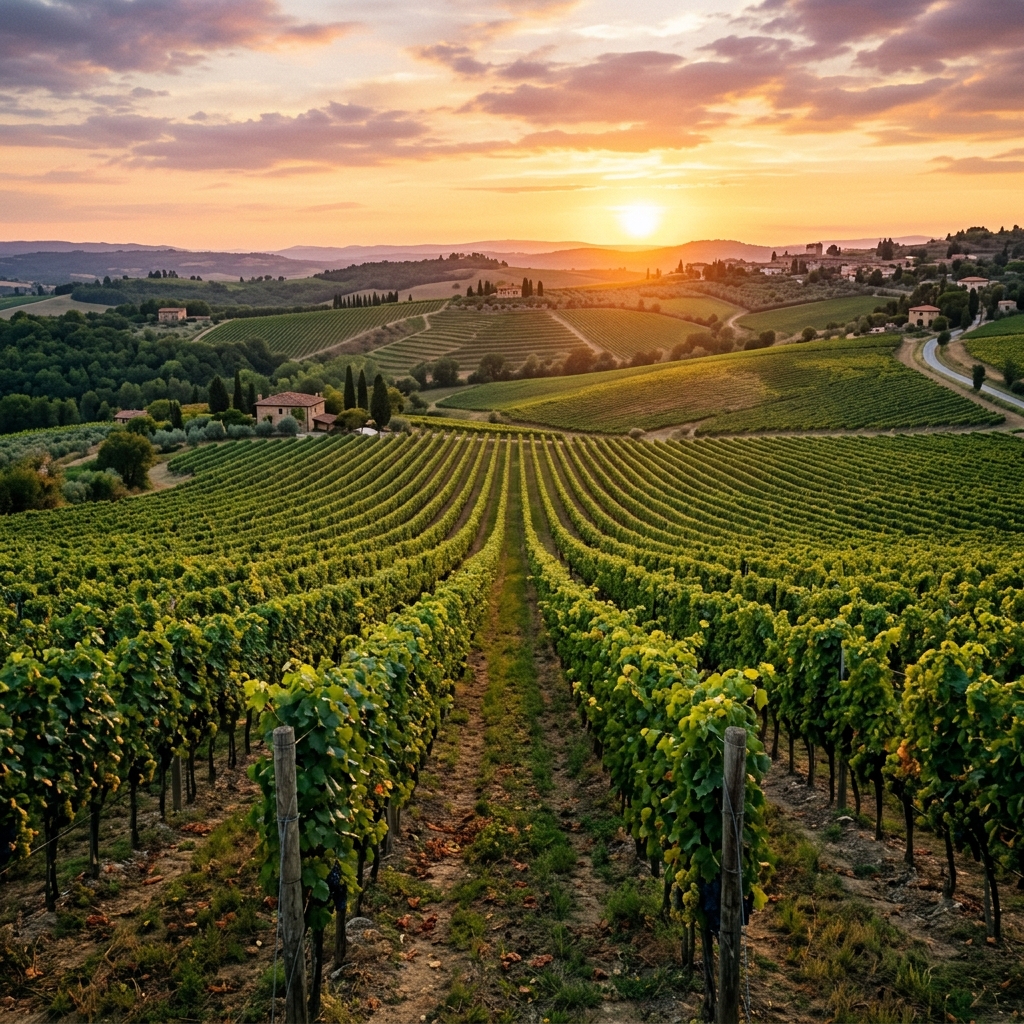
Tuscany (Toscana) is the spiritual soul of Italian fine wine and the kingdom of noble Sangiovese. Set amidst rolling cypress-lined hills, Tuscany produces three world benchmarks: the black-rooster stamped Chianti Classico DOCG, the long-lived monolithic Brunello di Montalcino DOCG, and the revolutionary coastal Super Tuscans of Bolgheri (Sassicaia, Ornellaia, Tignanello).
| Country | ✦ Italy |
|---|---|
| Key Grapes | ✦ Sangiovese ✦ Cabernet Sauvignon ✦ Merlot ✦ Trebbiano ✦ Malvasia |
| Flagship Grape | Sangiovese (known as Brunello in Montalcino, Prugnolo Gentile in Montepulciano) |
| International Grapes | Cabernet Sauvignon, Merlot, Cabernet Franc, Syrah (the backbone of Super Tuscans) |
| Chianti Icon | The Black Rooster (Gallo Nero) — official historical crest of Chianti Classico DOCG |
| Benchmark Longevity | Brunello di Montalcino DOCG — 100% Sangiovese, aged minimum 5 years before release |
| Viticultural Revolution | Super Tuscans (Bolgheri DOC, IGT Toscana) aged in new French barriques |
| Ideal Glassware | Generous tulip-shaped Bordeaux or Sangiovese glass (Glass Guide) |
Tuscany is the romantic heart of Italian viticultural culture. Spanning from the sun-drenched coastal scrub of the Maremma to the misty medieval hilltowns of Chianti and Montalcino, Tuscany harmonizes Renaissance elegance with unbending terroir identity.
The Four Signature Wine Styles of Tuscany
Chianti Classico
Savory Italian soul: sour red cherry, balsamic herbs, crushed violets, terracotta minerality, and vibrant, food-demanding acidity.
Sangiovese Guide →Brunello di Montalcino
Monolithic grandeur: dark macerated plum, leather, cigar humidor, dried rosemary, crushed ironstone, and profound structural depth.
Academy Montalcino →Super Tuscan Icons
Hedonistic brilliance: cassis, Mediterranean macchia, toasted French oak, sweet spice, and polished cashmere tannins (*Sassicaia*, *Ornellaia*).
Cabernet Blend →Vin Santo Dessert
Golden meditation: dried apricots, toasted hazelnuts, honey, amber caramel, and nutty rancio complexity paired traditionally with cantucci.
Dessert Pairing →Terroir & Soils of Tuscany: Galestro Schist, Alberese Limestone & Tyrrhenian Breezes
Key Appellations of Tuscany
| Appellation (DOCG/DOC) | Soils | Primary Grapes | Benchmark Style |
|---|---|---|---|
| Chianti Classico DOCG | Galestro shale & Alberese marl | Sangiovese (min. 80%) | Vibrant red cherry, herbal tension, fine-grained tannins, iconic Gallo Nero. |
| Brunello di Montalcino DOCG | Calcareous clay & stony schists | 100% Sangiovese Grosso | Monumental structure, balsamic depth, leather, requires decades of aging. |
| Vino Nobile di Montepulciano DOCG | Pliocene sand & clay | Sangiovese (Prugnolo) | Softer, rounder, floral violet notes with supple, ripe plum tannins. |
| Bolgheri DOC | Coastal alluvial gravel & clay | Cabernet, Merlot, Syrah | Plush, sun-drenched, opulent Mediterranean Bordeaux blends (Sassicaia). |
| Carmignano DOCG | Calcareous sandstone | Sangiovese & Cabernet (10-20%) | Historic Tuscan-French marriage dating back to the Medici edict of 1716. |
Sommelier Food & Wine Pairings
The searing tartaric acidity, balsamic herbal tension, and firm chalky tannins of Sangiovese make Tuscany Italy’s supreme culinary region:
Bistecca alla Fiorentina
Sangiovese's natural acidity and firm tannins slice through the smoky charcoal crust and intramuscular fat of rare Chianina T-bone beef.
Steak Pairings →Wild Boar Pappardelle Ragù
Rich game ragù and egg ribbon pasta harmonize seamlessly with the dried oregano, rosemary, and sour cherry notes of aged Chianti Riserva.
Pasta & Meat →Aged Pecorino Toscano
Firm sheep's milk Pecorino aged in walnut leaves or ash pairs with the dark Mediterranean cassis and velvety richness of Bolgheri blends.
Cheese & Wine →Cantucci di Prato & Vin Santo
Amber honey, dried apricot, and caramelized almond notes of passito Vin Santo make the ultimate ritual pairing with crisp almond biscotti.
Dessert Pairings →Continue exploring Italian and European wine capitals: compare Tuscan Sangiovese with the Rioja Tempranillos of Spain, France's historic Bordeaux, or test your Italian appellation knowledge in the Wine Academy!
Frequently Asked Questions
What is the difference between Chianti and Chianti Classico?
They are two distinct legal appellations. Chianti Classico DOCG is the ancient, mountainous heartland between Florence and Siena with prized galestro and alberese soils, requiring minimum 80% Sangiovese and strictly barring white grapes. Its bottles bear the iconic Black Rooster (*Gallo Nero*) seal. Generic Chianti DOC encompasses vast surrounding lowland territories with higher permitted yields, crafting lighter, everyday wines.
What sparked the 'Super Tuscan' revolution?
In the 1970s, visionary Tuscan aristocrats (including Marchesi Antinori and Mario Incisa della Rocchetta) rebelled against rigid DOC rules that forced winemakers to dilute Chianti with cheap white Trebbiano grapes. They planted Bordeaux varieties (Cabernet Sauvignon, Merlot) in coastal Bolgheri and aged wines in small French barriques. Masterpieces like Sassicaia and Tignanello originally debuted under the humble designation of 'Table Wine' (*Vino da Tavola*), yet outclassed Europe's finest wines and forged a global cult following.
Why does Brunello di Montalcino age so remarkably well?
Montalcino is a warmer, drier Mediterranean hill oasis in southern Tuscany. Grown on stony galestro schists, the thick-skinned Brunello clone yields monumental levels of anthocyanins, assertive natural acidity, and dense architectural tannins. By law, Brunello must age at least 5 years (with 2+ years in oak casks), allowing it to develop tertiary notes of leather, pipe tobacco, and dried cherry over 30 to 50 years.