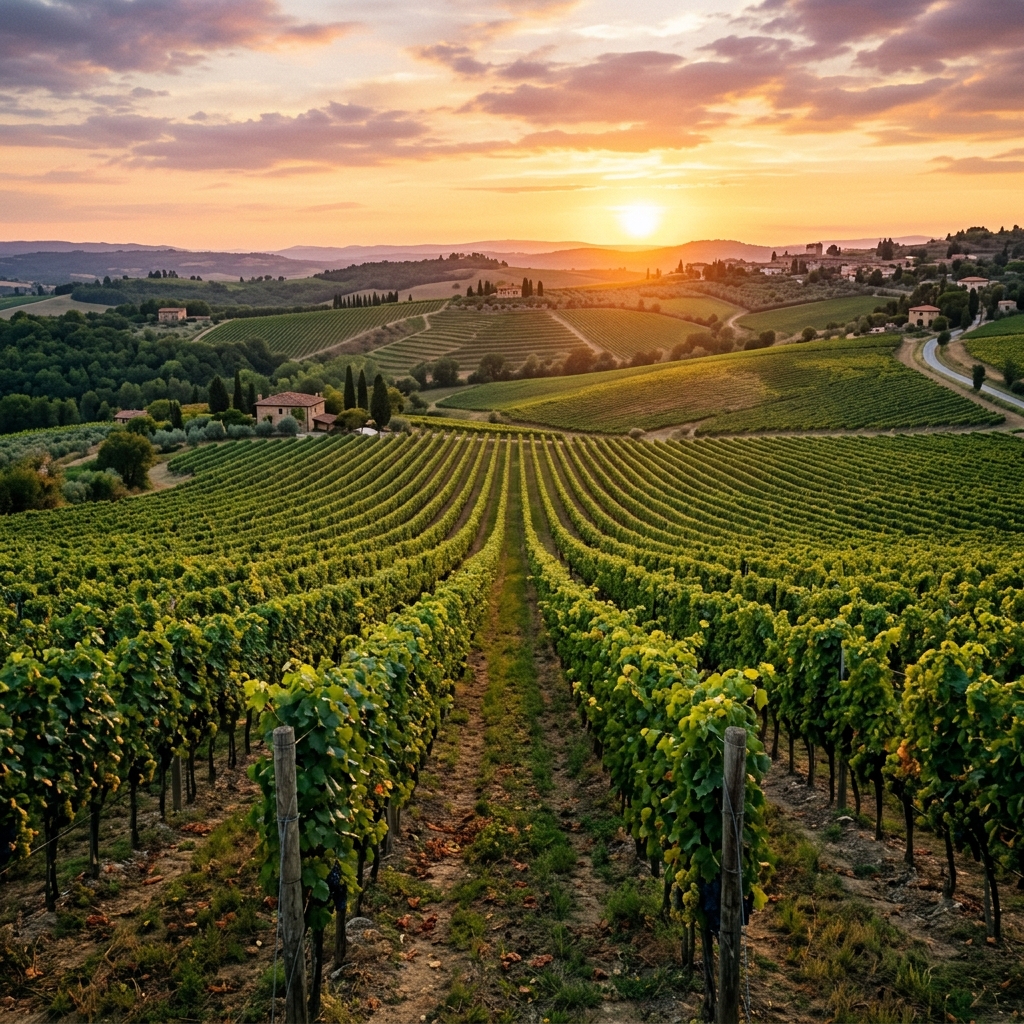
Cabernet Sauvignon is the world’s most renowned red grape variety. Originating in Bordeaux as a natural cross between Cabernet Franc and Sauvignon Blanc, it delivers full-bodied, deeply concentrated wines characterized by blackcurrant (cassis), cedar, graphite, and muscular, age-worthy tannins.
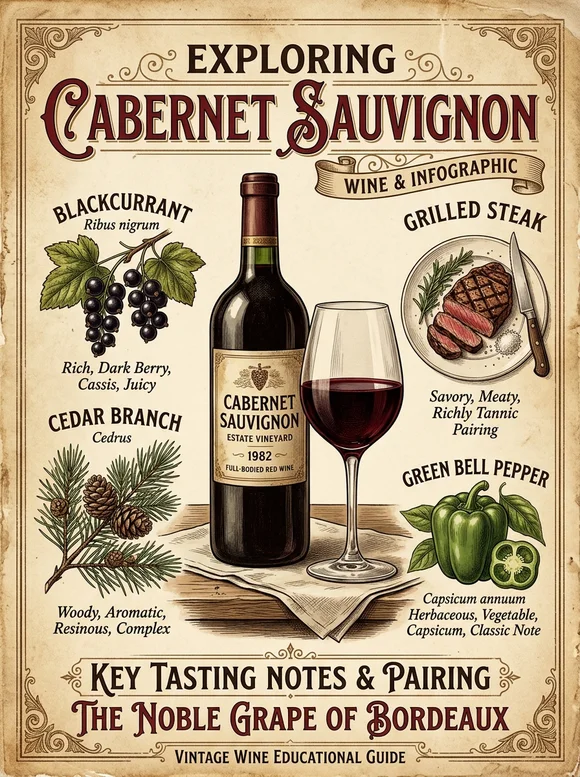
Taste Profile & Sensory Structure
Rating on 1–5 scaleKey Aromas & Flavor Descriptors
| Wine Style | Red Wine |
|---|---|
| Origin / Homeland | Bordeaux, France (Left Bank: Médoc & Graves) |
| Other Names | Cabernet Sauvignon, Bouche, Petit Cabernet |
| Benchmark Regions | Bordeaux Left Bank (Pauillac, Margaux), Napa Valley (California), Coonawarra (Australia) |
| Parentage | Spontaneous 17th-century vineyard cross between Cabernet Franc and Sauvignon Blanc |
| Ideal Glass | Bordeaux Glass (tall chimney to soften firm tannins) |
| Serving Temperature | 16–18 °C (60–64 °F) — decant young bottles for 1 hour |
Cabernet Sauvignon is the undisputed king of the red wine universe. Its ability to adapt to diverse gravelly and volcanic soils while retaining its unmistakable varietal identity has made it the most planted fine wine grape on earth.
Explore Cabernet Sauvignon in Depth
We have organized all essential knowledge into four specialized Academy guides: recognize flavors in the glass, master classic terroirs, pair with fine cuisine, and select the finest bottles.
Frequently Asked Questions
Why is Cabernet Sauvignon so age-worthy?
The thick skins of Cabernet Sauvignon are loaded with tannins, anthocyanins, and acidity. These natural preservatives allow top Bordeaux and Napa Valley wines to evolve gracefully for 20 to 50+ years.
What is the difference between Bordeaux and Napa Cabernet?
Bordeaux Cabernet (Left Bank) is structured, savory, and mineral with notes of cedar, cassis, graphite, and fresh acidity. Napa Valley Cabernet is richer, riper, and more opulent with dark blackberry, mocha, vanilla, and plush warmth.
Why is Cabernet Sauvignon the quintessential steak wine?
The high tannin content binds chemically with the proteins and fats of red meat, clearing the palate and softening the wine’s astringency into a silky texture.
Related Guides
- How to Recognize Cabernet Sauvignon in the GlassAromas, taste scales and sensory profile
- Where Cabernet Sauvignon GrowsGeography, classic terroirs and styles
- Food Pairing with Cabernet SauvignonSommelier culinary pairings and recipes
- What to Buy (Cabernet Sauvignon)Buyer's guide, appellations and producers
- BordeauxThe historic left-bank bastion of Cabernet Sauvignon
- CaliforniaNapa Valley's opulent, sun-drenched Cabernet icons
Last updated: September 19, 2026