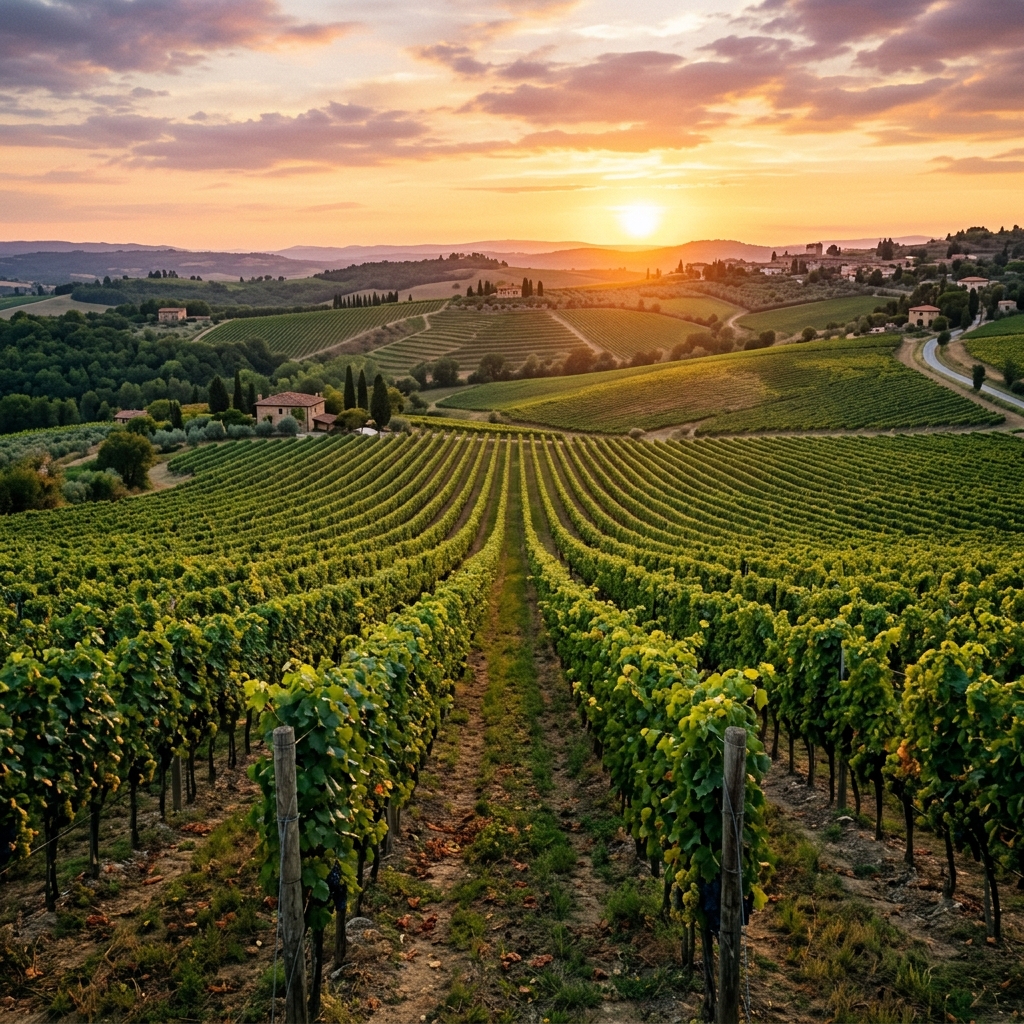
The Mosel is Germany's legendary wine region boasting the world's steepest slate vineyards (up to 68° incline). Here, the Riesling grape produces unmatched wines balancing electric mineral acidity, low alcohol (7.5–11% ABV), and ethereal floral-fruity delicacy.
| Country | ✦ Germany |
|---|---|
| Key Grapes | ✦ riesling ✦ elbling ✦ pinot-blanc ✦ pinot-noir |
| Signature Grape | Riesling — accounts for over 62% of all regional plantings |
| Extreme Terroir | Bremmer Calmont — Europe's steepest vineyard slope with a 68-degree gradient |
| Geology | Blue, grey, and red Devonian slate (Devonschiefer), absorbing and radiating daytime solar heat |
| Classification | VDP (Gutswein, Ortswein, Erste Lage, Grosse Lage / GG) and Prädikate (Kabinett, Spätlese, Auslese, TBA) |
| Wine Style | Low alcohol (7.5–11%), filigree acidity, gunflint, lime, white peach, and petrol notes with bottle age |
| Ideal Glass | Narrow tulip-shaped white wine / Riesling glass (glassware guide) |
Mosel is the cradle and undisputed global benchmark for Riesling. The Mosel River carves serpentine loops through deep gorges of the Rhenish Slate Mountains, creating breath-taking natural amphitheatres where vineyards cling to precipitous cliffs at gradients of up to 68 degrees.
Major Wine Styles of the Mosel
The wine spectrum of the Mosel stretches from ethereal, off-dry wines at 8% ABV to monumental, bone-dry Grosses Gewächs grand crus:
Kabinett & Feinherb
Regional hallmark: soaring lightness, green apple, lime blossom, wet river slate, and mouthwatering refreshing sweetness.
🌿 Riesling Guide →Grosses Gewächs
Monumental dry grand crus: uncompromising architectural structure, gunflint, grapefruit zest, smoky minerals, and 20+ year aging potential.
🍷 GG Glassware →Spätlese & Auslese
Concentrated nectar: ripe white peach, dried apricot, passionfruit, acacia honey, and electric acidity keeping the finish pristine and buoyant.
🍯 Sweet Pairings →Winzersekt
Méthode Traditionnelle from Riesling and Elbling: crunchy perlage, toasted brioche, crisp green apple, citrus zest, and bracing mineral purity.
❄️ Serve at 6–8°C →Terroir and Slate Soils of the Mosel: Devonian Slate, Steep Slopes and River Microclimate
Key Subregions of the Mosel and Their Terroir Profiles
The valley is naturally partitioned into three distinct sections, alongside the cool tributary valleys of the Saar and Ruwer:
| Grape Variety / Subregion | Soils & Microclimate | Style & Riesling Character | Cult Vineyards (Grosse Lage) |
|---|---|---|---|
| Middle Mosel (Mittelmosel) | Blue and grey Devonian slate, warm amphitheatre | Opulent, white peach, apricot, ripe pink grapefruit, flint | Wehlener Sonnenuhr, Bernkasteler Doctor, Piesporter Goldtröpfchen |
| Saar | High wind-swept hills, cold breezes, brittle slate | Steel-like acidity, green apple, wet slate, austere tension | Scharzhofberg, Kanzemer Altenberg (legendary Egon Müller) |
| Ruwer | Narrow forested side valley, cool microclimate | Delicate floral, lemon balm, whitecurrant, weightless purity | Karthäuserhofberg, Kaseler Nies’chen |
| Terrassenmosel | Lower Mosel, narrow rocky terraces | Powerful, dry, spicy, pronounced smoky mineral drive | Bremmer Calmont, Uhlen, Röttgen |
Sommelier Food Pairing Guide
Thanks to its filigree acidity and crystalline residual sugar, Mosel Riesling is celebrated among sommeliers as one of the most food-friendly wines in existence:
Pan-Asian Cuisine
Thai Tom Yum soup, crispy Peking duck, and fragrant spiced noodles find their heat tamed by the delicate sweetness and racy acidity of Riesling Kabinett.
Asian Pairing →Trout & Pikeperch
Pan-seared river trout with lemon butter and herbs or steamed pikeperch are elevated by the linear slate tension of dry Mosel Grosses Gewächs (GG).
Fish Guide →Sausages & Pork Knuckle
Traditional German Sauerkraut and roasted crispy pork knuckle find the perfect foil to richness in the mouthwatering acidity of Spätlese Trocken.
Meat Guide →Roquefort & Strudel
Salty blue cheeses like Roquefort and warm spiced apple strudel compose a regal symphony when paired alongside honeyed Auslese.
Cheese Guide →Continue your journey across Central Europe's legendary terroirs: explore noble Rheingau, sun-drenched Pfalz, or discover the Danube river terraces of Wachau in Austria!
Frequently Asked Questions
What makes Mosel's slate soils unique for Riesling?
Devonian slate (blue, grey, and red) has exceptional heat retention capacity: during the day, the rock slabs absorb the precious northern sunlight, and release that heat back to the vines through cool nights. Vine roots penetrate 10–15 meters deep into slate crevices in search of moisture and minerals, endowing the wine with its signature 'smoky', flinty, and subtly saline mineral finish.
What do the terms Kabinett and Spätlese mean?
These are designations within the German quality wine classification with predicate (Prädikatswein), determined by grape ripeness and sugar level at harvest (measured on the Oechsle scale):
• Kabinett: light, graceful early-harvest wines with low alcohol (7.5–10%) and a delicate tension between residual sweetness and vibrant citrus acidity.
• Spätlese: wine crafted from late-harvest grapes picked 1–2 weeks later. It is richer and denser, brimming with ripe mango, poached pear, and acacia honey, made either dry (Trocken) or off-dry / sweet.
Why do aged Riesling bottles develop a 'petrol' or 'kerosene' aroma?
This is a noble aromatic signature of mature Riesling, caused by the compound TDN (1,1,6-trimethyl-1,2-dihydronaphthalene). It develops naturally during bottle aging from grapes ripened on hot, sun-drenched slate slopes with low yields. In top-quality aged Rieslings, notes of kerosene, beeswax, and flint weave harmoniously with candied citrus peels and preserved ginger.