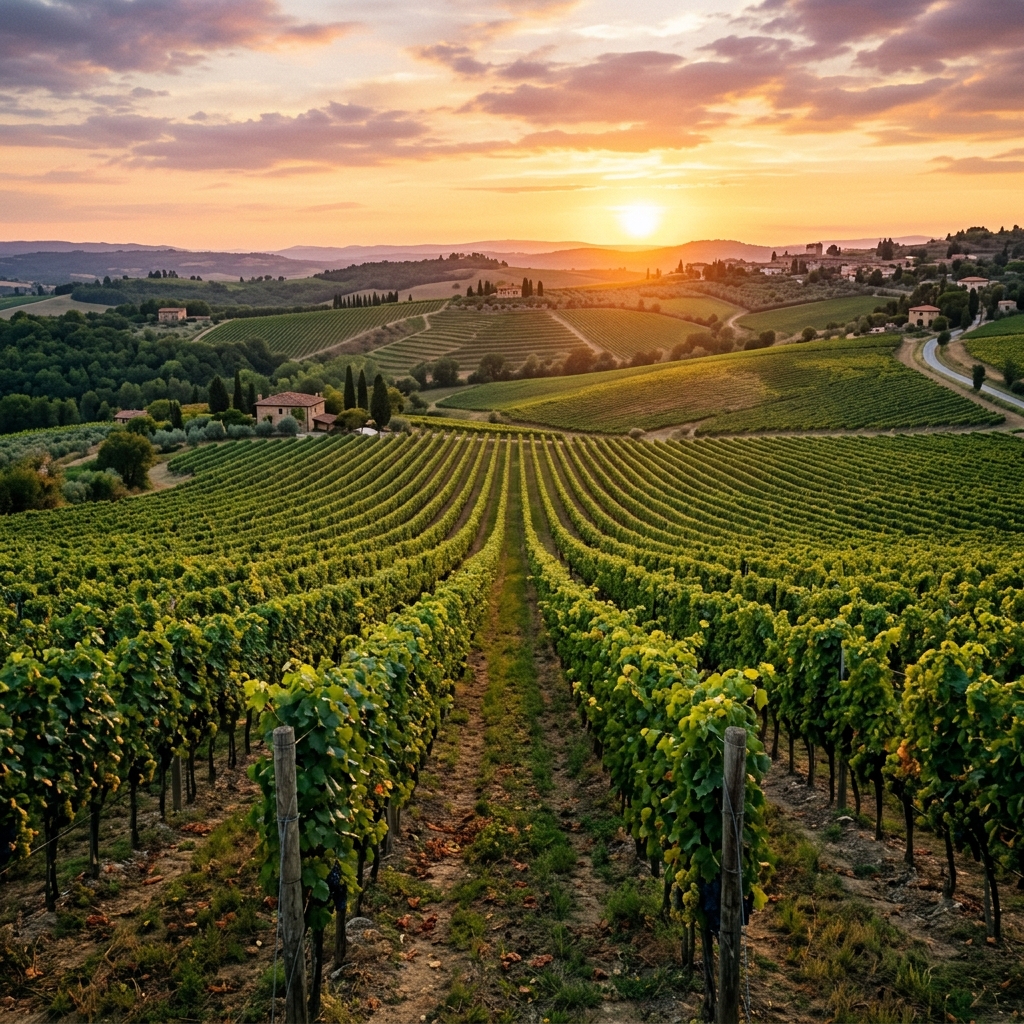
The Rheingau is the aristocratic heartland of German winemaking on the 50th parallel. Here, the Rhine turns westward, forming an ideal south-facing hillside amphitheatre. The Rheingau is the historic birthplace of Spätlese (late harvest) and Kabinett, setting the benchmark for taut mineral dry Rieslings (Grosses Gewächs) and silky Pinot Noir (Spätburgunder).
| Country | ✦ Germany |
|---|---|
| Key Grapes | ✦ riesling ✦ pinot-noir ✦ pinot-blanc ✦ silvaner |
| Signature Grape | Riesling — 78% of plantings; Spätburgunder (Pinot Noir) — 12% |
| Birthplace of Spätlese | Schloss Johannisberg (1775) — accidental discovery of noble rot (Botrytis) and the majesty of late harvesting |
| Monastic Heritage | Kloster Eberbach (1136) — the cradle of European cellar culture and the origin of the term Kabinett |
| Red Enclave | Assmannshausen (Höllenberg) — legendary slate terroir for ruby, silky Spätburgunder |
| Geology | Taunus quartzite on upper ridges, fertile loess and loam on mid-slopes, phyllite slate near the river |
| Ideal Glass | White wine glass or classic Burgundy glass for Spätburgunder (glassware guide) |
The Rheingau is the aristocratic cradle of German viticulture. It was here, within the monastic walls of the Cistercian order and the castles of German princes, that the craftsmanship behind noble Riesling and slate-grown Spätburgunder was honed over a millennium.
Major Wine Styles of the Rheingau
The regional wine portfolio spans structured dry grand crus, legendary late-harvest nectars, and outstanding cool-climate Pinot Noir:
Riesling GG Trocken
Powerful dry Riesling: yellow peach, ripe apricot, pomelo zest, quartzite steel, full volume, and profound textural depth.
👑 Riesling Guide →Schloss Spätlese
Historical benchmark: candied pineapple, crystallized citrus, acacia honey, ripe quince, and balancing noble acidity.
🍯 Sweet Pairings →Spätburgunder
Iconic red enclave: dark sour cherry, lingonberry, smoky slate, toasted almond, refined oak, and silky Grand Cru poise.
🍒 Pinot Noir Guide →Riesling Feinherb
Gastronomic crowd-pleaser: crisp green apple, juicy pink grapefruit, vibrant mineral chime, and supple cushioned acidity.
❄️ Serve at 8–10°C →Terroir and Soils of Rheingau: Rhine Bend, Taunus Quartzite and Loess
Key Wine Communes of the Rheingau and Their Character
From the precipitous crags of Rüdesheim to the monastic vineyards of Kiedrich and Hochheim:
| Commune / Zone | Soil Geology | Dominant Style & Variety | Legendary Vineyards (Grosse Lage) |
|---|---|---|---|
| Rüdesheim | Taunus quartzite, slate | Powerful, steely, mineral Riesling | Berg Schlossberg, Berg Roseneck, Berg Rottland |
| Johannisberg | Loess, loam, quartzite | Elegant, ripe peach, harmonious Riesling | Schloss Johannisberg, Hölle, Klaus |
| Assmannshausen | Dark phyllite slate | Silky, smoky, sour cherry Spätburgunder | Höllenberg (iconic Pinot Noir terroir) |
| Kiedrich | Sericite gneiss, quartzite | Piercingly fresh, crystalline Riesling | Gräfenberg, Turmberg, Wasseros (Weingut Robert Weil) |
| Hochheim am Main | Calcareous loam, loess | Dense, full-bodied, rounded Riesling (historic Hock) | Hölle, Kirchenstück, Domdechaney |
Sommelier Food Pairing Guide
The rich architectural structure and density of Rheingau wines make them stellar companions for fine dining and game dishes:
Roast Duck with Apples
Roast duck with caramelized apples and lingonberry sauce forms the timeless classic culinary pairing for Riesling Spätlese.
Poultry Guide →Salmon & Scallops
Grilled salmon fillet, seared sea scallops, and creamy asparagus risotto shine brilliantly alongside taut dry Riesling GG.
Fish Guide →Venison & Herb-Crusted Lamb
Tender venison loin with juniper berries and juicy rack of lamb harmonize with smoky Assmannshausen Spätburgunder.
Meat Guide →Brie, Munster & Tarte Tatin
Aged bloomy rind cheeses and warm caramelized apple Tarte Tatin create a regal pairing with sweet Auslese and Beerenauslese.
Cheese Guide →Explore other great terroirs of Germany and Austria: contrast Rheingau quartzite with the precipitous slate cliffs of the Mosel, discover warm sun-drenched Pfalz, or travel to the Danube terraces of Wachau!
Frequently Asked Questions
How does Rheingau Riesling differ from Mosel Riesling?
Rheingau Riesling is visibly firmer, denser, more full-bodied, and drier than Mosel Riesling. Benefiting from the expansive solar mirror of the Rhine and fertile loess-loam soils, grapes achieve higher physiological ripeness (12–13.5% ABV vs 8–10% in the Mosel). The aromatic profile is dominated by ripe yellow peach, apricot, pink grapefruit, and austere quartzite minerality.
How was Spätlese accidentally discovered at Schloss Johannisberg?
In autumn 1775, the courier carrying the official harvest permission from the Prince-Bishop of Fulda was delayed by three weeks. The grapes shriveled and developed noble rot (Botrytis cinerea). The monks harvested anyway and were astonished: the wine was extraordinarily luscious, complex, and fragrant, ushering in the golden era of noble late-harvest dessert wines.
What makes red Spätburgunder from Assmannshausen so renowned?
The village of Assmannshausen sits on a steep, rocky bend of the Rhine dominated by dark, heat-absorbing phyllite slate. This unique microclimate traps intense heat, enabling Spätburgunder (Pinot Noir) to yield reds displaying wild sour cherry, lingonberry, woodsmoke, bitter almond, and silky tannins of Grand Cru Burgundy pedigree.