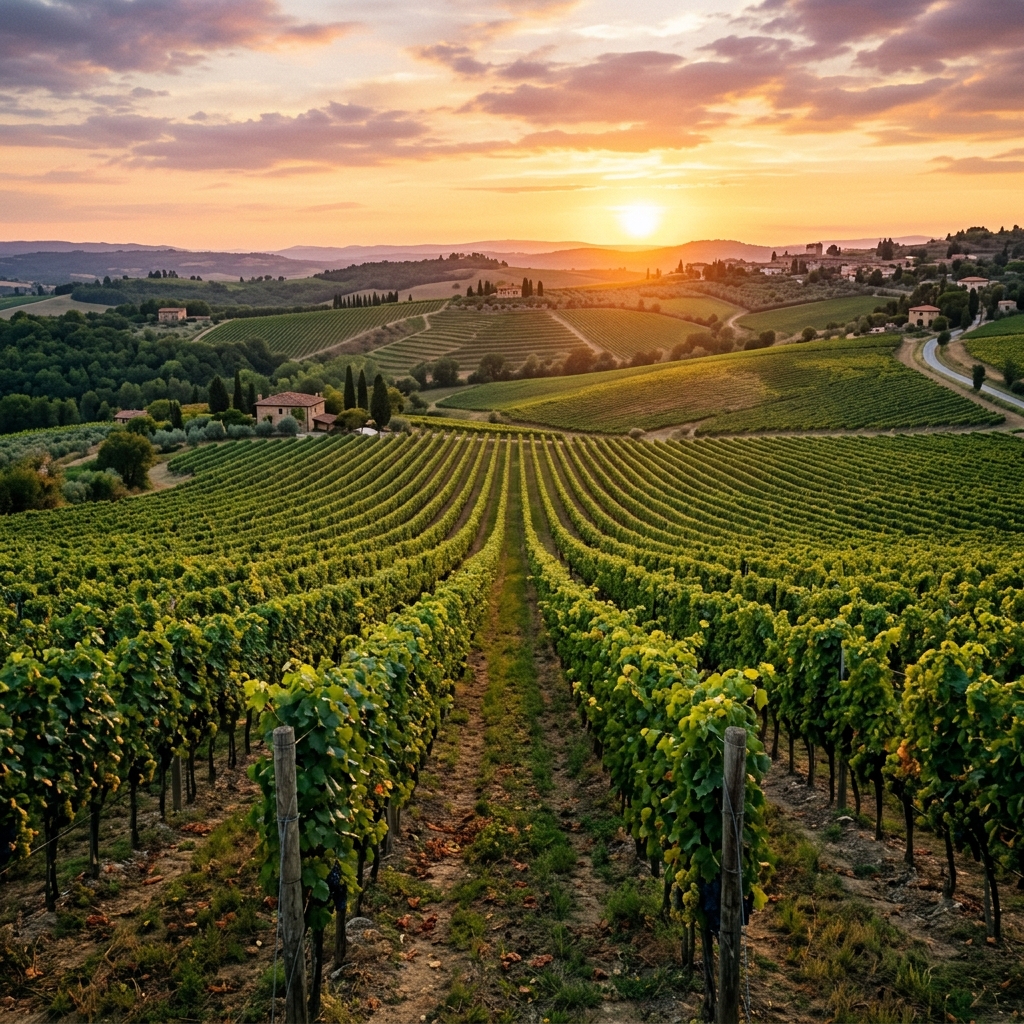
Wachau is the crown jewel of Austrian viticulture and a UNESCO World Heritage site. Along precipitous river terraces of ancient crystalline gneiss rising above the Danube River, Grüner Veltliner and Riesling craft the world's greatest dry white wines with distinctive white pepper, apricot, and flinty mineral personality under the iconic Smaragd tier.
| Country | ✦ Austria |
|---|---|
| Key Grapes | ✦ gruner-veltliner ✦ riesling ✦ pinot-blanc ✦ neuburger |
| Signature Grape | Grüner Veltliner (57%) and Riesling (33%) |
| Global Recognition | UNESCO World Heritage Site (historic cultural landscape of the Wachau Danube Valley) |
| Unique Hierarchy | Vinea Wachau: crisp Steinfeder (≤11.5%), classic Federspiel (11.5–12.5%), monumental Smaragd (≥12.5%) |
| Terroir Geology | Primary crystalline bedrock: Gföhl gneiss (Gföhler Gneis), amphibolite, and mica schist |
| Manual Viticulture | Dry-stone retaining terraces (Trockensteinmauern), crafted without mortar on slopes up to 55° |
| Ideal Glass | Generous white wine glass or Burgundy glass for mature Smaragd (glassware guide) |
The Wachau is an enchanting 33-kilometer stretch of the Danube River valley nestled between the historic abbey towns of Melk and Krems. As Austria’s most celebrated wine enclave, its terraced vineyards framed by medieval ruins and crystal-clear waters elevate Grüner Veltliner to world renown.
Major Wine Styles of the Wachau
The regional wine classification is grounded in the natural ripeness of harvested fruit, mirroring this singular Danube terroir:
Grüner Smaragd
The emerald pinnacle: white pepper, ripe Golden Delicious apple, grapefruit zest, dried tobacco, creamy texture, and deep primary gneiss minerality.
🦎 Grüner Guide →Riesling Smaragd
Monumental dry titan: Wachau vineyard apricot (Marille), white peach, smoky flint, crystalline structure, and 30+ year longevity.
👑 Riesling Guide →Federspiel (Classic)
Crisp falcon-like poise: Granny Smith apple, key lime, freshly cut meadow grass, saline minerality, and superb food versatility.
❄️ Serve at 9–11°C →Steinfeder (Aperitif)
Weightless delicacy: citrus breeze, alpine blossoms, subtle effervescence, and scintillating summer Vienna tavern freshness.
🍷 White Wine Glasses →Terroir and Soils of Wachau: Primary Gföhl Gneiss, Terraces and Danube Influence
Iconic Vineyards (Rieden) of the Wachau
From the cool microclimates of Spitz in the west to the warmth of Dürnstein and Loiben in the east:
| Commune / Village | Soil Profile | Dominant Grape | Legendary Vineyards (Ried) |
|---|---|---|---|
| Dürnstein | Primary gneiss, sand, loess | Riesling & Grüner Veltliner | Kellerberg, Höll, Höhereck (iconic F.X. Pichler) |
| Weißenkirchen | Mica schist, amphibolite | Powerful peppery Grüner & Riesling | Achleiten, Klaus, Weitenberg (Prager, Jamek) |
| Spitz an der Donau | Pure gneiss, cool climate | Crystal-mineral Riesling | Singerriedel, Rotes Tor, Axpoint (Franz Hirtzberger) |
| Unterloiben | Deep loess, warm basin | Opulent tropical Grüner Veltliner | Loibenberg, Schütt, Klosterberg (Emmerich Knoll) |
Sommelier Food Pairing Guide
Dense textural weight, the signature white pepper of Grüner, and the apricot depth of Riesling elevate Wachau wines to gastronomic pinnacles:
Wiener Schnitzel
Crispy golden Wiener Schnitzel made with tender veal and lemon is the immortal gastronomic partner for Grüner Veltliner Federspiel.
Meat Guide →Pikeperch & Danube Trout
Pan-roasted Danube pikeperch fillet on a bed of braised leeks and river trout sing alongside dry, mineral-laced Riesling Smaragd.
Fish Guide →Tafelspitz with Horseradish
Viennese boiled beef Tafelspitz served with apple horseradish and roasted potatoes is elevated by the white pepper bite of Grüner Smaragd.
Meat Guide →Marillenknödel & Hard Cheeses
Traditional curd dumplings filled with iconic Wachau apricots create a regal dialogue alongside mature, complex Riesling Smaragd.
Dessert Guide →After discovering European benchmark classics, explore the New World: high-altitude Malbec from Mendoza, vibrant Carmenère from Chile, or pungent Sauvignon Blanc from Marlborough!
Frequently Asked Questions
What do the categories Steinfeder, Federspiel, and Smaragd signify?
This is the exclusive classification system of the Vinea Wachau Nobilis Districtus codex, guaranteeing 100% dry, unchaptalized natural wines:
• Steinfeder: light, refreshing aperitif wines up to 11.5% ABV (named after the feather grass native to the slopes).
• Federspiel: elegant medium-bodied wines of 11.5–12.5% ABV (named after the falconer's lure).
• Smaragd: the apex of physiological ripeness from 12.5% ABV upwards (named after the emerald green lizard sunning on rock walls). These are monumental late-harvest dry wines capable of cellaring for 20 to 40+ years.
How does Austrian Riesling differ from German Riesling?
Austrian Riesling from the Wachau is almost universally vinified bone dry (Trocken). Benefiting from the warm continental heat currents of the Pannonian basin, it is noticeably denser, more muscular, and structured (13–14% ABV), showcasing ripe apricot (Marille), white peach, passionfruit, and a muscular mineral skeleton of gneiss and amphibolite.
What is the classic aromatic hallmark of Grüner Veltliner?
The signature call of benchmark Grüner Veltliner is the famous 'Pfefferl' — a vibrant note of freshly crushed white pepper — accompanied by crisp radish, green apple, grapefruit, and, in mature Smaragd bottlings, complex savory layers of tobacco leaf and celery root.
Related Guides
- Grüner VeltlinerAustria's flagship pride — pepper, vibrant freshness, and grandeur
- RieslingComparing dry Riesling styles from Austria to Germany
- Wine with Fish and PoultryIdeal culinary matches for Austrian mineral white wines
- Wine Academy TestTest your knowledge on Central Europe's legendary vineyards