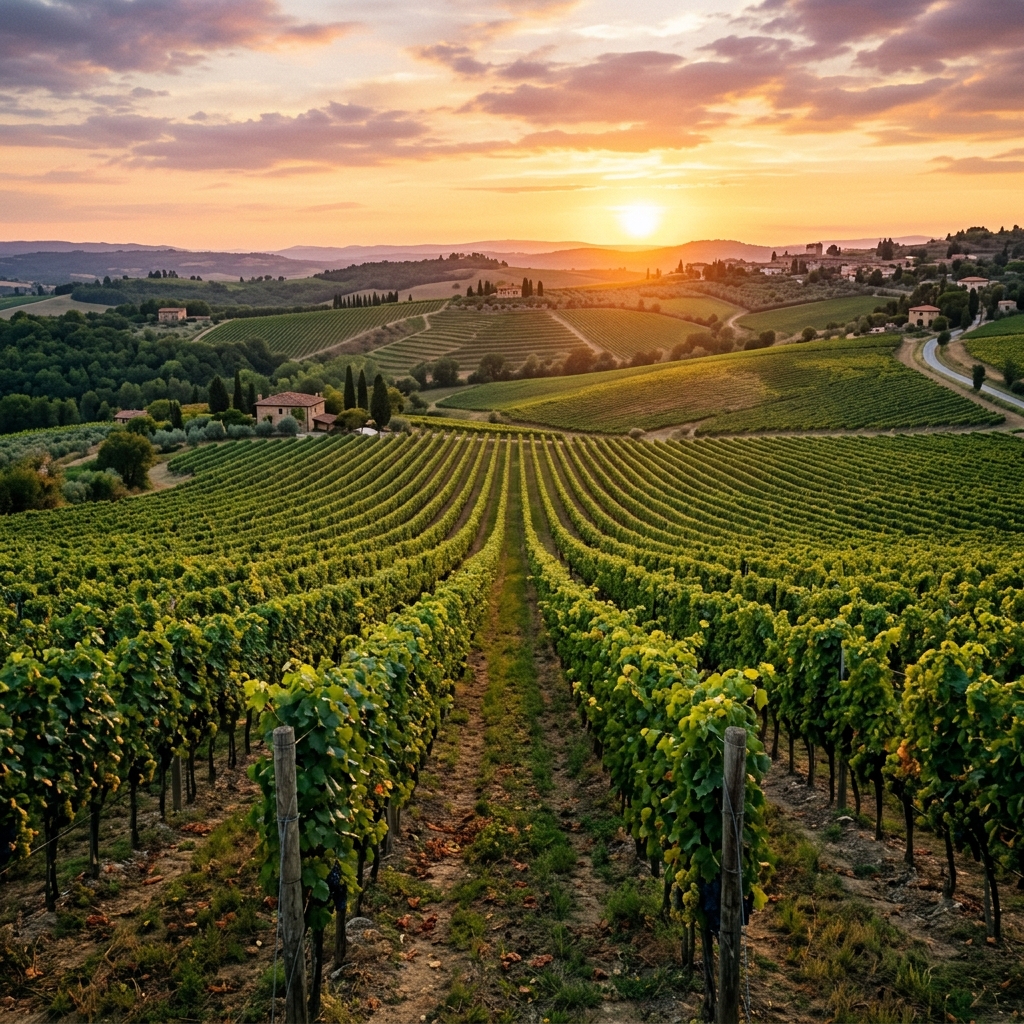
Grüner Veltliner is Austria's celebrated indigenous white grape variety, famed for refreshing notes of crisp green apple, fresh white pepper, lime, and savory green herbs. Ranging from light, zippy everyday sippers to rich, cellar-worthy Smaragd wines from the Wachau, it is one of the world's most versatile gastronomic white wines.
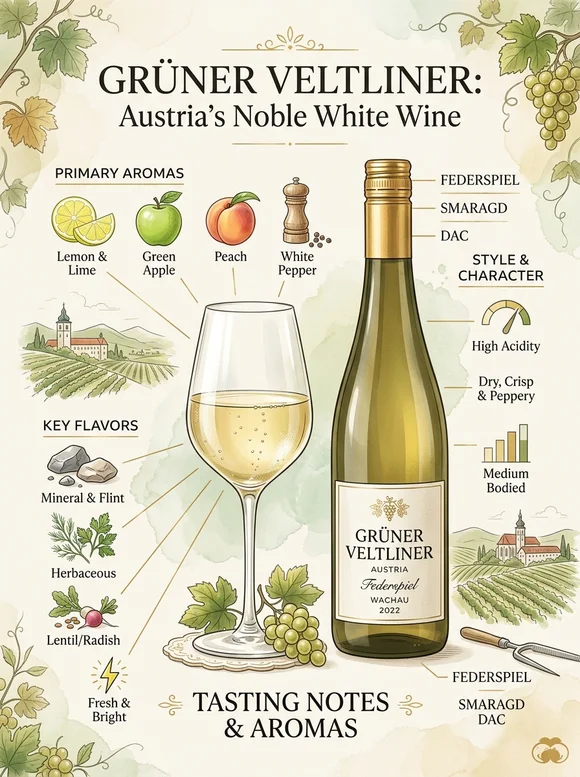
Taste Profile & Sensory Structure
Rating on 1–5 scaleKey Aromas & Flavor Descriptors
| Wine Style | White Wine |
|---|---|
| Origin / Homeland | Lower Austria (Niederösterreich — Wachau, Kremstal, Kamptal) |
| Other Names | Grüner Veltliner, Grüner, Weißgipfler |
| Wachau Quality Tiers | Steinfeder (light, <11.5% ABV), Federspiel (medium, 11.5–12.5%), Smaragd (full-bodied, rich, >12.5% ABV) |
| Trademark Sensory Marker | Cracked white pepper (rotundone compound) — the grape's unmistakable variety signature |
| Serving Temperature | 8–10 °C (46–50 °F) for crisp styles; 10–12 °C for complex Smaragd |
| Aging Potential | Wachau Smaragd and Kamptal Erste Lage comfortably mature for 15–25 years |
Grüner Veltliner is Austria’s viticultural pride and joy. Dynamic, food-friendly, and electrically fresh, it pairs a crisp green-apple core with a spicy crack of freshly ground white pepper and savory herbal minerality that enchants gourmands and sommeliers worldwide.
Explore Grüner Veltliner in Depth
Master Austria's flagship through our four comprehensive Academy guides: sensory analysis, Danube terroirs, culinary magic, and cellar choices.
Frequently Asked Questions
What does 'Smaragd' mean on an Austrian wine label?
Smaragd is the highest classification tier in the Wachau region, named after the emerald-green lizard (Lacerta viridis) that sunbathes on the terraced stone vineyard walls. It signifies dry white wines made from the ripest grapes with a minimum natural alcohol of 12.5% (frequently 13.5–14.5%), delivering immense concentration, creamy texture, and long aging capacity.
Why is Grüner Veltliner considered the ultimate wine for asparagus and artichokes?
Asparagus and artichokes contain chemical compounds (such as asparagusic acid and cynarin) that clash harshly with oak, fruitiness, and high tannins, turning most wines unpleasantly metallic. Grüner Veltliner possesses its own natural savory, herbal, and white pepper undertones that seamlessly harmonize with these vegetable flavors instead of fighting them.
How does Grüner Veltliner differ from Riesling?
Both excel on the steep terraced Danube slopes of Wachau and Kremstal, but their personalities are distinct. Riesling is driven by floral aromatics, stone fruit (peach, apricot), and piercing acidity. Grüner Veltliner is savory, herbaceous, and spiced with white pepper, possessing a broader mid-palate and a touch more phenolic weight.
Related Guides
- How to Recognize Grüner Veltliner in the GlassWhite pepper spice, green apple snap, and blind tasting benchmarks
- Where Grüner Veltliner GrowsWachau, Kamptal, Kremstal, and Weinviertel
- Food Pairing with Grüner VeltlinerWiener Schnitzel, asparagus hollandaise, river fish, and sushi
- What to Buy (Grüner Veltliner)Federspiel vs Smaragd, Erste Lage crus, and top Austrian estates
- AustriaThe historic Danube terraced valley of Wachau, Kamptal, and Burgenland
Last updated: September 19, 2026