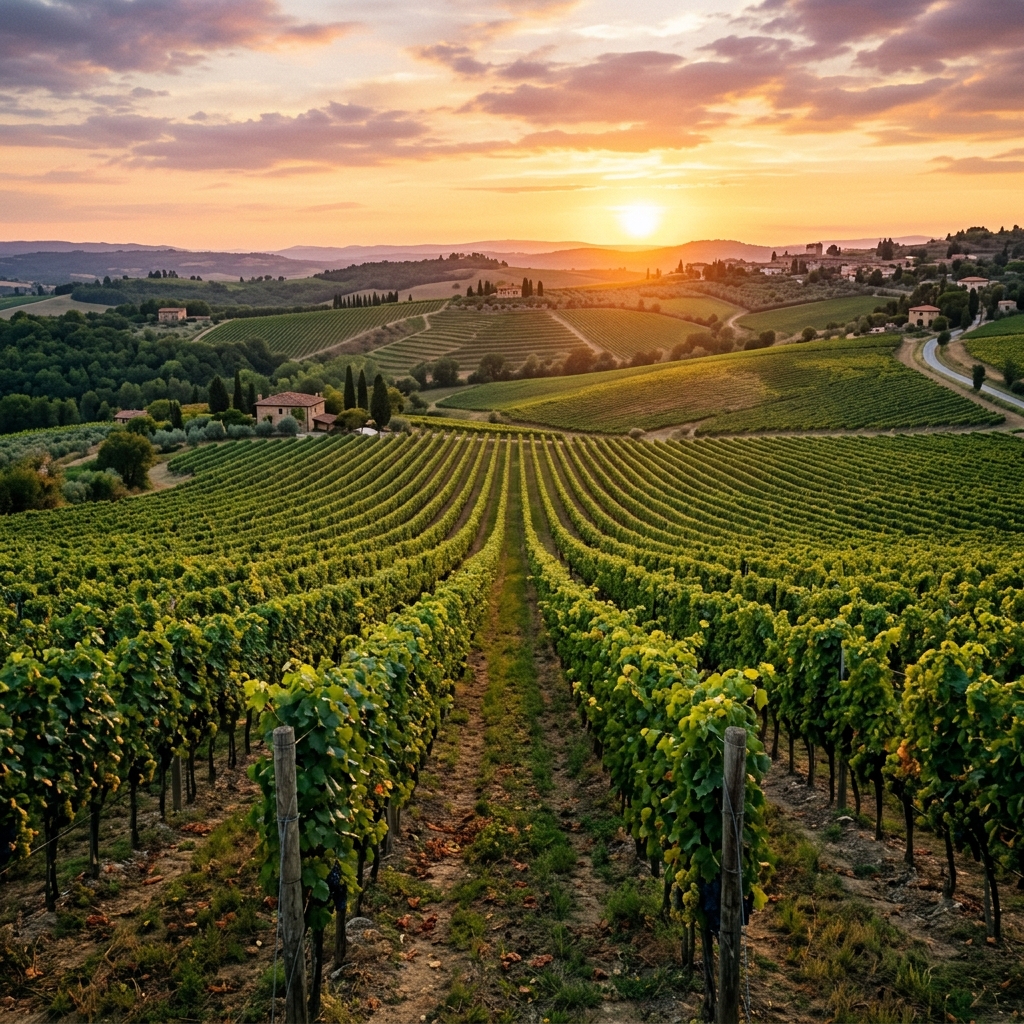
Kuban and the Taman Peninsula form the undisputed powerhouse of Russian winemaking, bordered by the Black Sea and the Sea of Azov. The region encompasses contrasting micro-zones: the historic cradle of traditional-method sparkling wines in Abrau-Durso, rocky limestone terraces in Semigorye and Anapa, volcanic mud knolls on Taman, and maritime slopes in Gelendzhik. It yields both razor-sharp mineral whites and monumental, long-aging reds from ancient autochthonous varieties like Krasnostop Zolotovsky.
| Country | ✦ Russia |
|---|---|
| Key Grapes | ✦ krasnostop-zolotovsky ✦ saperavi ✦ chardonnay ✦ riesling ✦ cabernet-sauvignon |
| Epicenter of Russian Viticulture | Krasnodar Krai accounts for approximately 60% of Russia's total grape harvesting and fine bottled wine production |
| Terroir of Two Seas | Positioned between the Black and Azov Seas, enjoying 280+ days of bright sunshine and constant maritime ventilation |
| Cradle of Classic Bubbles | Imperial Abrau-Durso estate founded in 1870 by decree of Tsar Alexander II; aged in historic mountain cellar galleries |
| Indigenous Star Variety | Krasnostop Zolotovsky — ancient dark-skinned autochthon boasting record polyphenol and velvety tannin concentrations |
| Geomorphological Contrast | From flat sandy spits and active mud volcanoes on Taman to dramatic Caucasus foothill slopes reaching 450 meters elevation |
| Serving Temperature | 8–10 °C for traditional sparkling and crisp Rieslings; 16–18 °C for robust reds (serving temperature guide) |
Kuban and the Taman Peninsula represent the beating heart and undisputed leader of contemporary Russian viticulture. Situated along the celebrated 45th parallel north — sharing the exact latitude with Bordeaux and Piedmont — the region benefits from the dual maritime influence of both the Black Sea and the Sea of Azov. Over the past fifteen years, a major quality revolution has swept through the area: from historic cellar restorations in Abrau-Durso to ultra-modern gravity wineries in Semigorye, Anapa, Novorossiysk, and Taman.
Key Wine Styles of Kuban
Thanks to the vibrant contrast between maritime capes, limestone ridges, and ancient volcanic knolls, Kuban crafts four signature wine pillars:
Classic Sparkling
Cuvées of Chardonnay, Pinot Noir, and Riesling aged 3 to 5 years sur lie: brioche, crisp green apple, white blossoms, and persistent, pinpoint bubbles.
Serve at 8–10°C →Krasnostop Zolotovsky
Dense inky color, cassis, dried prune, eucalyptus, cedar cigar box, and monumental ripe tannins engineered for a quarter-century cellar evolution.
Pair with Red Meat →Riesling & Sauvignon Blanc
Alpine-fresh foothill tension: white peach, blackcurrant bud, lemongrass, flinty sparks, and bright, crystalline mineral acidity.
Pair with Seafood →Cabernet Sauvignon & Syrah
Sheer cliffs directly above the Black Sea: ripe black cherry, bramble, cedarwood, crushed black pepper, and opulent, velvety textures.
Pair with Steak →Terroir and Soils of Kuban: Two Seas, Caucasus Foothills and Mud Volcanoes
Key Subregions of Kuban and Their Grape Varieties
| Grape Variety / Subzone | Soil & Geology Profile | Wine Style & Specialization | Iconic Producers |
|---|---|---|---|
| Abrau-Durso & Novorossiysk | Marl, limestone, fractured shale | Traditional-method sparkling wines, structured Cabernet & Pinot Noir | Abrau-Durso, Chateau Pinot, Myskhako, Sikory Estate |
| Taman Peninsula | Sandy loam, volcanic mud clay, chernozem | Opulent full-bodied whites, juicy Saperavi and bold Krasnostop | Chateau Tamagne (Kuban-Vino), Fanagoria, Golubitskoe Estate |
| Semigorye & Anapa | Rocky limestone, calcic marl | Crisp Riesling, flinty Sauvignon Blanc, elegant Cabernet Franc | Gai-Kodzor, Gunko Winery, Rocky Shore (Skalisty Bereg) |
| Gelendzhik & Krinitsa | Marine marl, rocky loam | Powerful Bordeaux-style red blends, Syrah, barrel-aged Chardonnay | Krinitsa, Usadba Divnomorskoe, Chateau de Talu |
Sommelier Food Pairing Guide
Kuban wines shine alongside fresh Black Sea marine delicacies and robust Caucasian culinary traditions:
Black Sea Mussels & Rapana
Sautéed rapana sea snails or garlicky cream-steamed mussels call for the razor-sharp minerality of an Anapa Riesling or Sauvignon Blanc.
Seafood Pairings →Charcoal Lamb & Shashlyk
Smoky wood-grilled lamb chops and spiced skewers match the intense tannins and dark fruit grip of Krasnostop Zolotovsky or Saperavi.
Meat Pairing Guide →Black Sea Turbot (Kalkan)
Rich, succulent Black Sea turbot or grilled pike-perch harmonizes seamlessly with oak-matured Chardonnay or textured Aligoté.
Fish Pairing Guide →Classic Brut & Cheeses
Regional goat cheeses, mild Adygean wheel cheeses, and red caviar tartlets provide the ultimate introduction with Abrau-Durso Brut.
Appetizer Pairing →Frequently Asked Questions
What makes the terroir of the Taman Peninsula unique?
The Taman Peninsula is cradled between the shallow, warm Sea of Azov and the deep Black Sea. This geographical position creates a moderating maritime climate that completely mitigates harsh winter frosts. A distinct geological marvel is the network of active mud volcanoes (knolls), which enrich sandy-clay topsoils with rare mineral salts, boron, and iodine, giving white and rosé wines an invigorating saline finish.
Why is Abrau-Durso compared to Champagne?
Abrau-Durso sits inside a pristine mountain amphitheater layered with marl and pure limestone, remarkably comparable to the chalky slopes of French Champagne. In the late 19th century, French master winemakers supervised by Prince Lev Golitsyn carved over 5 kilometers of subterranean limestone tunnels, maintaining a steady +14 °C year-round for aging traditional-method sparkling wines (Méthode Champenoise).
What character defines the Krasnostop Zolotovsky grape?
Krasnostop Zolotovsky is an ancient indigenous grape of southern Russia characterized by small berries and thick skins. It concentrates extraordinary levels of ripe tannins and anthocyanins, yielding inky, structured reds layered with dried black plum, sloe berry, leather, graphite, and eucalyptus, capable of evolving gracefully in oak for 20–30+ years.
Related Guides
- Cabernet Sauvignon ProfileExplore the world's king of red grapes thriving on coastal slopes of Gelendzhik and Abrau
- Wine & Grilled Steak PairingWhy structured Krasnostop and spicy Saperavi elevate wood-fired meats and kebabs
- Wine Glass Selection GuideHow glass bowl architecture reveals aromatic depth in powerful southern reds
- Academy Exam Level 1Test your foundational understanding of acidity, tannins, and balance