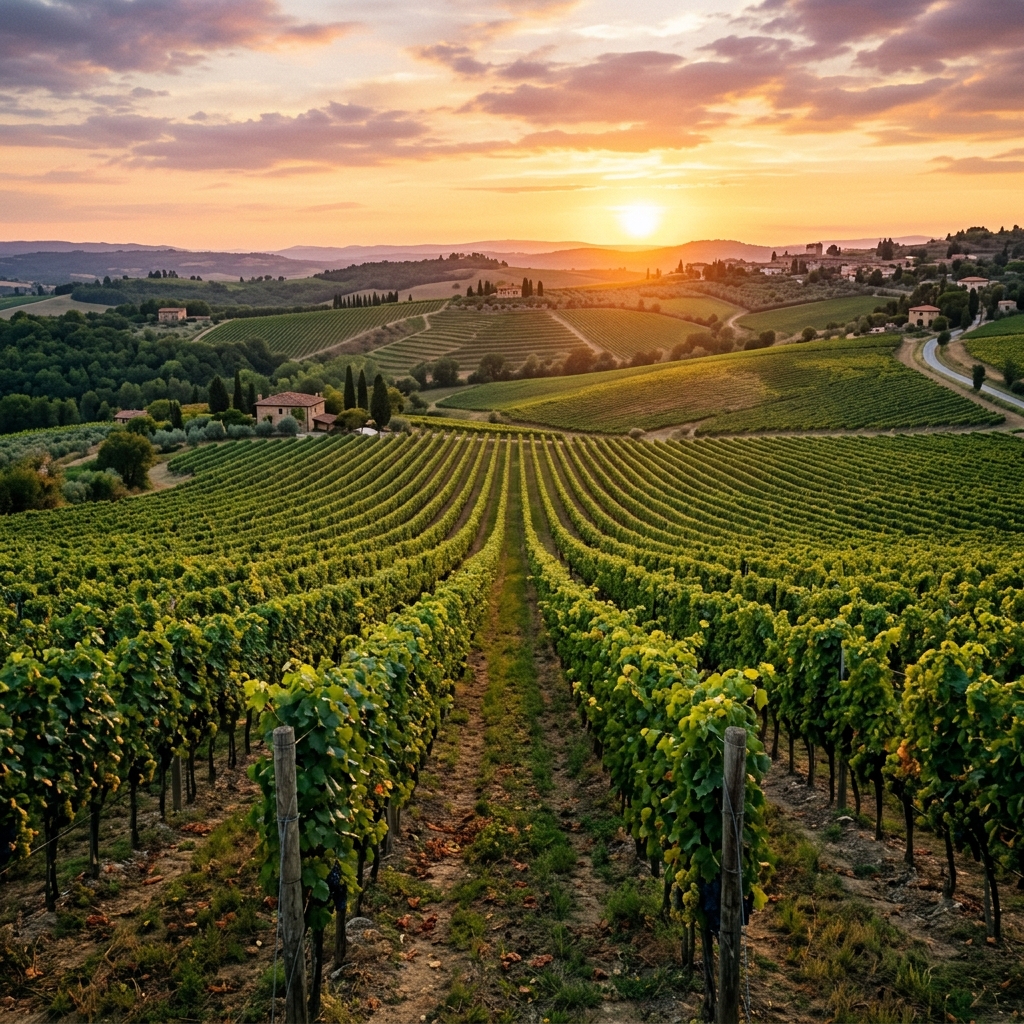
Crimea and Sevastopol represent one of the world's most ancient viticultural cradles, boasting continuous winemaking traditions spanning over 2,500 years. Sevastopol serves as the contemporary engine of fine terroir wine, where porous nummulitic limestone across the Belbek, Kacha, and Chornaya river valleys yields chiseled, mineral-driven Cabernet Franc, Pinot Noir, and Chardonnay. Balaklava excels in pristine traditional-method sparkling wines, while Sudak and the southern coast preserve priceless pre-phylloxera autochthons like Kokur Belyi and Kefesiya.
| Country | ✦ Russia |
|---|---|
| Key Grapes | ✦ cabernet-franc ✦ pinot-noir ✦ chardonnay ✦ riesling ✦ cabernet-sauvignon |
| 2,500 Years of Winemaking | Viticulture flourished continuously since the ancient Greek colony of Tauric Chersonesos and medieval Genoese trading fortresses |
| Nummulitic Limestone of Sevastopol | Prehistoric Tethys Ocean sediment along the Belbek and Kacha river valleys provides piercing acidity and flinty minerality |
| Autochthonous Star — Kokur Belyi | Ancient versatile indigenous variety: crafts crisp dry whites, Pét-Nats, classic-method sparkling, and legendary amber dessert wines |
| Massandra Imperial Heritage | Founded by Prince Lev Golitsyn in 1894; home to the world's largest historic wine collection exceeding 1 million bottles (Guinness World Records) |
| Microclimatic Polarity | From arid, semi-desert slate amphitheaters of Sudak to cool, forested mountain foothills in Bakhchysarai up to 380 meters elevation |
| Serving Temperature | 8–10 °C for sparkling cuvées and mineral Kokur; 16–18 °C for refined Cabernet Franc (serving temperature guide) |
The Crimean Peninsula and Sevastopol form one of Europe’s most storied winemaking frontiers, where vines were cultivated as early as the 6th century BCE by Greek settlers in ancient Chersonesos. Today, the region is experiencing a spectacular renaissance in terroir-driven fine wine: across the noble limestone plateaus of Sevastopol and Bakhchysarai, visionary winemakers craft chiseled wines reminiscent of Burgundy and the Loire, while eastern coastal amphitheaters safeguard rare pre-phylloxera autochthons.
Key Wine Styles of Crimea
The peninsula’s diverse microclimates give rise to four distinct vinous pillars:
Chardonnay & Kokur
Crystalline mineral tension: crisp green apple, fragrant quince, white blossoms, crushed wet stone, and a saline maritime finish.
Pair with Seafood →Cabernet Franc & Pinot Noir
Aristocratic pedigree: red cherry, wild raspberry, violet petals, pencil lead graphite, sweet bell pepper, and fine-grained silky tannins.
Pair with Fine Meat →Classic Brut
Chardonnay and Pinot Blanc matured on lees: freshly baked brioche, lemon zest, toasted almonds, and delicate, persistent mousse.
Serve at 8–10°C →Muscat & Bastardo
Legendary cellar elixirs: dried apricot, tea rose, buckwheat honey, candied figs, and the noble balsamic patina of long oak maturation.
Dessert Pairings →Terroir and Soils of Crimea: Nummulitic Limestone, River Canyons and Southern Shales
Key Subregions of Crimea and Their Grape Varieties
| Grape Variety / Subzone | Soil & Geology Profile | Wine Style & Specialization | Iconic Producers |
|---|---|---|---|
| Belbek Valley (Sevastopol) | Nummulitic limestone, calcareous marl | Chiseled, mineral Cabernet Franc, Pinot Noir, Chardonnay | Perovsky Estate, UPPA Winery (Pavel Shvets), Belbek, Alma Valley |
| Balaklava Valley | Carbonate loam, alluvial gravel | Traditional-method sparkling wines, crisp Riesling | Zolotaia Balka, Esse (Satera), Chateau Vartely |
| Sun Valley & Sudak | Coastal shale, sandstone, volcanic tuff | Autochthonous dry & dessert wines (Kokur, Kefesiya, Black Doctor) | Solnechnaya Dolina, Massandra (Sudak Branch) |
| South Coast of Crimea (YBK) | Dark stony shales, eroded marl | Fortified & sweet Muscats, vintage Madeiras, Ports | Massandra, Magarach Institute |
Sommelier Food Pairing Guide
Crimean fine wines pair naturally with Black Sea marine specialties and regional mountain cuisine:
Red Mullet & Garfish
Pan-fried Black Sea red mullet (barabulka) or grilled needlefish pairs impeccably with the dry, saline edge of Kokur Belyi.
Fish Pairing Guide →Braised Mountain Lamb
Slow-roasted lamb shanks with mountain rosemary or Tatar plov demand a spicy, limestone-grown Cabernet Franc or indigenous Kefesiya.
Meat Pairing Guide →Black Sea Oysters
Plump oysters cultivated in Donuzlav lagoon or Cape Tarkhankut achieve pure equilibrium with razor-sharp Balaklava Extra Brut.
Oyster Pairing Guide →Aged Cheeses & Black Figs
Piquant aged mountain cheeses, fresh ripe figs, and walnut pastries create sublime synergy with legendary White Muscat of Red Stone.
Dessert Pairings →Frequently Asked Questions
What makes the Sevastopol and Belbek Valley terroir so prized?
Sevastopol viticulture sits at the crossroads of the Crimean Mountains and the Black Sea. The soils consist of dense, calcium-rich nummulitic limestone and marl formed from ancient seabeds. Deep river valleys (Belbek, Kacha, Chornaya) act as natural conduits drawing brisk mountain air down to the sea each night. This sharp diurnal temperature swing preserves crystalline acidity in Cabernet Franc, Pinot Noir, and Chardonnay while infusing distinct crushed-chalk minerality.
What aromatic and gustatory profile defines Kokur Belyi?
Kokur Belyi is Crimea's benchmark indigenous white grape, celebrated for exceptional gastronomic versatility. In dry vinification, it yields pale gold wines displaying aromas of white peach, wild meadow herbs, quince, green almond, and a crisp maritime sea-breeze tang. Its vibrant natural acidity and gentle savory finish make it the quintessential partner for Black Sea seafood.
Why is the South Coast of Crimea famous for sweet and fortified wines?
The southern coast is shielded from cold northern winds by the Main Ridge of the Crimean Mountains rising up to 1,500 meters. This fosters a warm, dry Mediterranean microclimate with intense solar radiation. On steep, rocky shale terraces, late-harvest grapes (such as White Muscat and Aleatico) attain natural sugar levels of 28–32° Brix with gentle raisining on the vine, historically producing world-renowned elixirs like White Muscat of Red Stone.
Related Guides
- Pinot Noir Variety ProfileDiscover how Burgundy's noble red performs on Sevastopol's cool limestone plateaus
- Seafood & Wine Pairing GuideBlack Sea mussels, oysters, and the ideal pairing chemistry with crisp Kokur Belyi
- Wine Decanting Art & ScienceWhy young Crimean Cabernet Franc and Saperavi require aerating in crystal carafes
- Academy Exam Level 2Test your knowledge of geology, microclimates, and oak aging nuances