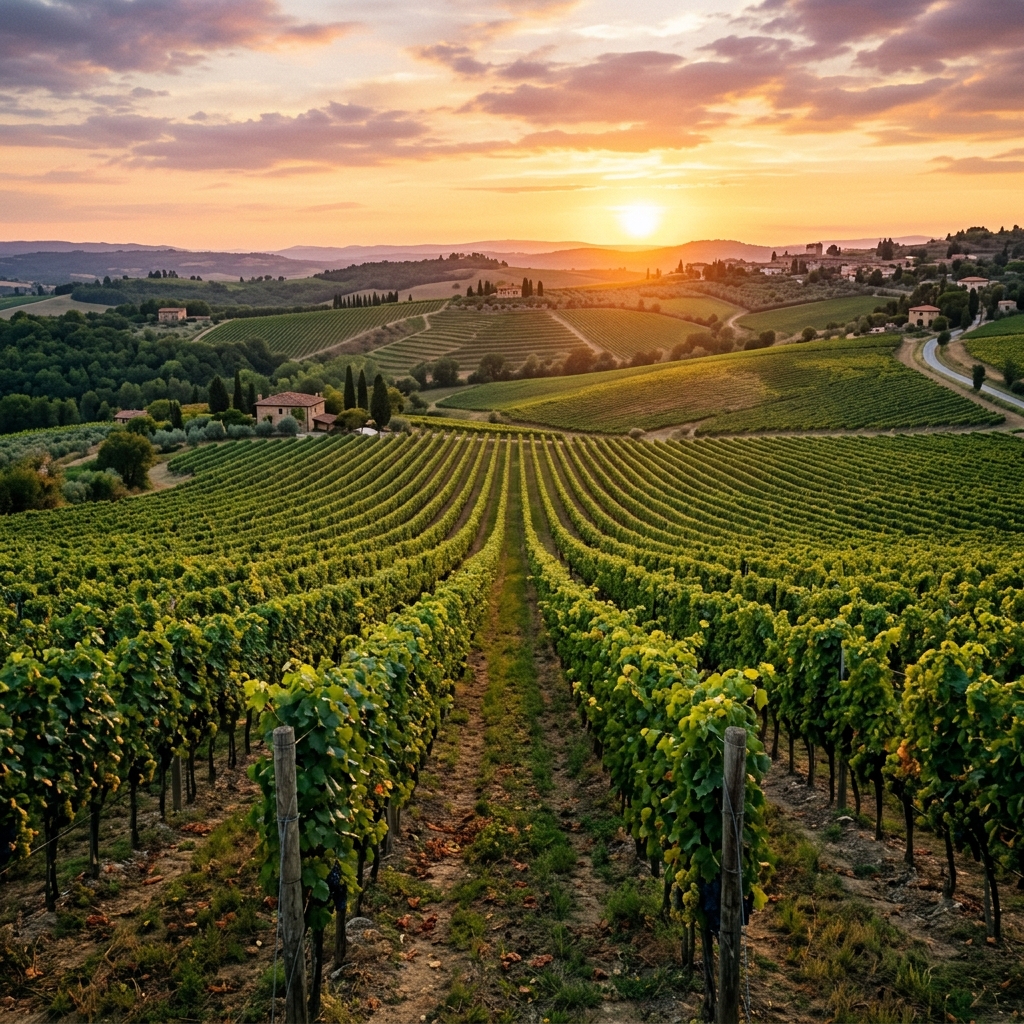
Washington State is the second-largest wine-producing state in the US, located east of the Cascade Mountains in a dramatic rain shadow. Across the vast Columbia Valley, Red Mountain, and Walla Walla Valley, arid semi-desert conditions with extreme diurnal temperature shifts and deep sand-and-gravel Missoula Floods soils produce powerhouses: structured Cabernet Sauvignon, plush Merlot, and savory, Northern-Rhône-rivaling Syrah.
| Country | ✦ USA |
|---|---|
| Key Grapes | ✦ cabernet-sauvignon ✦ merlot ✦ syrah ✦ riesling |
| Cascade Rain Shadow | The towering Cascade Mountains block Pacific storms, giving the eastern valleys 300+ days of sunshine and just 150–200 mm of annual rainfall |
| Missoula Floods Soils | Cataclysmic Ice Age glacial outburst floods deposited thick beds of gravel, sand, and slackwater silt over prehistoric basalt |
| Ungrafted Vines | Deep arid sands and frigid continental winters protect the vineyards from phylloxera; virtually all vines are planted on their own roots |
| Extreme Diurnal Swings | A 20–25 °C drop between scorching daytime highs (+35 °C) and crisp nights preserves juicy, crisp natural acidity |
| Serving Temperature | 16–18 °C for muscular Cabernet Sauvignon and Syrah; 8–10 °C for dry Riesling (serving temperature guide) |
Washington State is the second-largest wine producer in the United States and one of the most compelling terroirs in modern viticulture. While the coastal city of Seattle is famous for perpetual drizzles and evergreen pine forests, traveling east across the Cascade Mountains reveals an entirely different universe: a high-desert plateau drenched in bright desert sun, where irrigation from the Columbia River transforms dusty canyons into world-class vineyards.
Key Wine Styles of Washington
The convergence of desert sunshine, extended daylight, and cold alpine nights creates singular wines:
Washington Terroir: Rain Shadow, Missoula Floods & Basalt
Eastern Washington’s growing conditions are shaped by dramatic tectonic, volcanic, and glacial events:
Main Grape Varieties of Washington
| Grape Variety | Plantings Share | Flavour Profile | Regional Role |
|---|---|---|---|
| Cabernet Sauvignon | ~28% (Red Leader) | Blackcurrant, blackberry liqueur, cedar, pencil lead, dark chocolate, firm tannins | The flagship variety of the state, yielding cellar monuments of immense longevity |
| Merlot | ~18% (Velvet Benchmark) | Black plum, boysenberry, sweet spices, tobacco leaf, refined velvety texture | Celebrated globally for rescuing Merlot’s reputation with incredible concentration |
| Syrah | ~12% (Cult Superstar) | Smoked meat, black olive, wild bramble, ground pepper, graphite, violets | Produces critically revered bottlings that rival the finest crus of Hermitage |
| Riesling | ~16% (White Pioneer) | Lime zest, white peach, green apple, white flowers, vibrant mineral tension | Washington is the undisputed capital of premium Riesling in North America |
Sommelier Food Pairing Guide
The bold, structured profile of Washington wines makes them exceptional partners for hearty meats and charred grill specialties:
Prime NY Strip Steak & Red Mountain Cabernet
The muscular tannins and deep cassis fruit of Red Mountain Cabernet bind seamlessly with the rich marbling and charred crust of a prime grilled steak.
Steak Pairing Guide →Smoked Beef Brisket & Walla Walla Syrah
The savory bacon fat, tapenade, and black pepper notes of Walla Walla Syrah mirror the woodsmoke and crust of slow-smoked barbecue brisket.
Meat Pairing Guide →Roast Duck with Blackberry Reduction
Lush black plum and cocoa notes in Columbia Valley Merlot envelop roasted duck, while lively natural acidity balances the sweet berry sauce.
Poultry & Game →Thai Pad Thai & Spicy Stir-Fries
The electric lime acidity and subtle sweetness of Washington dry Riesling cut through tamarind spice, fresh red chilies, and crushed peanuts.
Spicy Food Pairing →Continue exploring the American Northwest: head south to the cool-climate vineyards of Oregon, explore the sunny valleys of California, or test your knowledge in the Wine Academy Level 2!
Frequently Asked Questions
How do Washington wines differ from California wines?
While California’s leading regions enjoy a coastal Mediterranean climate, eastern Washington is an arid inland high-desert with a harsh continental regime. Positioned at 46°–47° N latitude, Washington receives up to two extra hours of sunlight during summer days, followed by rapid nighttime temperature drops. Consequently, Washington reds balance the ripe, exuberant sweet fruit of the New World with the vibrant, food-friendly acidity and firm European structural spine.
What were the Missoula Floods and how did they affect wine?
At the end of the last Ice Age (15,000 to 13,000 years ago), an enormous glacial dam at Lake Missoula repeatedly ruptured, unleashing apocalyptic walls of water hundreds of feet high across the Columbia River basin. These surges laid down deep, layered terraces of free-draining sand, gravel, and loess. This loose, sandy foundation prevents the phylloxera aphid from surviving, allowing vignerons to cultivate ungrafted European vines.
What makes Red Mountain and Walla Walla world-famous?
Red Mountain is Washington's smallest, hottest AVA, renowned for southwest-facing slopes that produce profoundly dark, brooding, high-tannin Cabernet Sauvignon. Walla Walla Valley, nestled at the foot of the Blue Mountains, features the celebrated 'Rocks District'—ancient cobblestone riverbeds that produce world-class Syrah displaying gamey, savory notes of smoked bacon, kalamata olives, black pepper, and violets reminiscent of Côte-Rôtie.
Related Guides
- Oregon RegionContrast cool-climate Willamette Pinot Noir with Washington's muscular desert reds
- Cabernet Sauvignon GuideLearn why Columbia Valley Cabernet is ranked among the finest in North America
- Syrah (Shiraz) GuideExplore why Walla Walla Syrah rivals the greatest Northern Rhône benchmarks
- Academy Exam (Level 2)Test your knowledge on American Viticultural Areas (AVAs) and Washington wine styles