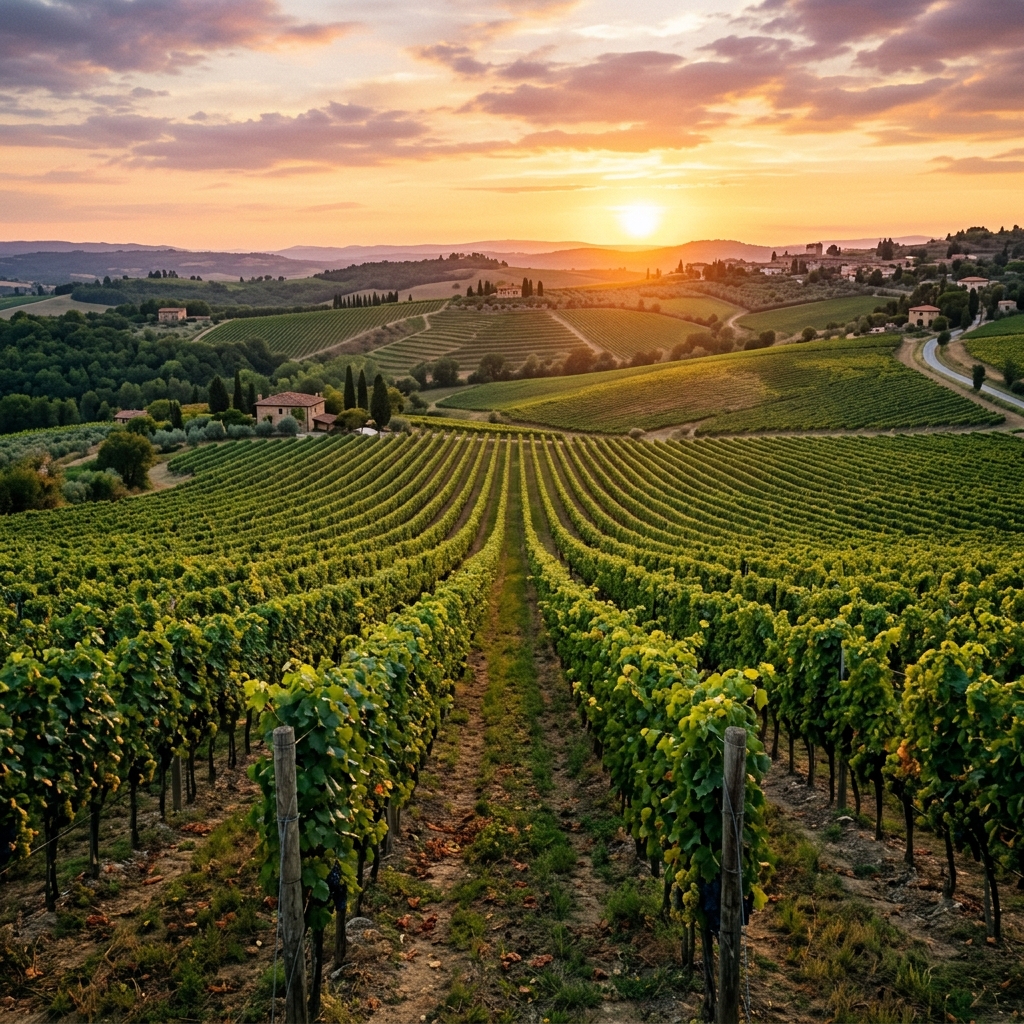
Oregon is widely hailed as the 'Burgundy of the New World', anchoring the Pacific Northwest viticultural scene. Within the celebrated Willamette Valley, framed between the Coast Range and Cascade Mountains, cooling Pacific gusts funneling through the Van Duzer Corridor and ancient volcanic Jory soils produce world-class Pinot Noir bursting with red cherry, forest floor, and black truffle, alongside chiseled, mineral-driven Chardonnays.
| Country | ✦ USA |
|---|---|
| Key Grapes | ✦ pinot-noir ✦ chardonnay ✦ pinot-gris ✦ syrah |
| The 45th Parallel | Occupies the exact same latitude as Burgundy and Bordeaux, benefiting from prolonged summer daylight hours and crisp autumns |
| Volcanic Jory Soils | Iron-rich, red volcanic clay (Jory series) formed from weathered Columbia River basalts yields silky, perfumed red-fruited Pinot Noir |
| Van Duzer Cooling Effect | A low gap in the Coast Range channels icy oceanic breezes every evening, plummeting temperatures and preserving vibrant acidity |
| The 1979 Paris Triumph | Eyrie Vineyards 1975 South Block Pinot Noir placed second in the Gault-Millau Wine Olympiad, shocking Burgundy's elite |
| Serving Temperature | 14–16 °C for fine Oregon Pinot Noir; 10–12 °C for mineral Chardonnay (serving temperature guide) |
Oregon is the undisputed sanctuary of boutique, artisan, and terroir-obsessed winemaking in the United States. Rejecting industrial scale and high-alcohol extraction, the state’s pioneer vignerons committed to capturing the fleeting, haunting nuances of cool-climate viticulture. The Willamette Valley, cradled between the coastal rainforests and snow-capped Cascade volcanoes, is globally revered as one of the elite homelands of Pinot Noir.
Key Wine Styles of Oregon
The region’s climate produces wines defined by electric tension, transparency, and mineral resonance:
Oregon Terroir: Volcanic Jory Soils & Oceanic Breezes
The Willamette Valley’s viticultural magic stems from a compelling clash of ancient geology and Pacific meteorological forces:
Main Grape Varieties of Oregon
| Grape Variety | Plantings Share | Flavour Profile | Regional Role |
|---|---|---|---|
| Pinot Noir | ~60% (Reigning King) | Red cherry, cranberry, forest floor, black truffle, clove, silky tannins | The soul of Oregon, responsible for placing the state on the global fine-wine map |
| Chardonnay | ~12% (Rising Benchmark) | Green apple, citrus oils, wet river stones, roasted hazelnut, electric salinity | Rapidly ascending as Oregon’s second superstar, competing with top Burgundies |
| Pinot Gris | ~14% (Pioneer White) | Ripe Bartlett pear, white peach, melon, lime zest, textural richness | Introduced by pioneer David Lett in the 1960s; an approachable local favourite |
| Syrah | ~5% (Southern Power) | Blackberry, smoked meat, cracked white pepper, graphite, fine chewy tannins | Excels in the sun-drenched, high-elevation granite soils of the Rogue Valley |
Sommelier Food Pairing Guide
The farm-to-table ethos of the Pacific Northwest creates natural gastronomic harmony with local wines:
Cedar Plank Wild Pacific Salmon
The quintessential Pacific Northwest pairing: silky tannins and bright berry acidity in Pinot Noir effortlessly cut through rich, smoky wild king salmon.
Fish Pairing Guide →Pan-Seared Duck Breast with Wild Chanterelles
The earthy woodland undertones of mature Pinot Noir echo the forest flavours of fresh local chanterelles and tender seared duck breast.
Meat Pairing Guide →Steamed Dungeness Crab & Drawn Butter
Sweet, delicate fresh crab dipped in melted clarified butter finds its ideal foil in Oregon Chardonnay's laser-focused lemon purity and mineral spine.
Seafood Guide →Rogue River Blue Cheese & Pinot Gris
Winner of the World Cheese Awards, this pear-spirit-soaked artisan blue cheese finds perfection alongside the stone fruit texture of dry Oregon Pinot Gris.
Cheese Pairing Guide →Expand your exploration of American terroirs: cross the northern border into the sunny desert basins of Washington State, discover the historic icons of California, or test your skills in the Wine Academy Level 2!
Frequently Asked Questions
Why is the Willamette Valley compared to Burgundy?
The Willamette Valley shares Burgundy's optimal 45th parallel latitude, marginal cool-climate conditions, and a prolonged ripening season. Warm summer days are offset by chilly Pacific evenings, allowing Pinot Noir and Chardonnay to ripen with exceptional physiological complexity while maintaining thrilling natural acidity, savoury earthy depth, and restraint, distinct from California's sun-baked styles.
What is the difference between Jory and Willakenzie soils?
In Oregon, soil type dictates the structural personality of Pinot Noir: Jory soils (Dundee Hills) are ancient, iron-rich volcanic basalts that produce ethereal, red-fruited wines laden with wild strawberry, cherry, rose petals, and seamless, silky tannins. Conversely, Willakenzie soils (Yamhill-Carlton, Ribbon Ridge) are marine sedimentary sandstones yielding darker, more muscular wines characterized by blackberry, damp earth, cedar, and firm tannic grip.
How does the Van Duzer Corridor shape Oregon viticulture?
The Van Duzer Corridor is a topographical pass in the Oregon Coast Range. As the inland valley heats up in mid-afternoon, it pulls cold maritime air off the Pacific Ocean through this funnel. This rapid late-afternoon drop of 15–20 °C thickens grape skins (adding colour and fine structural tannins) while dramatically halting sugar spikes, cementing Oregon's benchmark balance and fresh acidity.
Related Guides
- Burgundy RegionExplore the French benchmark of Pinot Noir and Chardonnay alongside Oregon's expression
- Pinot Noir GuideDetailed breakdown of the world's most capricious and elegant red variety
- Chardonnay GuideDiscover why cool-climate Willamette Chardonnay is receiving rapturous global acclaim
- Academy Exam (Level 2)Test your knowledge on Pacific Northwest terroirs and US American Viticultural Areas (AVAs)