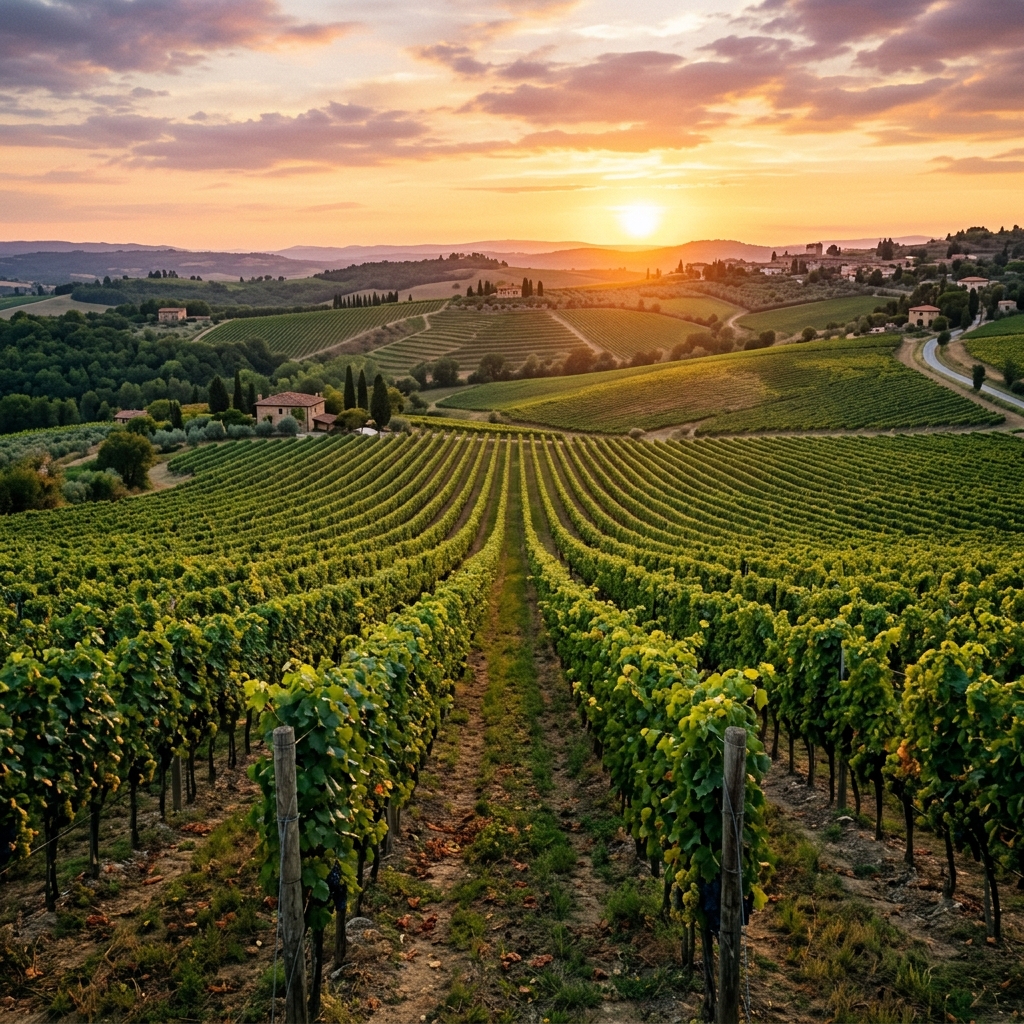
Ribera del Duero DO is Spain's elite high-altitude wine region on the Castilian plateau, where Tempranillo (locally Tinto Fino) under 20°C diurnal swings produces powerful, dark ruby, age-worthy wines (including legendary Vega Sicilia).
| Country | ✦ Spain |
|---|---|
| Key Grapes | ✦ tempranillo ✦ tinto-fino ✦ cabernet-sauvignon ✦ merlot ✦ albillo-mayor ✦ garnacha |
| Paramount Elite | Home to Spain's most iconic cult collectors' wines: Vega Sicilia Único and Dominio de Pingus |
| Core Native Clone | Tinto Fino / Tinta del País (small-berried, thick-skinned Tempranillo adaptation) |
| Extreme Altitude | Vineyards sit at 750–900+ meters on the Meseta plateau with day/night temperature swings of up to 20 °C |
| French Oak Affinity | Unlike Rioja's American oak tradition, Ribera favors French barriques (black fruits, espresso, graphite, spice) |
| Serving & Decanting | 16–18 °C in an ample Bordeaux glass with 45+ minutes of aeration (serving guide) |
Ribera del Duero DO is the epicenter of muscular power, uncompromising concentration, and elite modern winemaking in Spain. Located along the Duero River on Castile-León’s high-altitude plateau (750–900+ meters above sea level), this region challenged Rioja’s historic hegemony and gave the world peerless icons — from legendary Vega Sicilia to the cult garage masterpiece Pingus.
Styles & Hierarchical Prestige in Ribera
In Ribera del Duero, Tinto Fino achieves unrivaled extraction, opacity, and structural depth:
Extreme Terroir of the Meseta Plateau (850+ m)
The distinctive sensory profile of Ribera wines is forged by harsh climatic conditions:
Ribera del Duero vs Rioja: Clash of the Titans
| Feature | Ribera del Duero | Rioja |
|---|---|---|
| Terroir Elevation | 750–950 meters (extreme continental plateau) | 350–650 meters (Ebro River valley) |
| Grape & Clones | 100% Tinto Fino (small thick-skinned berry) | Tempranillo + Garnacha + Graciano |
| Predominant Oak | French oak barriques (cedar, graphite, coffee) | American oak barrels (vanilla, coconut, dill) |
| Color & Density | Opaque black-ruby, dense core | Translucent ruby with brick-garnet rim |
| Aromatic Profile | Blackberry, blueberry, espresso, graphite | Red cherry, leather, tobacco leaf, vanilla |
| Signature Pairing | Chuletón steak, roast suckling pig (Cochinillo) | Vine-smoked lamb cutlets, Jamón Ibérico |
Sommelier Food Pairing Guide
Ribera’s muscular tannins and succulent acidity call for hearty meat dishes and mature cheeses:
With Roast Suckling Pig (Cochinillo)
Castilian crisp-skinned Cochinillo Asado is the ultimate regional match for an aged Ribera Reserva.
Meat Guide →With Chuletón Ribeye on Charcoal
Chuletón de Buey: Tinto Fino's authoritative tannins seamlessly dissolve into marbled beef fibers.
Steak Guide →With Aged Queso Castellano
Aged sheep's milk cheese highlights the cedar, graphite, and toasted spice notes of French oak barriques.
Cheese Guide →With Morcilla de Burgos & Game
Spiced blood sausage with rice (Morcilla de Burgos) creates savory magic paired with vibrant young Crianza.
Tapas Guide →Continue exploring Spain: discover mineral-rich Priorat, Atlantic-cooled Galicia, or take your test in Level 2 Wine Academy!
Frequently Asked Questions
How does Ribera del Duero differ from Rioja?
While both regions champion Tempranillo, their expressions are contrasting. Rioja is celebrated for red-fruit elegance, savory tobacco, and sweet vanilla from American oak. Ribera del Duero lies higher in the mountains (750–950 m) — resulting in wines that are considerably darker, denser, packed with black fruit, espresso, and graphite, aged predominantly in French oak.
What makes cult icon Vega Sicilia Único so legendary?
Vega Sicilia Único is Spain's historic benchmark estate, established in 1864. Único is aged between 10 and 15 years in oak and bottle before release. Blending 85–90% Tinto Fino with Cabernet Sauvignon, it displays monumental concentration and cellar development extending 50–70+ years.
What exactly is the Tinto Fino clone?
Tinto Fino (also called Tinta del País) is a regional clonal adaptation of Tempranillo evolved over centuries to endure Ribera's fierce continental extremes. Under scorching midday heat and chilling night freezes, berries developed extraordinarily thick skins loaded with ripe tannins and anthocyanins.