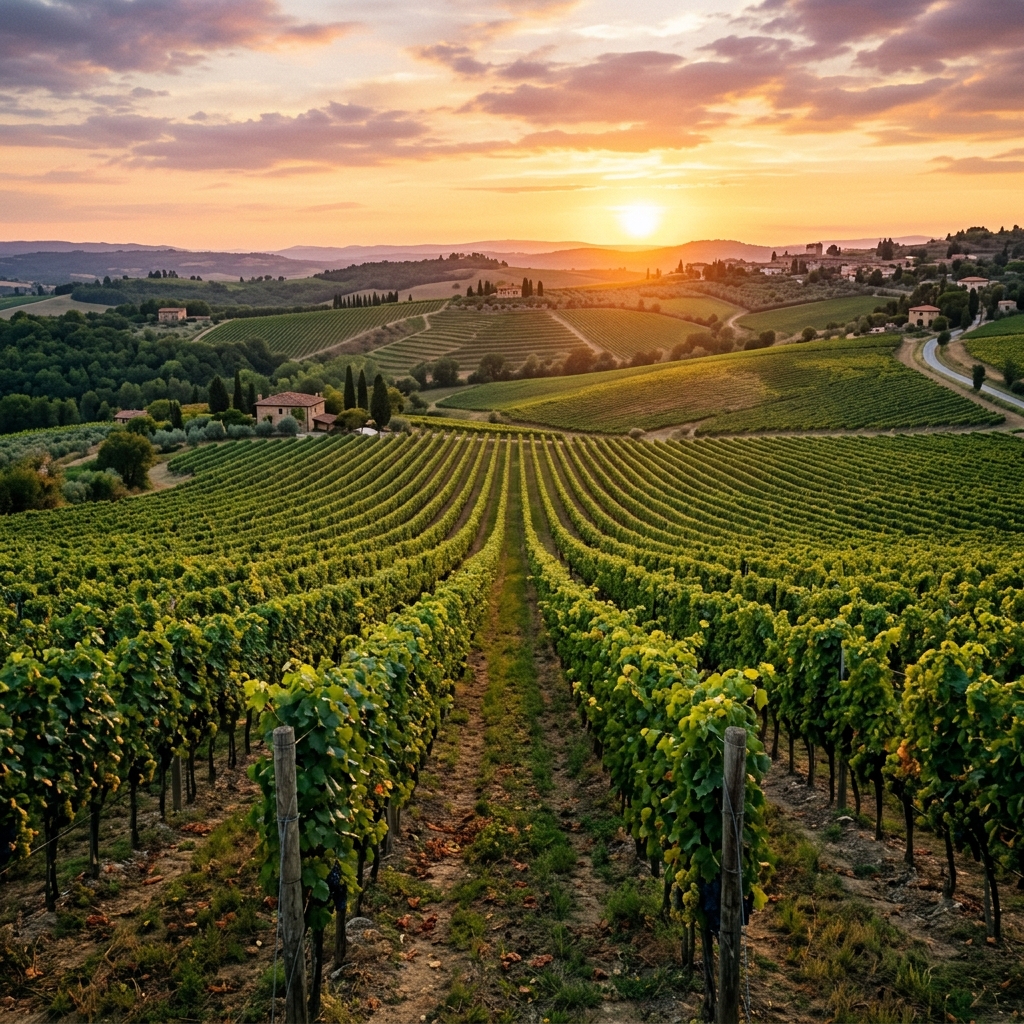
Tempranillo is Spain's flagship noble red grape variety, renowned for flavors of ripe red cherry, plum, dried fig, leather, and sweet vanilla coconut from American oak aging. Famous across Rioja, Ribera del Duero (where it is known as Tinto Fino), and Toro, it ranges from juicy young reds to extraordinarily long-lived Gran Reservas.
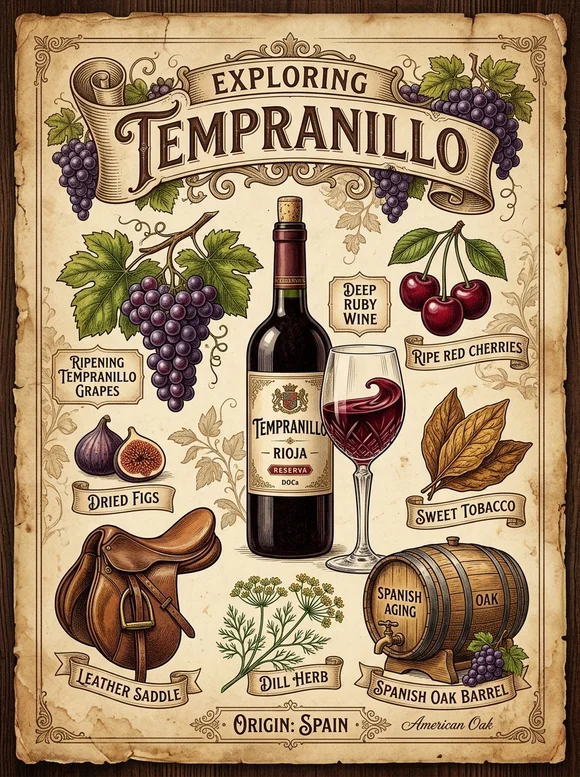
Taste Profile & Sensory Structure
Rating on 1–5 scaleKey Aromas & Flavor Descriptors
| Wine Style | Red Wine |
|---|---|
| Origin / Homeland | Rioja & Navarra, Northern Spain |
| Other Names | Tempranillo, Tinto Fino, Tinta del País, Cencibel, Aragonez / Tinta Roriz (Portugal) |
| Crianza Standard | Minimum 2 years aging before release, with at least 1 year in oak barrels |
| Reserva Standard | Minimum 3 years aging, with at least 1 year in oak and 6 months in bottle |
| Gran Reserva Standard | Minimum 5 years aging (2 in oak, 3 in bottle) — crafted only in exceptional harvest years |
| Serving Temperature | 16–18 °C (60–64 °F) — allows complex oak and savory tertiary aromas to unfold |
Tempranillo is the royal aristocrat of Spain. Supple, structured, and deeply savory, it weaves together luscious red cherries, dark plums, cured leather, and the seductive, sweet perfume of vanilla and cigar-box cedar gifted by decades of traditional oak aging.
Explore Tempranillo in Depth
Master Spain's premier variety through our four comprehensive Academy guides: sensory analysis, historic Iberian terroirs, tapas gastronomy, and vintage selections.
Frequently Asked Questions
What is the practical difference between Crianza, Reserva, and Gran Reserva?
The distinction lies in mandatory aging duration. Crianza spends at least 2 years aging (1 in barrel), displaying fresh cherry fruit backed by vanilla oak. Reserva matures for 3 years (1 in barrel), achieving silky elegance and tobacco depth. Gran Reserva rests for 5 years (2 in barrel, 3 in bottle), transforming into a pale garnet elixir of leather, dried fruit, and autumnal leaves.
Why do classic Rioja wines smell so distinctly of vanilla and coconut?
Spanish winemakers historically favored barrels crafted from American white oak (Quercus alba) over French oak. American oak possesses wider wood grain and delivers markedly higher concentrations of vanillin and lactones, imparting sweet vanilla, coconut, dill, and cigar-box spices into the wine.
Is Tempranillo in Ribera del Duero different from Rioja?
Genetically they are identical, but Ribera del Duero's extreme continental climate (intense daytime heat, freezing high-altitude night winds) produces a thicker grape skin (locally called Tinto Fino). Consequently, Ribera del Duero wines are darker, more muscular, and more tannic than the aromatic, silky reds of Rioja.
Related Guides
- How to Recognize Tempranillo in the GlassCherry fruit, American oak vanilla, leather, and blind tasting keys
- Where Tempranillo GrowsRioja Alta, Ribera del Duero, Toro, and Portugal's Douro
- Food Pairing with TempranilloJamón Ibérico, roasted lamb, Manchego cheese, and tapas
- What to Buy (Tempranillo)Crianza vs Gran Reserva, modern vs traditional, and top bodegas
- RiojaThe historic capital of Spanish winemaking and barrel aging mastery
Last updated: September 19, 2026