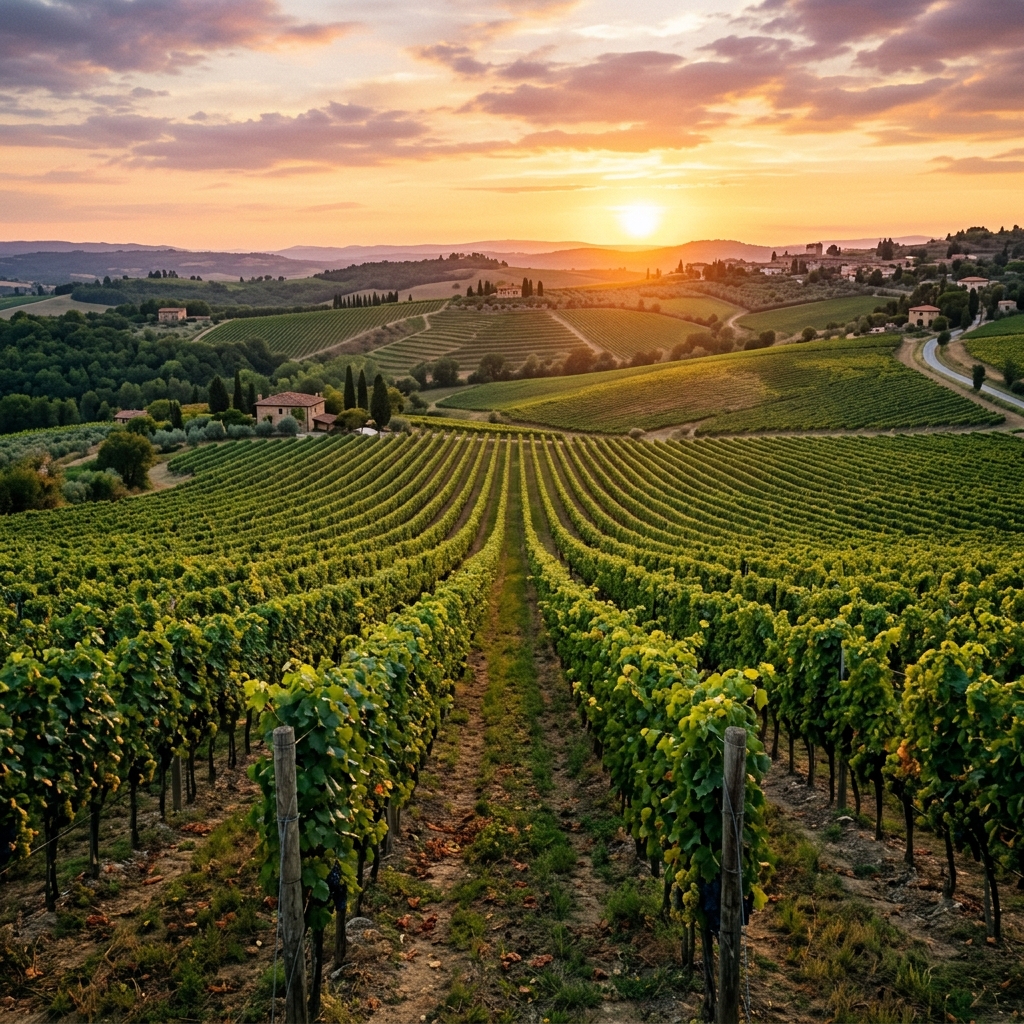
Galicia (Rías Baixas DO and indigenous appellations) is "Green Spain" on the Atlantic coast. World-renowned for crystalline, saline, and mineral white Albariño boasting aromas of white peach, citrus, and sea spray, Galicia produces the ultimate seafood and oyster wine on Earth.
| Country | ✦ Spain |
|---|---|
| Key Grapes | ✦ albarino ✦ godello ✦ mencia ✦ treixadura ✦ loureiro ✦ caino-blanco |
| Benchmark Appellation | Rías Baixas DO — the global capital of Albariño spanning 5 coastal sub-zones |
| Maritime Grape No. 1 | Albariño — accounts for over 96% of Rías Baixas plantings (white peach, lime, sea salt) |
| Traditional Trellising | Granite Pergolas (Parrales) — vines elevated 1.8–2 meters above ground on stone pillars to combat Atlantic humidity |
| Heroic Red Native | Mencía in Ribeira Sacra DO — vibrant, slate-inflected red wines grown on sheer 70° river canyon terraces |
| Serving Temperature | 8–10 °C for vibrant young Albariño; 10–12 °C for aged Sobre Lías cuvées (serving guide) |
Galicia (Galicia / Rías Baixas DO) is Spain’s enchanting “Green Spain” (España Verde) perched on the wild northwestern shoulder of the Iberian Peninsula. Bounded by the tempestuous Atlantic Ocean and Bay of Biscay, Galicia is a world apart from the sun-scorched plains of Castile or Andalusia. Here, emerald estuaries, Atlantic mists, Celtic stone crossways, and the noble Albariño grape define the ultimate white wine territory of Spain.
Signature Wine Styles & Appellations of Galicia
Galicia is celebrated for bone-dry saline whites and ethereal mountain reds:
Atlantic Climate & Granite Terroirs
The character of Galician wine is intrinsically tethered to oceanic storms and granitic bedrock:
The 5 Sub-zones of Rías Baixas DO
| Sub-zone | Geographical Setting | Key Varieties | Style & Profile |
|---|---|---|---|
| Val do Salnés | Coastline around the Ría de Arousa | 100% Albariño | The historic heartland: highest acidity, briny sea spray, green citrus, benchmark purity |
| O Rosal | Southern border along the Miño River | Albariño + Loureiro + Caiño | Warmer microclimate: aromatic, floral, enriched with bay leaf and stone fruits |
| Condado do Tea | Inland mountainous basin on the Miño | Albariño + Treixadura | Sunniest, warmest subzone: rounded, ripe stone fruit, melon, lower perceived acid |
| Ribeira do Ulla | Northern hills near Santiago de Compostela | Albariño (new plantings) | Youthful, vibrant, crisp apple, refreshing whites, and pale crisp rosés |
| Soutomaior | Smallest enclave at the head of Ría de Vigo | 100% Albariño | Sheltered microclimate on pure granite gravel yielding intense mineral finesse |
Sommelier Food Pairing Guide
Albariño and Galician whites are universally celebrated as the gold standard for ocean seafood and oysters:
Pulpo a la Gallega (Galician Octopus)
Tender boiled octopus served on sliced potatoes with extra virgin olive oil, sea salt, and smoked pimentón is the quintessential match for Albariño.
Seafood Pairing Guide →Raw Oysters & Saint-Jacques Scallops
Galician sea scallops (Vieiras) baked in their shells and freshly shucked oysters require the crystalline, saline acidity of Val do Salnés.
Oyster Pairing Guide →Galician Tuna Empanada
Empanada Gallega stuffed with Bonito tuna, caramelized onions, sweet bell peppers, and olive oil pairs magnificently with textured Godello.
Appetizers Guide →Creamy Queso Tetilla DOP
Galicia's iconic cone-shaped cow's milk cheese offers a velvety, buttery texture that cuts through the electric acidity of lees-aged Albariño.
Cheese Pairing Guide →Continue exploring Spain: discover high-altitude Ribera del Duero, aromatic Castilian Rueda, or take your foundation test in Level 1 Wine Academy!
Frequently Asked Questions
Why is Rías Baixas Albariño celebrated as the world's quintessential \"ocean wine\"?
Vineyards in Rías Baixas hug the shorelines of dramatic sea fjords (Rías), where constant Atlantic breezes spray fine ocean mist onto ripening clusters. Combined with acidic decomposed granite soils (Xabre), this creates a singular organoleptic fingerprint: electric citrus acidity, ripe white peach, lemon peel, and an undeniable briny, saline finish that pairs flawlessly with raw oysters, barnacles, and fresh shellfish.
Why are vines in Galicia trained on high granite pergolas (Parrales)?
Galicia is Spain's wettest region, receiving up to 1,600 mm of annual rainfall. Cultivating vines close to the sodden ground would invite rampant mildew and botrytis. For centuries, Galician growers have used granite posts to suspend grape canopies 1.8 to 2 meters in the air (Parrales). This pergola system catches brisk ocean winds to dry the bunches and maximizes sun exposure across the canopy ceiling.
What other wine treasures does Galicia produce beyond Rías Baixas?
Galicia is extraordinarily diverse: inland appellations Valdeorras DO and Ribeiro DO produce textured, age-worthy whites from the indigenous Godello grape featuring quince, beeswax, and mineral tension. Meanwhile, along the dizzying 70-degree canyon walls of the Sil and Miño rivers in Ribeira Sacra DO, "heroic viticulture" yields crunchy, perfumed reds from Mencía reminiscent of Northern Rhône Syrah and Loire Cabernet Franc.