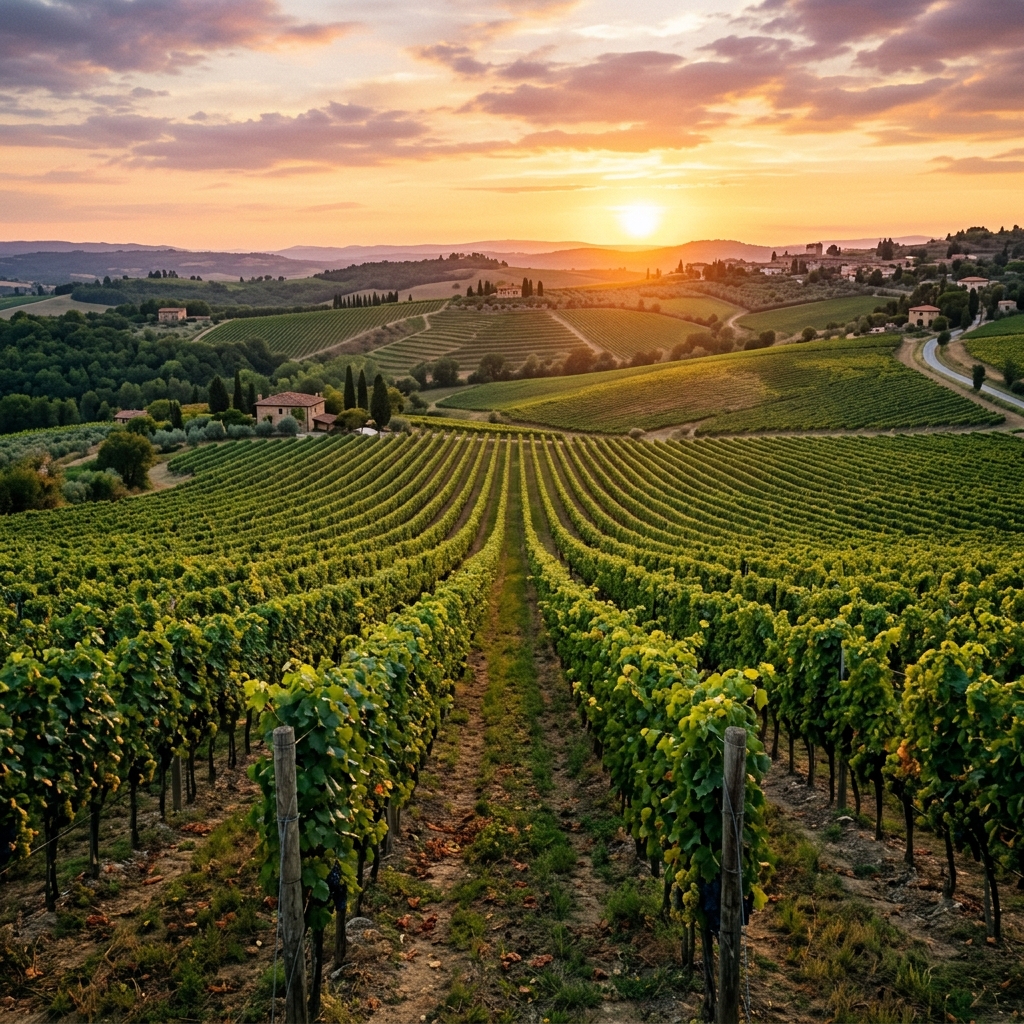
Rueda DO is Spain's premier white wine region on the high Castilian plateau (Meseta Central). Championing the indigenous Verdejo grape on pebble terraces (cascajosos) along the Duero River, Rueda yields intensely aromatic, crisp whites with wild fennel, green apple, and signature bitter almond notes.
| Country | ✦ Spain |
|---|---|
| Key Grapes | ✦ verdejo ✦ sauvignon-blanc ✦ viura |
| Landmark DO | D.O. Rueda — established in 1980 as the first official DO dedicated exclusively to white wines in Castile and León |
| Indigenous Star | Verdejo — must comprise at least 85% in DO blends and 100% in Rueda Verdejo varietal cuvées |
| Continental Altitude | Vineyards sit on the high Meseta plateau at 700–850 meters with diurnal temperature swings of up to 25 °C |
| Signature Technique | Night Harvesting (Vendimia Nocturna) — picking at 10–12 °C under moonlit floodlights to prevent oxidation |
| Serving Temperature | 7–9 °C for crisp young Verdejo; 10–12 °C for lees-aged or barrel-fermented cuvées (serving guide) |
Rueda DO is the modern crown jewel of Spanish white viticulture. Perched across the windswept high plains of Castile and León south of Valladolid, this historic region proved to the international wine world that Spain’s arid, sun-baked heartland could produce whites of dazzling freshness, aristocratic botanical perfume, and crystalline precision.
Signature Wine Styles & Tiers of Rueda DO
From thirst-quenching aperitifs to complex, cellar-worthy oak-fermented cuvées, Rueda offers a sophisticated spectrum:
High-Altitude Terroir: Cascajosos & Night Picking
Rueda’s unique character is shaped by the confluence of severe continental geography and forward-thinking viticultural science:
Grape Varieties of Rueda DO
| Grape Variety | Share in Region | Aromatics & Flavor Profile | Role in Appellation |
|---|---|---|---|
| Verdejo | 88%+ (Indisputable King) | Wild fennel, white peach, green melon, anise, bitter green almond | Indigenous native star providing body, aromatics, and terroir authenticity |
| Sauvignon Blanc | ~8% (Aromatic Accent) | Passionfruit, gooseberry, boxwood, crushed flint, elderflower | Imparts tropical brightness and snappy upfront acidity |
| Viura (Macabeo) | ~3% (Historical Blend) | Green apple, white blossoms, delicate citrus, clean minerality | Traditional blending partner adding lightness and delicate freshness |
| Palomino Fino | <1% (Historic Relic) | Dried herbs, toasted nuts, saline oxidative notes | Legacy plantings used for traditional fortified Rueda Dorado wines |
Sommelier Food Pairing Guide
The herbal freshness, citrus vibrancy, and gentle almond bitterness of Verdejo make Rueda the quintessential wine for Spanish tapas and global cuisine:
Crispy Calamari & Boquerones
Golden fried calamari with lemon aioli and marinated white anchovies cut seamlessly through the razor acidity and fennel notes of Rueda.
Tapas Pairing Guide →Jamón Ibérico & Semi-Curado Cheese
Acorn-fed bellota ham and sheep's milk cheese find their ideal palate cleanser in Verdejo's citrus zest and cleansing bitter almond touch.
Ham & Meat Guide →Grilled Green Asparagus & Chevre
Green asparagus is notoriously difficult to pair with wine, but Verdejo's natural pyrazinic herbal undertones make it a masterclass match.
Cheese & Greens Guide →Citrus Ceviche & White Fish Crudo
Lime-cured sea bass, coriander, and thinly shaved red onions highlight the energetic citrus fruit and stony minerals of barrel-aged Verdejo.
Seafood Guide →Continue exploring Spain: journey to full-bodied Ribera del Duero, coastal Galicia, or take your certification exam in Level 1 Wine Academy!
Frequently Asked Questions
How does Rueda Verdejo differ from Sauvignon Blanc?
While both varieties display vibrant green aromatics and refreshing acidity, Verdejo possesses a rounder, more textured mid-palate with distinct notes of wild fennel bulb, aniseed, white peach, and Meyer lemon, concluding with an aristocratic hint of bitter green almond. Sauvignon Blanc tends to be more pungently herbaceous, showing boxwood, passionfruit, and grassy bite without Verdejo's savory botanical finish.
Why is the grape harvest conducted exclusively at night in Rueda?
September temperatures on the Castilian Meseta often soar past 35 °C during the day. Picking sun-drenched grapes would cause premature fermentation, enzymatic oxidation, and loss of delicate volatile thiols. By harvesting mechanically between midnight and dawn when temperatures drop to 10–12 °C (Vendimia Nocturna), grapes arrive at wineries chilled, preserving pure aromatics, vibrant green hues, and natural acidity while drastically cutting energy consumption.
What is the new \"Gran Vino de Rueda\" quality tier?
Introduced in 2020 to celebrate historic heritage, Gran Vino de Rueda requires vines to be at least 30 years old with maximum yields strictly capped at 6,500 kg/ha (compared to the standard 10,000 kg/ha). These elite cuvées show profound concentration, stony minerality, and extraordinary cellar longevity spanning 5 to 10 years.
Related Guides
- Sauvignon BlancCompare aromatic profiles between Verdejo and Sauvignon Blanc
- Wine & TapasBenchmark pairings for Spanish croquetas, olives, and seafood bites
- Ribera del DueroExplore Rueda's red wine neighbour along the majestic Duero River
- Academy Exam (Level 1)Test your foundation knowledge on Spanish wine classifications