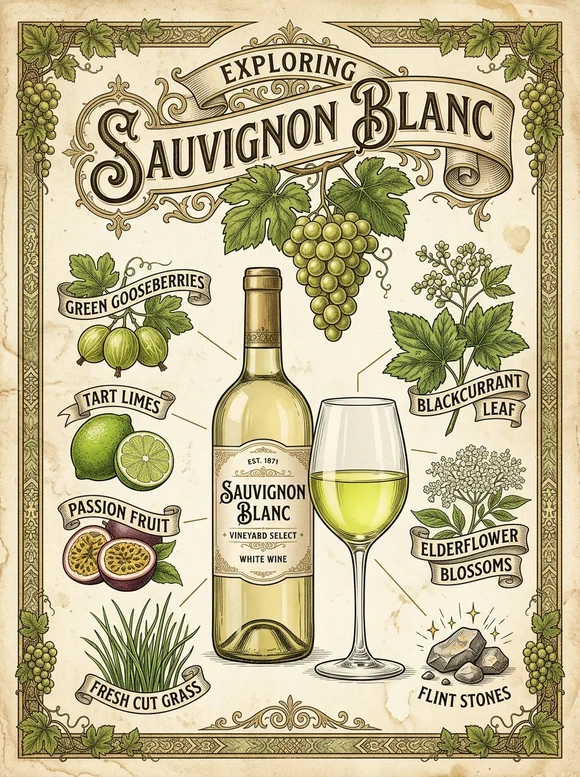
Sauvignon Blanc is a dry, high-acid white wine renowned for electric freshness and explosive aromas of gooseberry, passion fruit, lime, and freshly cut grass. Famous benchmarks include the flinty mineral wines of Sancerre and the pungent, tropical fruit bombs of Marlborough, New Zealand.
Taste Profile & Sensory Structure
Rating on 1–5 scaleKey Aromas & Flavor Descriptors
| Wine Style | White Wine |
|---|---|
| Origin / Homeland | Loire Valley & Bordeaux, France |
| Other Names | Sauvignon Blanc, Fumé Blanc, Sauvignon Jaune |
| Acidity | 5/5 — among the highest natural acidities in the white wine kingdom |
| Serving Temperature | 7–9 °C (45–48 °F) to accentuate crisp vibrancy |
| Cellar Longevity | Best consumed within 1–2 years; thrives on youthful aromatic intensity |
| The Asparagus Miracle | One of the few wines on Earth that effortlessly pairs with stubborn green asparagus |
Sauvignon Blanc is one of the most beloved, outspoken, and instantly recognizable white wine varieties on the planet. Uncompromisingly refreshing and crackling with vibrant energy, it delivers an unforgettable sensory punch of crisp gooseberry, zesty lime, exotic passion fruit, and crushed flint minerality.
Explore Sauvignon Blanc in Depth
We have curated four specialized Academy guides: recognize sensory markers in the glass, navigate iconic global terroirs, pair with delicate cuisine, and choose outstanding bottles.
Frequently Asked Questions
Why does Sauvignon Blanc smell like grass, bell pepper, and boxwood?
The signature herbaceous and green notes are driven by organic aroma compounds called methoxypyrazines (the same chemical compounds found in green bell peppers). The pungently exotic, passionfruit and boxwood nuances stem from volatile thiols. In balanced moderation, they create the variety's magnetic hallmark; in excess, they indicate cool terroirs or shaded vine canopies.
How does Marlborough Sauvignon Blanc differ from Loire Valley Sancerre?
Marlborough (New Zealand) is an unabashed aromatic explosion: passion fruit, pink grapefruit, crushed tomato leaf, and zesty lime at maximum volume. Sancerre and Pouilly-Fumé (Loire Valley, France) are restrained, flinty, and mineral-focused: the citrus and gooseberry notes are tightly wound around gunpowder flint (pierre à fusil) and chalky limestone soils.
Can Sauvignon Blanc be aged in oak barrels?
The overwhelming majority is vinified in temperature-controlled stainless steel to preserve pristine freshness. However, prestigious exceptions exist: Graves and Pessac-Léognan in Bordeaux blend Sauvignon Blanc with Sémillon and age it in French oak barrels, creating creamy, textured, cellar-worthy white wines with beeswax and toasted almond complexity. California also bottles oaked styles historically termed Fumé Blanc.
Related Guides
- How to Recognize Sauvignon Blanc in the GlassSensory scales, green pyrazines, and blind tasting benchmarks
- Where Sauvignon Blanc GrowsSancerre, Marlborough, Bordeaux, and cool-climate terroirs
- Food Pairing with Sauvignon BlancGoat cheese, herb-infused seafood, and green vegetables
- What to Buy (Sauvignon Blanc)Top appellations, producer picks, and label decoding
- BordeauxThe classic cradle of Sémillon-Sauvignon dry white blends
Last updated: September 19, 2026