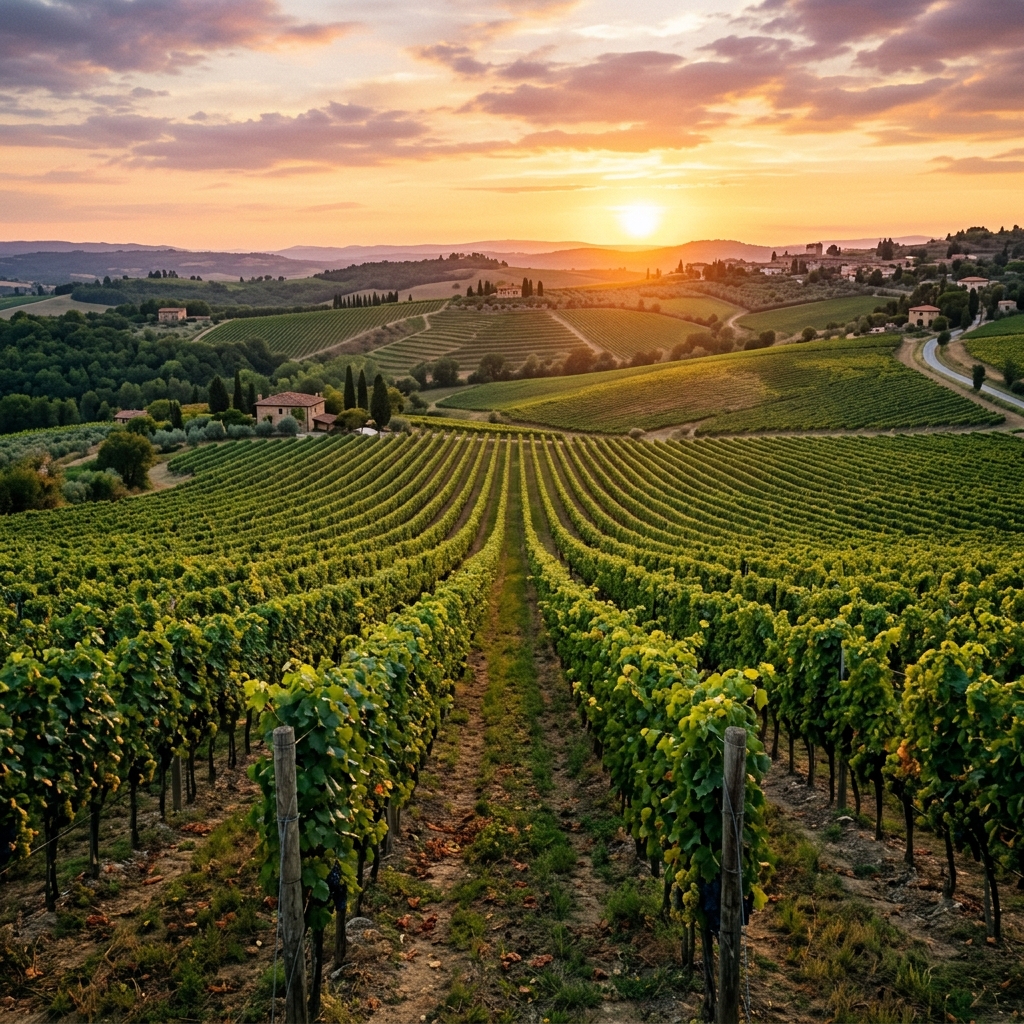
Veneto is Italy's most multifaceted and productive wine region, renowned worldwide for opulent Amarone della Valpolicella made from dried grapes, benchmark sparkling Prosecco Superiore, and crisp, volcanic white Soave.
| Country | ✦ Italy |
|---|---|
| Key Grapes | ✦ corvina ✦ rondinella ✦ molinara ✦ glera ✦ garganega ✦ pinot-grigio |
| Monumental Icon | Amarone della Valpolicella DOCG — 100–120 days of grape drying (Appassimento method) |
| Sparkling Capital | Conegliano Valdobbiadene Prosecco Superiore DOCG — 100% Glera |
| White Classic | Soave Classico DOC — volcanic limestone soils and indigenous Garganega grape |
| Ripasso Technique | Valpolicella Ripasso — secondary fermentation of young wine over warm Amarone pomace |
| Serving Temperature | 6–8 °C for Prosecco, 16–18 °C for Amarone (temperature guide) |
Veneto is the most dynamic and contrasting wine region of northeastern Italy. Stretching from the snow-capped Dolomite Alps and picturesque Lake Garda to the shores of the Adriatic, Veneto has given birth to global icons: celebratory sparkling Prosecco, aristocratic Amarone, and mineral white Soave.
Veneto Wine Styles and Key Appellations
Veneto offers four world-renowned signature wine styles:
Terroir & Soils of Veneto: Soave Volcanic Basalt, Valpolicella Limestone & Prosecco Hills
The Secret of the Appassimento Method
The unique grape-drying technique that creates the Amarone phenomenon:
Comparison of Veneto’s Signature Wine Styles
| Wine / Appellation | Key Grape Varieties | Vinification & Aging | Flavor Profile |
|---|---|---|---|
| Amarone della Valpolicella | Corvina, Rondinella, Corvinone | Appassimento for 120 days, oak aging 2+ years | Raisin, dried black cherry, espresso, dark cocoa, velvety, 15–16% ABV |
| Valpolicella Ripasso | Corvina, Rondinella | Secondary fermentation on Amarone pomace | Ripe red cherry, sweet spice, rounded body, supple texture |
| Valdobbiadene Prosecco | 100% Glera | Charmat method in stainless steel autoclaves | Green apple, wisteria blossoms, ripe white peach |
| Soave Classico | Garganega (min. 70%), Trebbiano | Stainless steel / large neutral oak fermentation | Ripe pear, chamomile, saline minerality, bitter almond |
Sommelier Food Pairing Guide
Veneto wines span the entire spectrum of Italian cuisine — from light aperitivo antipasti to hearty braised meats:
Aged Cheeses
Tyrosine crystals in aged Grana Padano and Asiago Stravecchio harmonize seamlessly with the opulent richness of Amarone.
Cheese Guide →Risotto all'Amarone
Risotto all'Amarone cooked with Vialone Nano rice and slow-braised beef cheeks represent the pinnacle of Veronese gastronomy.
Meat Guide →Fish & Seafood
Venetian Lagoon seafood and Lake Garda freshwater trout paired with crisp, mineral-driven Soave Classico.
Fish Guide →Prosciutto & Antipasti
Prosciutto di San Daniele, rosemary focaccia, and Castelvetrano olives are a match made in heaven with dry Prosecco Brut.
Appetizer Guide →Continue your journey through wine Italy: explore neighboring Piedmont, legendary Tuscany, or take the assessment in Wine Academy Level 2!
Frequently Asked Questions
What is the Appassimento method used for Amarone wines?
Appassimento is an ancient grape-drying technique. In autumn, select bunches of Corvina and Rondinella are placed on bamboo mats in well-ventilated drying lofts (Fruttaio) for 3–4 months. The grapes lose up to 40% of their water content, concentrating sugars, acids, and phenolics into near-raisins. Fermenting this concentrated must yields Amarone — a dry, powerful (15–16% ABV) red displaying notes of dried dark cherry, dark chocolate, dried fig, and exotic baking spice.
How does Valdobbiadene DOCG Prosecco differ from standard Prosecco DOC?
Standard Prosecco DOC is cultivated across the flatter plains of Veneto and Friuli. In contrast, Conegliano Valdobbiadene DOCG encompasses steep, UNESCO-protected hillside amphitheatres where viticulture is exclusively manual on dizzying terraces. These wines deliver an exceptionally refined perlage, vibrant white floral aromas, crisp green apple, white peach, and deep slate minerality.
What is the secret behind Valpolicella Ripasso?
Ripasso is affectionately known as 'baby Amarone'. In late winter or spring, young, fermented basic Valpolicella wine is re-passed over the warm, unpressed pomace (grape skins) remaining from Amarone fermentation. This initiates a brief secondary fermentation that enriches the wine with velvety tannins, dried-fruit complexity, and fuller body while remaining approachable and affordable.