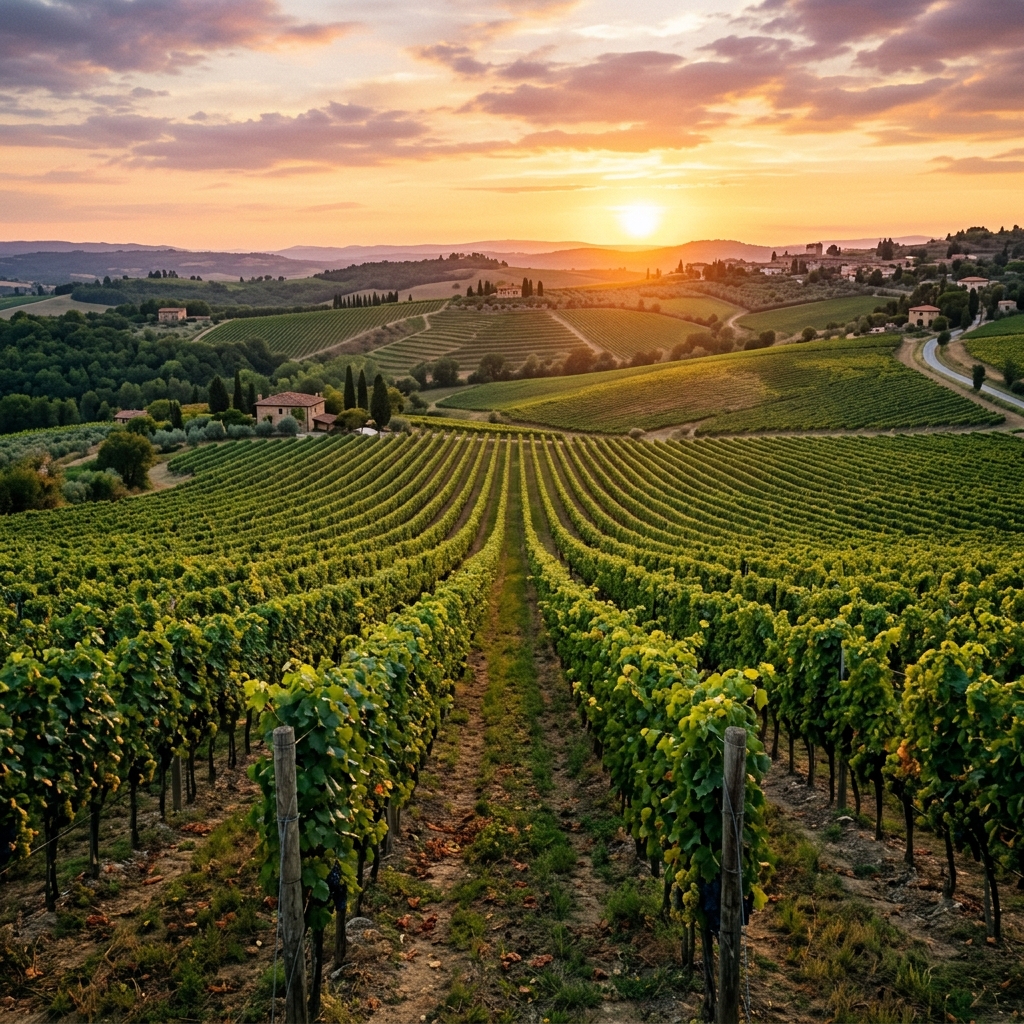
Sangiovese is Italy's most planted and celebrated red grape variety, serving as the noble foundation of Chianti Classico, Brunello di Montalcino, and Vino Nobile di Montepulciano. Known for high natural acidity, firm tannins, and flavors of sour red cherry, dried oregano, sun-drenched terracotta, and leather, it is world-renowned as the ultimate gastronomic wine for tomato-based cuisine.
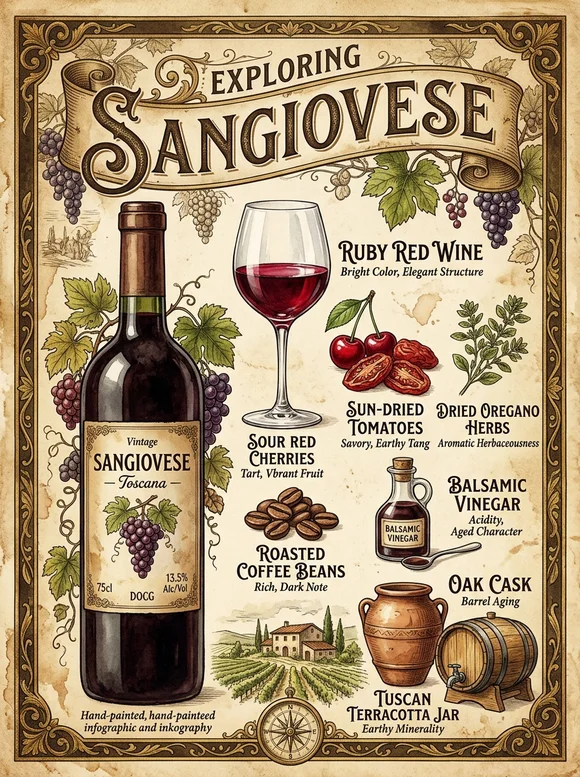
Taste Profile & Sensory Structure
Rating on 1–5 scaleKey Aromas & Flavor Descriptors
| Wine Style | Red Wine |
|---|---|
| Origin / Homeland | Tuscany, Central Italy (Chianti, Montalcino, Montepulciano) |
| Other Names | Sangiovese, Brunello (Montalcino), Prugnolo Gentile (Montepulciano), Morellino (Scansano), Nielluccio (Corsica) |
| Piercing Acidity | 5/5 — among the highest natural acidities in the red wine world, providing incredible food versatility |
| Chianti Classico Standard | Historical heartland between Florence and Siena; legally requires minimum 80% Sangiovese |
| Brunello di Montalcino | 100% Sangiovese Grosso; requires minimum 5 years aging before commercial release |
| Serving Temperature | 16–18 °C (60–64 °F) — enhances cherry aromatics while smoothing firm youthful tannins |
Sangiovese is the liquid soul of Italy. Rustic, energetic, and unapologetically gastronomic, it shines with vibrant notes of sour red cherry, sun-dried tomato, wild Mediterranean herbs, and warm clay earth, delivering a crisp, appetizing acidity that brings Italian dining to life.
Explore Sangiovese in Depth
Master Tuscany's quintessential grape through our four comprehensive Academy guides: sensory analysis, historic hill terroirs, pasta gastronomy, and buyer recommendations.
Frequently Asked Questions
Why is Sangiovese the unmatched pairing for tomato pasta and pizza?
Tomatoes are naturally high in acid. When paired with low-acid red wines, tomato sauce makes the wine taste flat, flabby, and awkwardly sweet. Sangiovese shares the identical high-acid profile of ripe tomatoes, cutting through olive oil, melting cheese, and rich meat ragù with effortless harmony. It is a match forged not just by tradition, but by food chemistry.
What is the difference between Chianti and Chianti Classico?
Chianti Classico is the ancient, original historic zone situated on high rocky hills between Florence and Siena, marked by the iconic Black Rooster (Gallo Nero) neck seal and requiring at least 80% Sangiovese. Generic 'Chianti' covers a vastly larger peripheral region with higher yields, producing lighter, simpler, and everyday commercial wines.
What are Super Tuscans?
In the late 1960s and 1970s, visionary Tuscan winemakers broke strict local DOC regulations by introducing French Bordeaux varieties (Cabernet Sauvignon, Merlot) or aging 100% Sangiovese in small French oak barriques (e.g., Tignanello, Sassicaia). Though originally downgraded to lowly 'Vino da Tavola', their stratospheric international acclaim led to the creation of the prestigious IGT Toscana classification.
Related Guides
- How to Recognize Sangiovese in the GlassSour cherry, tomato leaf, high acidity, and blind tasting keys
- Where Sangiovese GrowsChianti Classico, Montalcino, Montepulciano, and Romagna
- Food Pairing with SangioveseTomato pasta, Neapolitan pizza, Bistecca Fiorentina, and Pecorino
- What to Buy (Sangiovese)Chianti Gran Selezione, Brunello vintages, and Super Tuscans
- TuscanyThe rolling cypress hills of Chianti Classico, Montalcino, and Bolgheri
Last updated: September 19, 2026