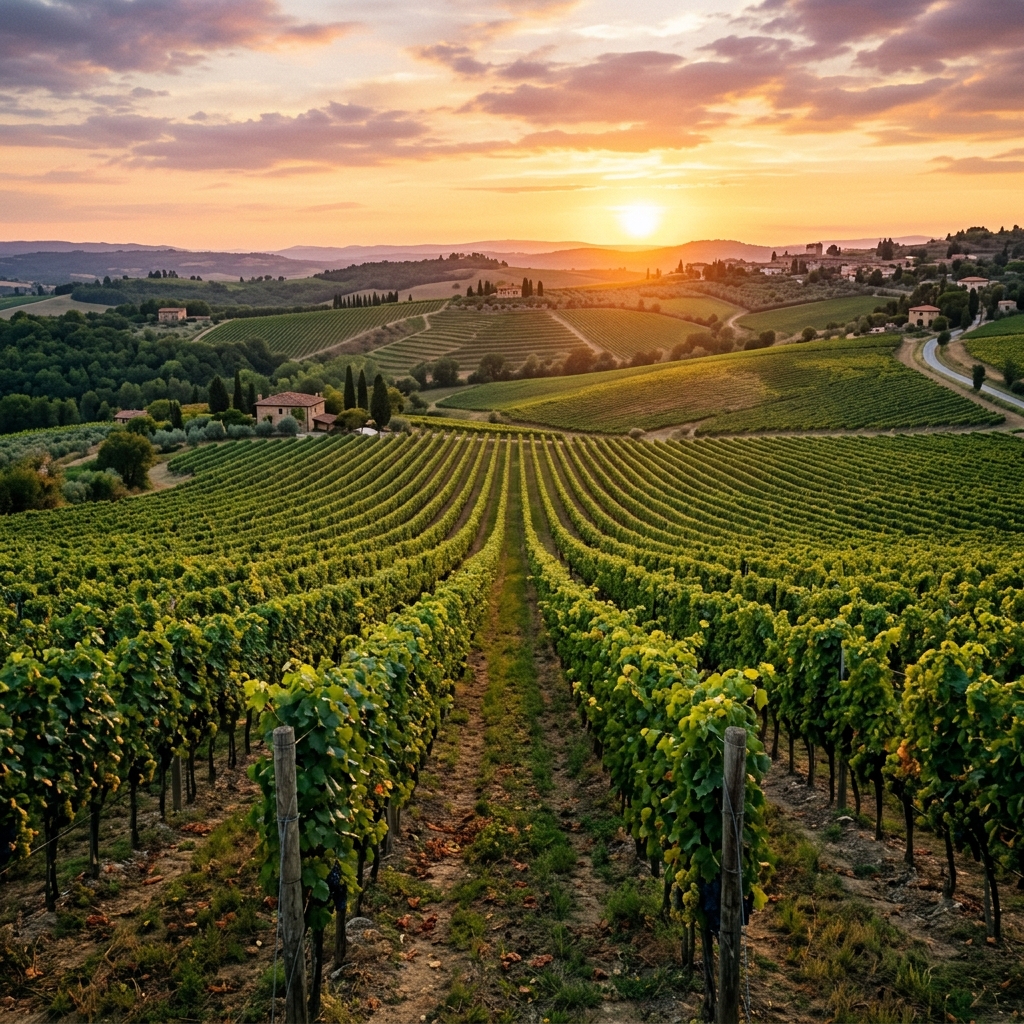
Mourvèdre (known in Spain as Monastrell and in Australia and the US as Mataro) is a muscular, late-ripening, thick-skinned red grape variety. Renowned for ink-dark color, firm age-worthy tannins, and a profoundly savory profile of wild blackberry, black pepper, cured leather, truffles, and roasted game meats, it reaches its varietal pinnacle in Provence's Bandol and anchors iconic GSM blends.
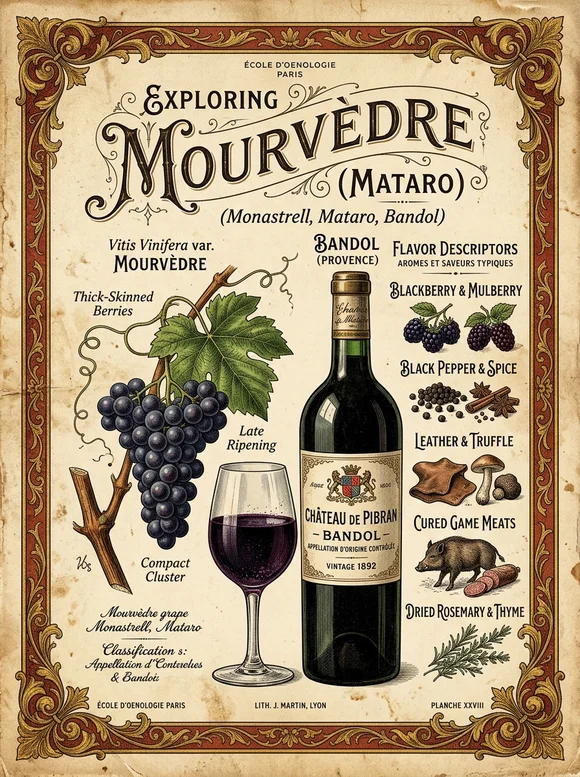
Taste Profile & Sensory Structure
Rating on 1–5 scaleKey Aromas & Flavor Descriptors
| Wine Style | Red Wine |
|---|---|
| Origin / Homeland | Spain (Valencia & Murcia); spiritual world capital in Bandol (Provence) and Barossa Valley (Australia) |
| Other Names | Mourvèdre, Monastrell (Spain), Mataro (Australia, California), Balzac Noir |
| Benchmark Terroirs | Bandol (Provence, France), Jumilla & Yecla (Spain), and Barossa Valley (Australia) |
| The GSM Anchor | Provides deep ink color, muscular structure, firm tannins, and savory game complexity to Grenache and Syrah |
| Glassware Recommendation | Large Syrah / Bordeaux Glass (broad bowl allows rustic animal and leather aromas to breathe) |
| Serving Temperature | 16–18 °C (60–64 °F) — decanting 1–2 hours before serving is strongly recommended |
Mourvèdre is the wild, untamed titan of the Mediterranean. Late to ripen and possessing thick, inky skins, it yields dark, brooding red wines laden with wild blackberry, cracked black pepper, forest truffles, and a savory, gamey undertone that commands reverence from lovers of serious, structured red wines.
Explore Mourvèdre in Depth
Master this muscular powerhouse through our four comprehensive Academy guides: sensory analysis, coastal limestone terroirs, game meat gastronomy, and cellar recommendations.
Frequently Asked Questions
Why does this single grape have three completely different names?
The grape originated in Spain, where it was cultivated around monasteries and christened Monastrell. As it crossed into southern France (Provence and the Rhône), it took the name Mourvèdre, derived from the ancient port town of Murviedro (modern Sagunto). When vine cuttings sailed to Australia and California, they embarked from the Catalan port of Mataró — hence the name Mataro.
What makes Bandol the world capital of Mourvèdre?
Situated along Provence's limestone coast overlooking the Mediterranean sea, Bandol is a natural sun-trap where Mourvèdre legally constitutes a minimum of 50% (and often 80–95%) of the red blend. Here, sea breezes and poor rocky soils tame its wild vigor, creating profound, structured red wines that evolve effortlessly for 20–40 years.
What does Mourvèdre bring to the GSM blend?
In the GSM triumvirate, Grenache provides warm alcohol and candied red berries, while Syrah brings dark fruit, violet florals, and black pepper. Mourvèdre provides the structural backbone — dense, grippy tannins, dark purple color, and a uniquely savory, wild-game (*sauvage*) complexity that anchors the wine.
Related Guides
- How to Recognize Mourvèdre (Mataro) in the GlassInky color, black pepper, game notes, and blind tasting keys
- Where Mourvèdre GrowsBandol, Jumilla, Yecla, and Australia's Barossa Valley
- Food Pairing with MourvèdreVenison, braised short ribs, rack of lamb, and wild boar
- What to Buy (Mourvèdre)Bandol benchmark domaines, Jumilla values, and old-vine Mataro
- ProvenceThe limestone coastline of Bandol, Cassis, and world-class rosés
Last updated: September 19, 2026