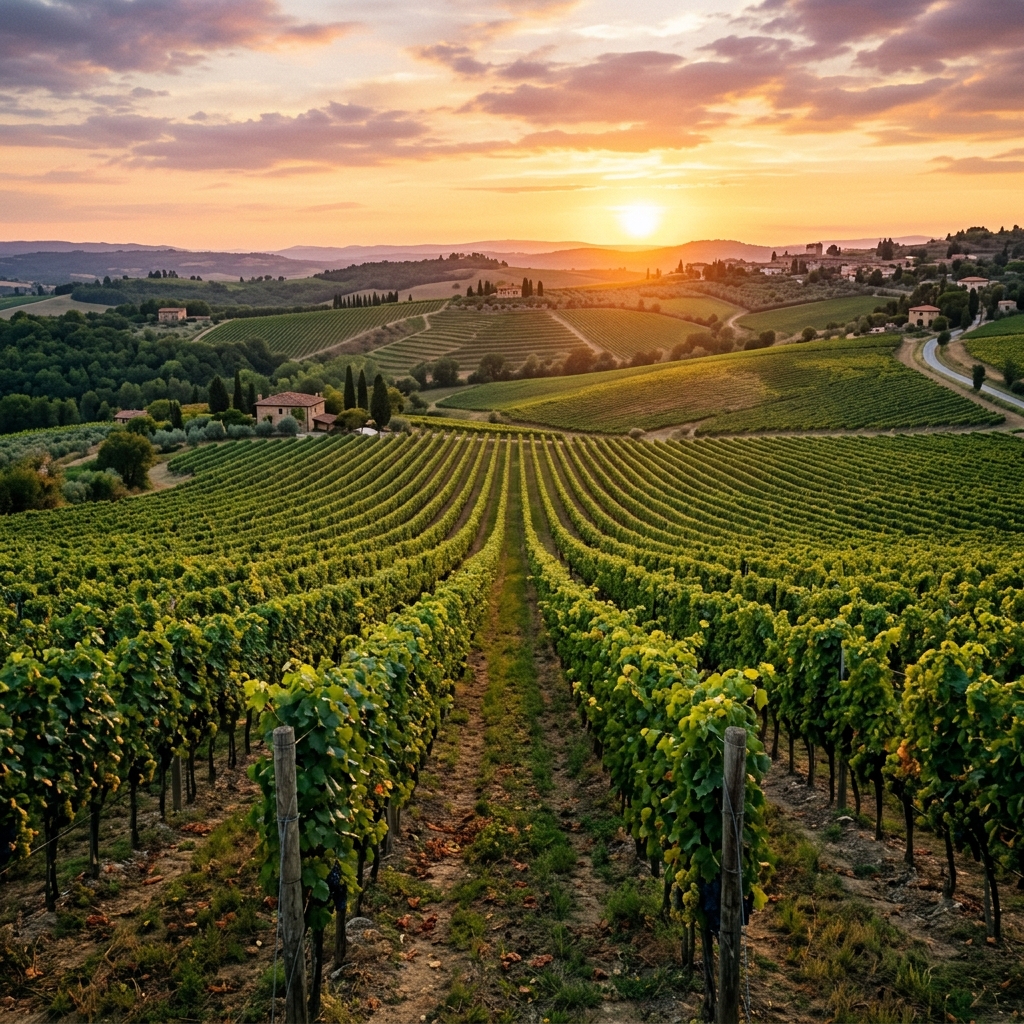
The Don Valley (Rostov Region) stands as Russia's most northerly, extreme viticultural outpost and the birthplace of monumental indigenous grape varieties. It preserves the arduous tradition of winter-buried viticulture, where vines are manually buried beneath soil trenches every autumn to endure sub-zero freezes reaching -30 °C. The steep chalk and limestone banks of the Don River bestow the legendary Krasnostop Zolotovsky with titanic tannic architecture, while indigenous Sibirkovy and Tsimlyansky Cherny express an unmistakable wild steppe typicity.
| 國家/產區 | ✦ 俄羅斯 |
|---|---|
| 核心葡萄品種 | ✦ krasnostop-zolotovsky ✦ saperavi ✦ cabernet-sauvignon ✦ riesling ✦ chardonnay |
| Extreme Northern Outpost | Vineyards thrive between 47° and 48° North latitude — representing one of the planet's most northern commercial wine zones |
| Winter-Buried Viticulture | Due to brutal winter chills down to -30 °C, vines are unclipped each autumn, laid in trenches, covered with soil, and unearthed in spring |
| Cradle of Krasnostop Zolotovsky | Russia's flagship dark-skinned autochthon originated here in the historic Cossack stanitsa of Zolotovskaya on the Don |
| Don Cossack Heritage | Cossack vineyard orchards date back to Tsar Peter the Great; traditional Tsimlyanskoe sparkling was immortalized by Alexander Pushkin |
| Chalk & Limestone Banks | The elevated right bank of the Don River reveals white Cretaceous chalk and shell-rock beneath fertile calcic chernozem soils |
| Serving Temperature | 8–10 °C for floral Sibirkovy; 16–18 °C for monumental barrel-aged Krasnostop (serving temperature guide) |
The Valley of the Don represents one of the world’s most dramatic, authentic, and uncompromising wine frontiers. Spanning the endless steppe expanses of the Rostov Region along the majestic Don River, viticulture perseveres in defiance of extreme nature: summer heat frequently eclipses +40 °C, while Siberian winter winds plunge the mercury to -30 °C. Here, in the heartland of free Don Cossacks, emerged an extraordinary library of indigenous grape varieties found nowhere else on earth.
Key Wine Styles of the Don Valley
Tempered by continental extremes, chalk bluffs, and centuries of Cossack craftsmanship, the Don crafts four legendary wine styles:
Krasnostop Zolotovsky
Inky, titanic concentration: dried sloe berry, black prune, Russian leather, eucalyptus, graphite, and formidable ripe tannins built for 25+ years cellar longevity.
Pair with Game & Meat →Tsimlyansky Cherny
Silky grace and spice: ripe sour cherry, dried wild berries, violet blossoms, cracked black pepper, and polished, supple tannins of aristocratic restraint.
Pair with Steak →Sibirkovy
Essence of flowering steppes: wild mountain thyme, white meadow flowers, sagebrush, juicy white peach, lime zest, and crystalline minerality.
Pair with River Fish →Tsimlyanskoe Sparkling
Heritage blend of Tsimlyansky Cherny and Plechistik: ruby mousse, sloe jam, pomegranate seeds, dark cherry, and velvety, festive effervescence.
Serve at 8–10°C →Terroir and Soils of Don Valley: Chalk Cliffs, Calcic Chernozem and Winter Burying
Key Subregions of Don Valley and Their Grape Varieties
| Grape Variety / Subzone | Soil & Geology Profile | Wine Style & Specialization | Iconic Producers |
|---|---|---|---|
| Right Bank of the Don (Vedernikov Hamlet) | Cretaceous writing chalk, marl, chestnut loam | Monumental oak-aged Krasnostop, Sibirkovy, Governor blends | Vedernikov Winery, Arpachin |
| Tsimlyansk District & Sarkel | Sandy loam, terraces of the Tsimlyansk Sea | Spicy Tsimlyansky Cherny, historic Cossack sparkling reds | Tsimlyanskie Vina, Usadba Sarkel |
| Semikarakorsk & Bagayevsky District | Alluvial river loam, calcic chernozem | Crisp whites from Aligote, Rkatsiteli, and Kumshatsky Belyi | Arpachin Winery, Villa Zvezda |
| Razdorsky Terroir | Rocky sandstone, limestone ridges | Elegant Cabernet Sauvignon, Saperavi, varietal Plechistik | Vedernikov Winery, Galina Wine Studio |
Sommelier Food Pairing Guide
Powerful, distinctive Don wines call for bold Cossack culinary classics and hearty wood-fired meats:
Don Ukha & Baked Pike-Perch
Rich Cossack fish soup with ripe tomatoes or baked river pike-perch with wild herbs pairs flawlessly with the herbal freshness of Sibirkovy.
Fish Pairing Guide →Roast Duck with Apples
Pan-seared steppe game bird or oven-braised duck with tart lingonberry sauce finds perfect harmony with spicy, cherry-scented Tsimlyansky Cherny.
Meat Pairing Guide →Charcoal Lamb Leg & Skewers
Succulent lamb shashlyk or smoked beef brisket demands the massive tannic grip and graphite depth of barrel-aged Krasnostop Zolotovsky.
Shashlyk Pairing Guide →Aged Cheeses & Charcuterie
Aged hard mountain cheeses, cured dried beef basturma, and rustic Cossack sausages pair magnificently with structured Don red blends.
Appetizer Guide →常見問題解答 (FAQ)
Why is winter-buried viticulture practiced on the Don and how does it affect the wine?
The Don Valley endures a fiercely continental climate: blisteringly hot steppe summers give way to sub-zero winter temperatures plunging to -25°C or -30°C with howling winds, which would freeze exposed grape buds to death. To safeguard the vines, viticulturists prune the canes in autumn, bend them flat, and bury them beneath 30 cm of insulating earth. In spring, every vine is manually unearthed by hand. This immense labor restricts yields and forces the vine to channel concentrated nutrients into limited grape clusters, resulting in profound phenolic intensity and architectural depth.
What aromatic identity characterizes the indigenous white grape Sibirkovy?
Sibirkovy is an ancient native white variety named after the thorny steppe bush 'sibirek' (wild pea shrub) whose foliage it mirrors. It crafts delicate, racy white wines drenched in the essence of blooming Don steppes: wild mountain thyme, white clover, wormwood, ripe white peach, and bergamot. The palate offers crisp, electric acidity with a distinct saline-chalky persistence.
What is the historic legacy of traditional Tsimlyansk sparkling wine?
Tsimlyansk wine is the legendary sparkling red crafted by Don Cossacks using an ancient ancestral method: hand-harvested bunches of Tsimlyansky Cherny and Plechistik were semi-dried on straw mats, pressed, and fermented in sealed pitch-lined casks. Retained natural carbon dioxide yielded an effervescent, velvet-textured sparkling red. It was celebrated at imperial banquets and uncorked to toast victory over Napoleon in 1812.
延伸閱讀推薦
- Krasnostop Zolotovsky ProfileExplore genetics and sensory characteristics of Russia's greatest red autochthon
- Game & Red Meat Pairing GuideWhy dense Don Krasnostop tannins form the ideal counterpoint to rich roasted meats
- Wine Serving Temperature GuideProper temperatures to unlock the complex aromatic herbal bouquets of indigenous wines
- Academy Exam Level 3Validate advanced knowledge of global appellations, climates, and rare grape varieties