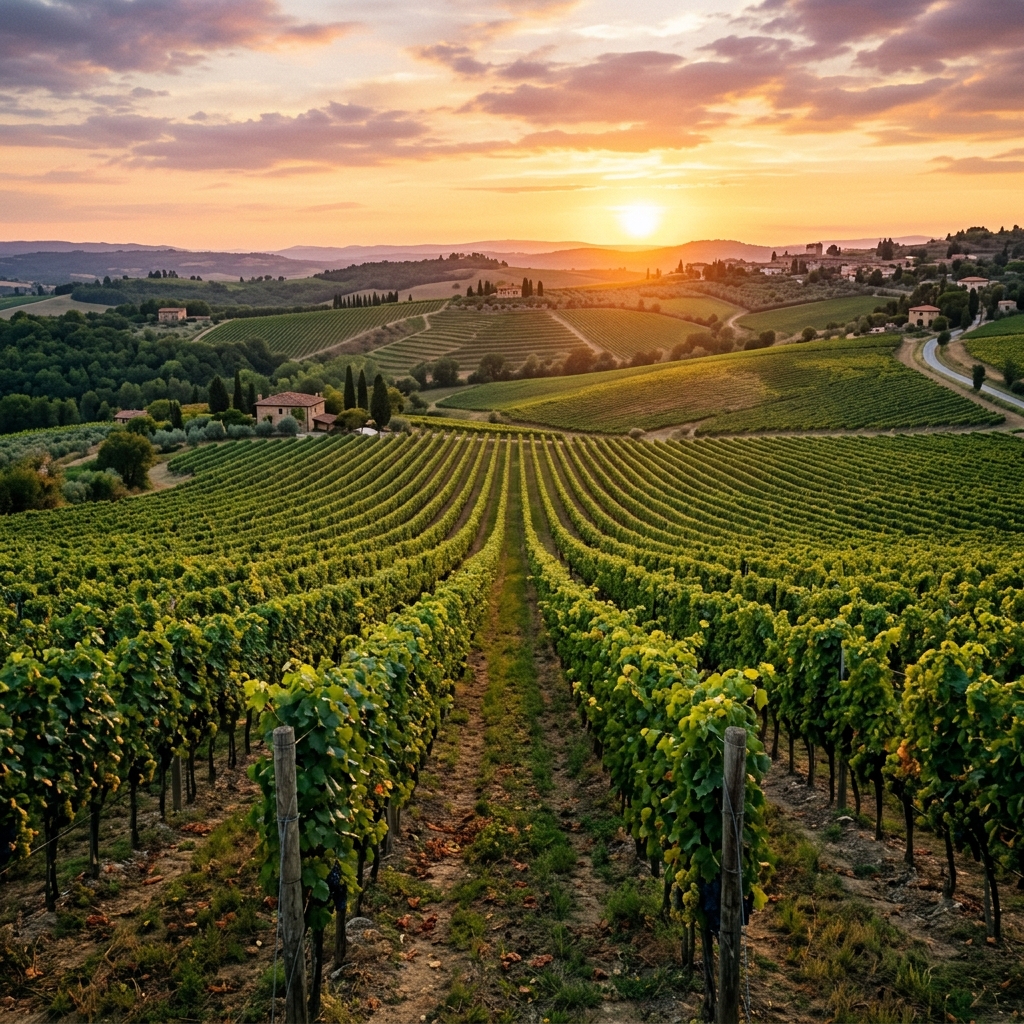
布根地(Burgundy / Bourgogne)是全世界風土哲學(Terroir)的終極聖殿。在此,唯有黑皮諾(Pinot Noir)與夏多內(Chardonnay)兩種高貴品種,卻透過 1247 個微型法定地塊(Climats)演繹出千變萬化的感官交響。從羅曼尼·康帝特級園的空靈神韻到蒙哈榭的金色油脂,布根地代表著人類對土地微細差異的最高敬畏。
| 國家/產區 | ✦ 法國 |
|---|---|
| 核心葡萄品種 | ✦ Pinot Noir ✦ Chardonnay ✦ Aligoté ✦ Gamay |
| Flagship Grapes | 100% Pinot Noir (reds) & 100% Chardonnay (whites) |
| Quality Hierarchy | Structured around strictly delineated land parcels (climats), not estate brands |
| Chablis Enclave | Kimmeridgian fossil oyster limestone producing pure, unoaked mineral Chardonnay |
| Rarity | Accounts for only 3% of French wine production, yet commands the world's highest auction prices |
| Ideal Glassware | Wide-bowled Burgundy glass for capturing delicate ethereal aromas (Glass Guide) |
Burgundy is the intellectual heartland and philosophical summit of French oenology. Stretching from the rolling limestone hills of Auxerre down through the golden escarpment of the Côte d’Or to the borders of Lyon, Burgundy captures the whisper of geology through single-grape perfection.
The Four Signature Wine Styles of Burgundy
Aristocratic Pinot Noir
Ethereal nobility: wild red cherry, violets, damp forest floor (sous-bois), game, and crystalline, gossamer tannins.
Pinot Noir Guide →Opulent Chardonnay
Liquid velvet: ripe white peach, warm brioche, toasted hazelnut, crushed limestone, and scintillating mineral tension.
Chardonnay Guide →Laser-Sharp Chablis
Crystalline purity: green apple, oyster shell, wet chalk, citrus zest, and salivating saline acidity untouched by new oak.
Chablis Guide →Cru Beaujolais (Morgon)
Vibrant joy and depth: black cherry, crushed granite, peony flowers, sweet spice, and buoyant juicy freshness.
Academy Beaujolais →Key Subregions of Burgundy
| Subregion | Primary Soil | Flagship Grapes | Benchmark Communes |
|---|---|---|---|
| Chablis | Kimmeridgian & Portlandian limestone | 100% Chardonnay | Les Clos, Vaudésir, Blanchot, Montée de Tonnerre. |
| Côte de Nuits | Bajocian crinoidal limestone & clay | 100% Pinot Noir | Vosne-Romanée, Gevrey-Chambertin, Chambolle-Musigny. |
| Côte de Beaune | Bathonian limestone & marl | Chardonnay & Pinot Noir | Meursault, Puligny-Montrachet, Corton-Charlemagne, Volnay. |
| Côte Chalonnaise | Limestone outcrops & clay valleys | Pinot Noir & Chardonnay | Mercurey, Rully, Givry, Montagny. |
| Mâconnais | Warm limestone & granite | Chardonnay & Gamay | Pouilly-Fuissé, Saint-Véran, Viré-Clessé. |
Sommelier Food & Wine Pairings
The sheer finesse, ethereal sous-bois perfume, and laser-sharp limestone acidity of Burgundy wines require nuanced culinary balance:
Boeuf Bourguignon & Duck
Côte de Nuits Pinot Noir complements braised beef and roast duck with forest floor sous-bois, sour red cherry lift, and fine tannins.
Meat Pairings →Lobster & Bresse Chicken
Côte de Beaune Chardonnay mirrors rich hazelnut butter sauces while piercing through with vibrant limestone salinity.
Seafood Guide →Oysters & Escargots
Unoaked Kimmeridgian Chablis provides razor-sharp iodine, crushed seashell, and steel that cleanses rich garlic herb butter.
Seafood Guide →Époisses & Aged Comté
Pungent Marc de Bourgogne washed-rind Époisses finds its perfect counterweight in a vibrant village or Premier Cru Pinot Noir.
Cheese & Wine →Continue exploring French wine nobility: compare Burgundy with the gravel majesty of Bordeaux, the effervescence of Champagne, or test your palate in the Wine Academy!
常見問題解答 (FAQ)
What is the official 4-tier Burgundy classification?
Burgundy's hierarchy is based on terroir potential:
• Regional (Bourgogne AOC): ~50% of production; fresh, accessible introductory wines.
• Village (e.g., Gevrey-Chambertin, Meursault): ~35% of production; expressing communal terroir personality.
• Premier Cru (1er Cru): ~10% of production; specific recognized superior vineyard sites.
• Grand Cru: ~1.5% of production; the 33 mythic vineyard apexes (e.g., Chambertin, Musigny, Montrachet).
What are Burgundy Climats?
Inscribed as a UNESCO World Heritage site in 2015, a climat is a precisely delineated vineyard parcel with a specific microclimate, geological history, and exposure documented over a thousand years by Benedictine and Cistercian monks. Two vineyards separated only by a low stone wall (clos) yield wines of distinctly different character.
Why is Burgundy generally more expensive than Bordeaux?
Microscopic vineyard acreage combined with intense worldwide demand. Under Napoleonic inheritance laws, vineyards were divided equally among heirs across generations. A single 10-hectare Grand Cru like Clos de Vougeot may have over 80 independent grower-owners, with each producer crafting only a few hundred bottles annually.