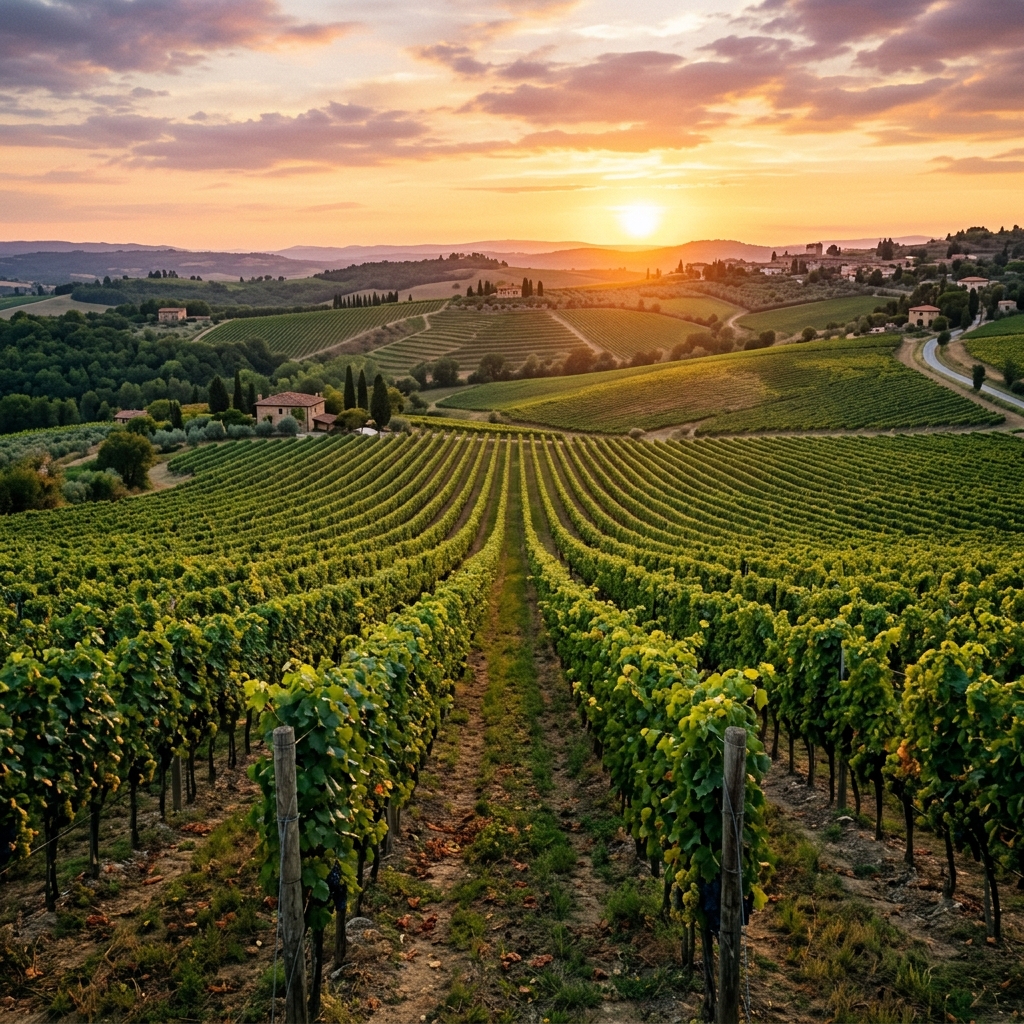
The Douro Valley is the world's oldest demarcated wine region (1756) and a UNESCO World Heritage site. Along the precipitous schist banks of the Douro River, it produces legendary fortified Port wine (Porto) and acclaimed monumental dry reds from indigenous Touriga Nacional and Touriga Franca grapes.
| Country | ✦ Portugal |
|---|---|
| Key Grapes | ✦ touriga-nacional ✦ touriga-franca ✦ tinta-roriz ✦ tinta-barroca ✦ tinto-cao ✦ rabigato ✦ viozinho |
| Oldest Demarcation | 1756 — The Marquis of Pombal legally demarcated Douro's boundaries using carved granite boundary stones (Marcos de Feitoria) |
| Signature Grape | Touriga Nacional — intense aromas of violets, bergamot, blueberries, and formidable structural tannins |
| UNESCO Terraces | Steep slopes with hand-built stone terraces Socalcos and Patamares, tended exclusively by hand |
| Lagar Tradition | Shallow granite troughs (Lagares), where grapes are foot-trodden to ensure gentle phenolic extraction |
| Dry Revolution | Douro DOC — benchmark dry reds (Barca Velha, Douro Boys guild), rivaling top Bordeaux and Rioja |
| Serving Temperature | 16–18 °C for Vintage Port and dry reds, 10–12 °C for Tawny (temperature guide) |
The Douro Valley (Vale do Douro) is a monumental natural and man-made amphitheatre in northern Portugal, recognized as a UNESCO World Heritage site. It stands as the world’s oldest legally demarcated wine region, formally established in 1756 by the Marquis of Pombal. Upon the sun-baked schist slopes carved by the Douro River, it brings forth immortal fortified Port Wine (Porto) and world-class dry red wines under Douro DOC.
Major Wine Styles of the Douro Valley
Douro viticulture seamlessly bridges centuries-old fortification heritage and a modern dry wine renaissance:
Vintage Port
Declared only in benchmark years: blackberry, dark cherry, dark cocoa, pitch resin, crushed violets, and monumental velvety tannins.
👑 Vintage Guide →Aged Tawny
Oxidative aging in seasoned pipas: amber-tawny hue, dried fig, toasted hazelnut, crème brûlée, warm spice, and seamless endless length.
❄️ Serve at 12°C →Douro Tinto
Powerful, refined dry reds: wild blackberry, rockrose, dark cherry, slate minerality, tight-knit structural tannins, and fresh poise.
🥩 Meat Pairings →White Port & Branco
From crisp high-altitude whites made from Rabigato to aged golden White Port displaying honey, citrus peel, and toasted resin notes.
🍸 Aperitif Pairing →Terroir & Soils of the Douro: Vertical Schist, Granite Lagares & River Terraces
Comparison of Key Douro Wine Styles
| Wine Style | Key Grape Varieties | Maturation & Technique | Flavor Profile | Cellaring Potential |
|---|---|---|---|---|
| Vintage Port | Touriga Nacional, Franca, Tinta Roriz | 2 years in wood, decades of bottle aging | Blackberry, dark cherry, dark chocolate, resin, violet | 30–80+ years |
| Aged Tawny (20 yo) | Touriga Franca, Tinta Barroca | 20 years in seasoned 550L oak pipas | Walnut, caramel, dried fig, candied orange peel | Ready upon release |
| Late Bottled Vintage (LBV) | Traditional Douro Field Blend | 4–6 years in large oak vats prior to bottling | Ripe plum, wild berries, baking spice, supple tannins | 5–15 years |
| Douro DOC Tinto Reserva | Touriga Nacional, Tinta Roriz | 12–18 months in French oak barriques | Blackberry, graphite, balsamic herbs, rosemary, fresh tension | 10–25 years |
Sommelier Food Pairing Guide
Douro Valley wines span a magnificent gastronomic spectrum — from succulent steaks to the undisputed world gold standard of cheese pairings:
Stilton & Ewe's Milk Cheeses
English blue Stilton or creamy Portuguese Queijo Serra da Estrela form a timeless harmony with the sweetness and muscular power of Vintage Port.
Cheese Guide →Prime Ribeye & Wild Game
Dry red Douro DOC with its firm tannin grip and herbal nuances matches perfectly alongside grilled ribeye steak and braised venison.
Meat Guide →Dark Chocolate & Nut Tarts
70%+ dark artisanal chocolate marries the dark berry intensity of LBV, while caramelized hazelnut tarts are unmatched alongside 20-year Tawny.
Sweet Pairings →Port & Tonic & Salted Almonds
The iconic Portuguese cocktail Porto Tónico (White Port, tonic, fresh mint, and ice) is exceptional alongside green olives and roasted salted almonds.
Appetizer Guide →Continue exploring the great terroirs of the Iberian Peninsula: visit neighboring Spanish Ribera del Duero along the same river, legendary Rioja, or discover the steep slate slopes of Priorat!
Frequently Asked Questions
What is the key difference between Ruby and Tawny Port styles?
Ruby Port: matured in massive oak vats (balseiros) or stainless steel with minimal oxygen exposure, preserving an opaque ruby hue, exuberant fresh dark fruit (blackberry, black cherry, plum), and vibrant youthful power. The crown jewel is Vintage Port, from an exceptional single harvest, which evolves for decades in bottle.
• Tawny Port: aged in smaller 550-liter seasoned oak casks (pipas). Through 10, 20, 30, or 40 years of gradual micro-oxygenation, its color fades to an amber-tawny hue, revealing decadent notes of dried fig, caramel, roasted hazelnuts, espresso, dried apricot, and vanilla.
How is Port wine made and at what stage is alcohol added?
Must fermentation lasts only 2 to 3 days in granite lagares or fermentation vats. When approximately half of the natural grape sugars have fermented, fermentation is abruptly halted by fortification: neutral grape spirit — aguardente (77% ABV) — is added in a ratio of roughly 1:4 (1 part spirit to 4 parts fermenting must). The yeasts perish, preserving natural residual sugar (around 100 g/l), while the wine reaches its classic 19–20% ABV.
What is the phenomenon of dry, unfortified Douro DOC wines?
Historically, virtually all top Douro fruit was channeled into Port. However, following the pioneering creation of Barca Velha in 1952 and the formation of the 'Douro Boys' guild in 2003, the region proved to the world that its schist terroirs and native varieties like Touriga Nacional and Touriga Franca craft some of Europe's most complex, mineral, and age-worthy dry red wines.
What are the three primary subregions of the Douro Valley?
The Douro Valley is partitioned into three distinct climatic sectors from west to east:
1. Baixo Corgo (Lower Corgo): the westernmost and wettest zone under Atlantic influence; wines are lighter and fresh.
2. Cima Corgo (Upper Corgo): the historic core around Pinhão; home to premier estates (Quintas) supplying Vintage Port.
3. Douro Superior (Upper Douro): stretching to the Spanish border; the hottest, most arid sector, celebrated for powerful dry reds.