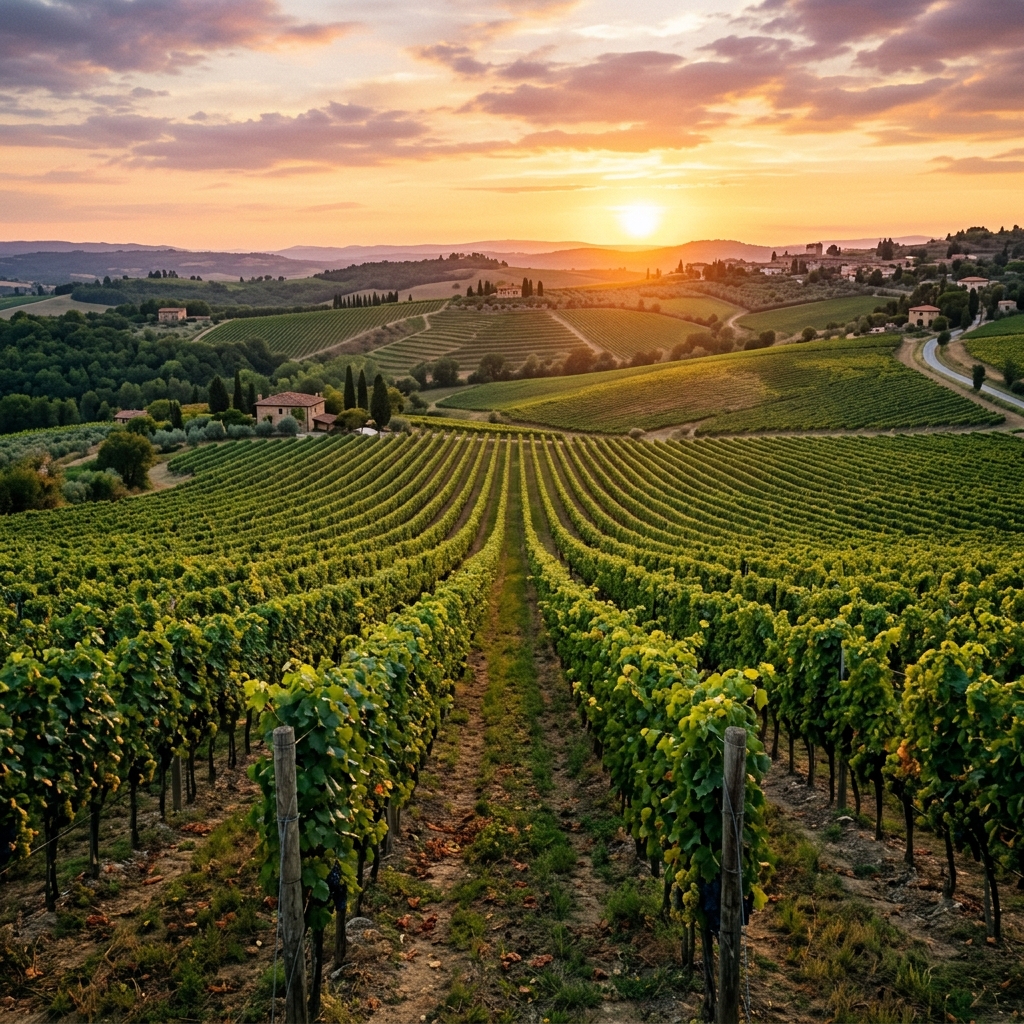
Sicily is the Mediterranean's volcanic crown jewel experiencing a wine renaissance: from ethereal, high-altitude mineral masterpieces of Etna Rosso on active lava slopes (Nerello Mascalese) to sun-drenched, velvety Nero d'Avola and saline white Grillo.
| Country | ✦ Italy |
|---|---|
| Key Grapes | ✦ nero-d-avola ✦ nerello-mascalese ✦ carricante ✦ grillo ✦ frappato ✦ catarratto |
| Volcanic Marvel | Etna Rosso DOC — Nerello Mascalese grown at 600–1000m on Mount Etna ("The Mediterranean Burgundy") |
| Sole DOCG Pinnacle | Cerasuolo di Vittoria DOCG — the noble blend of bold Nero d'Avola and floral, fresh Frappato |
| Native Red King | Nero d'Avola — ripe dark plum, blackcurrant, sweet spice, and cocoa |
| Volcanic White Elegance | Etna Bianco (Carricante) & Grillo — saline sea spray, crushed flint, grapefruit zest, and Mediterranean thyme |
| Serving Temperatures | 14–16 °C for Etna Rosso; 16–18 °C for Nero d'Avola; 8–10 °C for Etna Bianco (serving guide) |
Sicily (Sicilia) is the Mediterranean’s largest island and one of the most hypnotic wine landscapes in Italy. Here, scorching African winds from the Sahara meet the snowy, glacial vents of Mount Etna—Europe’s highest active volcano—fostering an extraordinary continuum of styles, from aristocratic, smoke-laced Etna Rosso to opulent, sun-drenched Nero d’Avola.
Key Wine Styles & Appellations of Sicily
Sicily’s viticultural map is anchored by four dramatic, contrasting expressions:
Volcanic Terroirs of Mount Etna & High Altitudes
The slopes of active Mount Etna represent one of the planet’s most extreme and revered wine environments:
Comparison of Major Sicilian Wine Styles
| Appellation / Wine | Grape Composition | Terroir & Soils | Sensory Fingerprint |
|---|---|---|---|
| Etna Rosso DOC | Nerello Mascalese (80%+), Nerello Cappuccio | 600–1,000m, basalt lava & ash | Wild sour cherry, campfire smoke, flint, dried rose petals, noble grip |
| Cerasuolo di Vittoria DOCG | Nero d’Avola (50–70%), Frappato (30–50%) | 200–350m, red sand & limestone | Juicy red cherry, pomegranate, violet blossom, soft supple tannins |
| Nero d’Avola Sicilia DOC | 100% Nero d’Avola | Lowland & coastal clay-chalk | Dark plum, blackberry compote, mocha, warm Mediterranean herbs |
| Etna Bianco DOC | Carricante (60%+), Catarratto | 700–950m, pure volcanic basalt | White peach, bitter lemon, wild oregano, electric acidity, ocean salinity |
Sommelier Food Pairing Guide
Sicilian gastronomy celebrates the ocean’s fresh harvest, sun-ripened garden vegetables, and charcoal-grilled meats:
Pasta alla Norma
Crispy fried eggplant, rich San Marzano tomato sauce, and salted Ricotta Salata create a magical match with vibrant Cerasuolo di Vittoria.
Pasta Guide →Grilled Swordfish & Salmoriglio
Pesce Spada seasoned with lemon juice, oregano, garlic, and extra virgin olive oil echoes the saline, stony minerality of Etna Bianco.
Fish Guide →Sweet-Sour Caponata & Lamb
The sweet-sour (agrodolce) caponata alongside char-grilled lamb chops harmonizes with Nero d'Avola's dark plum and herbal warmth.
Meat Guide →Cannoli Siciliani & Passito
Crispy pastry shells piped with sweet sheep's milk ricotta and candied orange peel paired with golden sun-dried Passito di Pantelleria.
Dessert Guide →Continue exploring Italy: journey to sun-drenched southern Puglia, volcanic Campania, or take your master examination in Level 3 Wine Academy!
Frequently Asked Questions
Why are Mount Etna wines (Etna DOC) heralded as the \"Burgundy of the Mediterranean\"?
The indigenous grape Nerello Mascalese, thriving on black basaltic lava terraces between 600 and 1,000 meters above sea level, yields pale, translucent, yet astonishingly concentrated wines. Thanks to dramatic diurnal temperature swings and mineral-rich volcanic ash, Etna Rosso displays the same aristocratic tension, fine-grained tannins, and haunting aromatics of sour red cherry, flint, dried rose petals, and woodsmoke found in top Burgundy Pinot Noirs and Piedmont Nebbiolos.
What is the fundamental difference between Nero d'Avola and Nerello Mascalese?
Nero d'Avola ("The Black of Avola") is Sicily's sun-loving champion of warm rolling southern hills: it delivers deep ruby pigmentation, ripe blackberry, sweet plum, melted dark chocolate, and rounded, velvety tannins. Nerello Mascalese is an austere alpine aristocrat grown on the slopes of an active volcano: pale in color, briskly high in acidity, and defined by crushed granite, graphite minerality, and savory wild herbs.
What are \"Contrade\" on the volcanic slopes of Mount Etna?
Contrade (singular: Contrada) are Mount Etna's historic single-vineyard crus. These parcels are geographically demarcated by distinct ancient lava flows (colate di lava) from eruptions occurring between the 17th and 20th centuries. Because each lava flow possesses a unique mineral composition, altitude, and microclimatic exposure, single-contrada bottlings (such as Rampante, Guardiola, or Chiappemacine) express remarkably varied terroir nuances.
Related Guides
- Pinot Noir & BurgundyCompare Etna Rosso's pale elegance with classic Burgundian Pinot Noir
- Wine for Fish & SeafoodWhy saline Etna Bianco and Grillo are masterclass seafood matches
- Wine for PastaPairing Sicilian Pasta alla Norma with native red varieties
- Academy Exam (Level 3)Test your knowledge on iconic volcanic terroirs and Italian crus