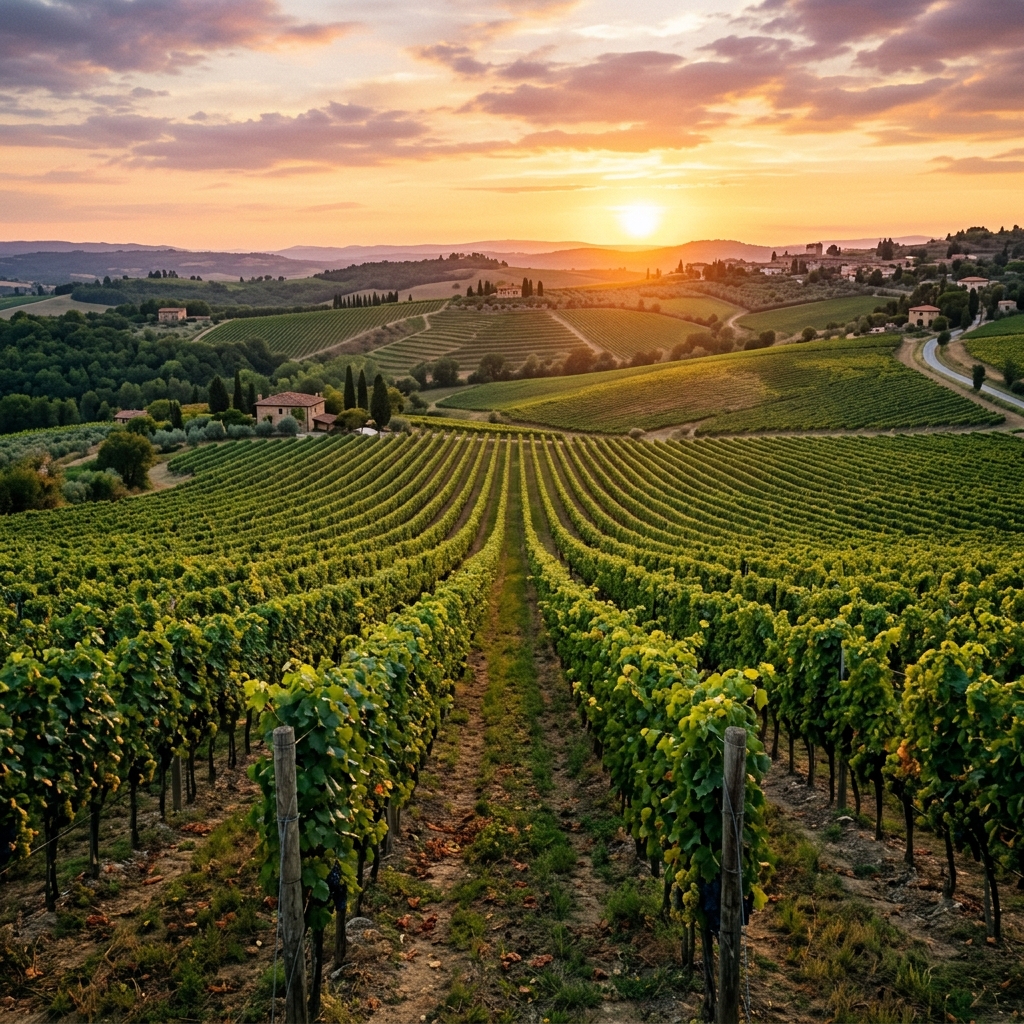
The Hunter Valley is Australia's oldest and historically most revered wine region, planted in the 1820s by the 'father of Australian viticulture' James Busby. Located in New South Wales north of Sydney, the valley is universally celebrated for two distinct benchmarks: unique bone-dry Hunter Semillon—harvested early and un-oaked, evolving across decades into golden toast, beeswax, and honey—and savory, medium-bodied historic Shiraz.
| Country | ✦ Australia |
|---|---|
| Key Grapes | ✦ semillon ✦ shiraz ✦ chardonnay ✦ verdelho |
| Cradle of Australian Viticulture | Australia's oldest wine region: here in 1832 James Busby planted his historic collection of European vine cuttings |
| The Hunter Semillon Phenomenon | Harvested early at low alcohol (10–11.5% ABV); without any oak contact, it ages gracefully for 20–30 years into honeyed toast |
| Birthplace of Australian Chardonnay | In 1971 Murray Tyrrell crafted Tyrrell's Vat 47—the first commercially released Chardonnay in Australian history |
| Brokenback Range Terroir | The ancient mountain ridge provides basalt slopes for savory Shiraz and sandy alluvial river flats for mineral Semillon |
| Serving Temperature | 8–10 °C for young Semillon, 11–13 °C for aged versions; 16–18 °C for elegant Shiraz (temperature guide) |
The Hunter Valley is the historic sanctuary and cradle of Australian wine. Situated 160 kilometers north of Sydney in New South Wales, this picturesque valley safeguards some of the oldest continuously producing, ungrafted vines on Earth. Shielded from phylloxera, its living history is preserved in sandstone cellars and heritage homesteads established by pioneers during the reign of Queen Victoria.
Signature Wine Styles of Hunter Valley
A unique subtropical climate and nearly two centuries of winemaking wisdom define its world-renowned wine portfolio:
Terroir & Soils of Hunter Valley: Brokenback Basalt & River Alluvium
Despite its warm, subtropical latitude (32°S), distinctive mesoclimatic and soil patterns protect the vines:
Principal Grape Varieties of Hunter Valley
| Grape Variety | Vineyard Share | Aroma & Palate Profile | Role in the Region |
|---|---|---|---|
| Semillon | ~38% (White King) | Young: lime, lemongrass, flint. Aged: honey, toast, beeswax, roasted nuts | Hunter’s undisputed signature grape, delivering a one-of-a-kind global wine style |
| Shiraz | ~32% (Red Flagship) | Earth, vintage leather, red cherry, white pepper, cedar, medium weight | Historic elegant Australian Shiraz honoring 19th-century ungrafted heritage bush vines |
| Chardonnay | ~18% (1970s Classic) | Peach, grapefruit, brioche, creamy butter, fine smoky oak undertones | Home of Australia’s first commercial Chardonnay release with the iconic Vat 47 |
| Verdelho | ~8% (Tropical Vibrancy) | Ripe mango, guava, citrus zest, refreshing spicy finish | Madeira-heritage grape crafting aromatic, succulent, and highly gastronomic whites |
Sommelier Food Pairing Guide
Hunter Valley’s dramatic spectrum—from bone-dry young whites to aged honeyed treasures and savory reds—inspires extraordinary culinary pairings:
Sydney Rock Oysters
A New South Wales classic: mineral-rich, saline rock oysters find their natural partner in the crisp lime and flint tension of youthful Hunter Semillon.
Seafood Guide →Honey-Glazed Roast Free-Range Chicken
The waxy, nutty, and honeyed complexity of a 10-year-old Hunter Semillon creates an exquisite counterpoint to succulent roasted poultry with caramelized skins.
Poultry Guide →Black Peppercorn Ribeye Steak
Leather, red plum, and ground pepper notes in classical Hunter Shiraz mirror the richness of marbled prime beef and savory pan sauce.
Steak Pairing Guide →Hunter Valley Ash Brie & Cheddar
Creamy local cheeses from Hunter Valley artisan cheesemakers are brought to life by the buttery richness and toasted oak accents of regional Chardonnay.
Cheese Guide →Continue exploring Australian viticulture: discover maritime grace in Margaret River, feel the warmth and power of Barossa Valley, or test your skills in the Wine Academy!
Frequently Asked Questions
Why is Hunter Valley Semillon considered a global wine anomaly?
Hunter Semillon is one of world viticulture's great paradoxes. Grapes are picked very early at modest sugar levels yielding merely 10–11.5% potential alcohol and vibrant natural acidity. Fermented entirely in neutral stainless steel and bottled without oak maturation, it tastes taut, lean, and grassy with lemon-lime zest in its youth. Yet after 10–25 years in bottle, it magically develops a deep golden color and opulent nuances of buttered brioche, roasted hazelnuts, beeswax, dried fig, and honey—all while retaining electric freshness without a splinter of oak.
How does Hunter Valley Shiraz differ from Barossa and McLaren Vale styles?
Unlike hot South Australian regions known for monumental, high-octane, and jammy fruit bombs, Hunter Shiraz is the historical benchmark of restraint and savory complexity. Tempered by afternoon cloud cover and maritime breezes, it displays medium body, moderate 13–13.5% ABV, and distinctive earthy character: red cherry, leather, white pepper, dry forest floor, graphite, and warm spice.
Who was James Busby and why is his legacy tied to the Hunter Valley?
James Busby is universally celebrated as the 'father of Australian viticulture'. In 1831, he undertook an epic tour across French and Spanish vineyards, collecting hundreds of classical vine cuttings (including Syrah/Shiraz). Planting them on his Hunter Valley estate Kirkton, Busby established the genetic foundation that seeded the entire modern Australian wine industry.
Related Guides
- Margaret River RegionCompare Western Australia's maritime elegance with Hunter's historic heritage
- Barossa Valley RegionContrast Hunter's savory Shiraz with Barossa's powerful, full-bodied expressions
- Chardonnay Grape GuideDiscover how Tyrrell's iconic Vat 47 redefined New World white winemaking
- Wine Academy Quiz (Level 2)Test your knowledge on New South Wales wine geography and Semillon aging styles