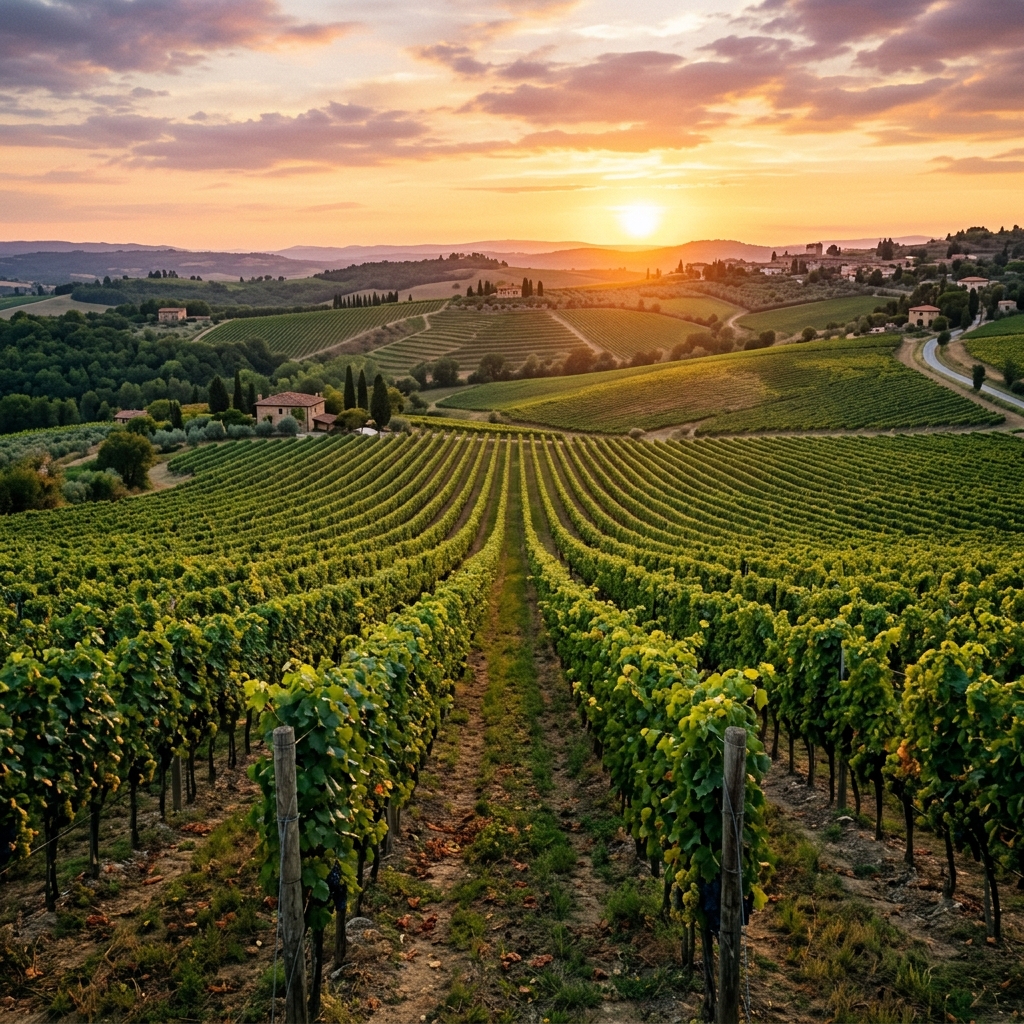
Casablanca Valley is Chile's premier cool-climate wine region, nestled 20–30 km from the Pacific Ocean. Influenced by the Antarctic Humboldt Current and morning Camanchaca coastal fogs, Casablanca yields benchmark New World whites—electrifying Sauvignon Blanc with passionfruit and lime, mineral Chardonnay, and refined, silky Pinot Noir.
| Country | ✦ Chile |
|---|---|
| Key Grapes | ✦ sauvignon-blanc ✦ chardonnay ✦ pinot-noir ✦ syrah |
| Benchmark Grapes | Sauvignon Blanc, Chardonnay, Pinot Noir |
| Pacific Influence | Pacific Ocean (20–30 km) and the icy Antarctic Humboldt Current (12–14 °C water temperature) |
| Climate Phenomenon | Camanchaca — thick marine fog blanketing vineyards every morning until midday |
| Geology & Soils | Ancient weathered coastal granite (100+ million years old) overlaid with red clay and loam |
| Wine Profile | Vibrant citrus-tropical aromatics, crystalline natural acidity, flinty minerality, and saline finish |
| Serving Temperature | 8–10 °C for Sauvignon Blanc; 10–12 °C for Chardonnay; 14–16 °C for Pinot Noir (serving guide) |
Casablanca Valley is the modern miracle of Chilean viticulture. Until the early 1980s, the valley was dismissed as far too cold for grape cultivation and relegated to cattle pasture. But pioneering oenologist Pablo Morandé recognized dramatic climatic similarities to California’s Carneros and planted the first experimental Sauvignon Blanc vines in 1982, inaugurating Chile’s cool-climate Pacific revolution.
Signature Wine Styles of Casablanca Valley
The cool coastal climate crafts crystalline, chiseled, and mineral-driven wines:
Sauvignon Blanc
The valley's international signature: electrifying lime, pink grapefruit, passionfruit, lemongrass, wet granite, and a refreshing saline finish.
Sauvignon Guide →Casablanca Chardonnay
An aristocratic New World classic: white peach, crisp yellow apple, lemon curd, hazelnut, brioche, and crystalline flinty depth.
Chardonnay Guide →Pinot Noir
Graceful and pure: ripe red raspberry, wild strawberry, black cherry, forest floor, pink peppercorn, and seamless silky tannins.
Pinot Noir Guide →Cool-Climate Syrah
Reminiscent of Northern Rhône Côte-Rôtie: cracked white pepper, violet, wild blueberry, graphite, tapenade, and brisk freshness.
Syrah Guide →Sub-Zones and Sectors of Casablanca Valley
The valley extends west toward the ocean, growing progressively colder:
| Sector / Zone | Distance to Ocean | Soils & Microclimate | Benchmark Varieties & Profile |
|---|---|---|---|
| Las Dichas | 18–22 km (Far West) | Coldest maritime sector, pure decomposed granite | Crystalline Sauvignon Blanc, chiseled Chardonnay |
| El Ovalle | 25–30 km (Central) | Sandy-clay soils, balanced solar warmth and morning fogs | Silky Pinot Noir, benchmark classical Chardonnay |
| Tapihue / Lo Ovalle | 35–40 km (East) | Warmer hillside slopes, gravelly clay loam | Elegant cool-climate Syrah, Merlot, Pinot Gris |
Sommelier Food Pairing Guide
The electric acidity and saline minerality of Casablanca whites offer an unbeatable match for fresh oceanic seafood:
Chilean Sea Bass Ceviche
Ultra-fresh white fish marinated in fresh lime juice, cilantro, and chili finds its quintessential foil in Casablanca Sauvignon's razor acidity.
Fish Pairing Guide →Centolla King Crab & Scallops
Sweet, succulent Antarctic king crab with drawn butter and seared sea scallops match beautifully with creamy, flinty Chardonnay.
Seafood Guide →Duck Breast with Cherry Glaze
Pan-seared duck magret with tart cherry reduction highlights the vibrant red berry perfume and spice notes of cool Pinot Noir.
Duck & Poultry Guide →Herb-Crusted Beef Tenderloin
Charcoal-grilled lomo tenderloin paired with cool Syrah's cracked black pepper and dark olive notes creates an aristocratic harmony.
Steak & Meat Guide →Continue exploring Chile: journey to the powerhouse of Cabernet Sauvignon and Carmenère in the Maipo Valley, or cross the Andes to discover the Malbec paradise of Mendoza!
Frequently Asked Questions
Why does warm, sunny Chile produce some of the world's most crisp white wines?
The secret of Casablanca Valley lies in its open east-west topography facing the Pacific Ocean. The freezing Antarctic Humboldt Current sweeps up the Chilean coastline, pumping icy sea breezes directly into the valley. This cools daily temperatures by up to 10 °C compared to nearby Santiago, allowing white grapes to mature slowly while preserving vibrant natural acidity.
What are the morning Camanchaca fogs and how do they benefit vines?
Camanchaca is a dense coastal fog that rolls in from the Pacific each evening and encloses the valley until late morning. It acts as an organic solar shield, lowering solar radiation, reducing vine transpiration, and preventing sunburn on fragile Sauvignon Blanc and Pinot Noir grapes.
How does Casablanca Sauvignon Blanc differ from New Zealand Marlborough?
While Marlborough Sauvignon Blanc leans heavily into pungent green pyrazines (jalapeño, boxwood, canned peas) and aggressive passionfruit, Casablanca Sauvignon Blanc combines juicy pink grapefruit, lime zest, and white peach with distinctive saline minerality and smoky crushed-granite complexity derived from its ancient coastal soils.