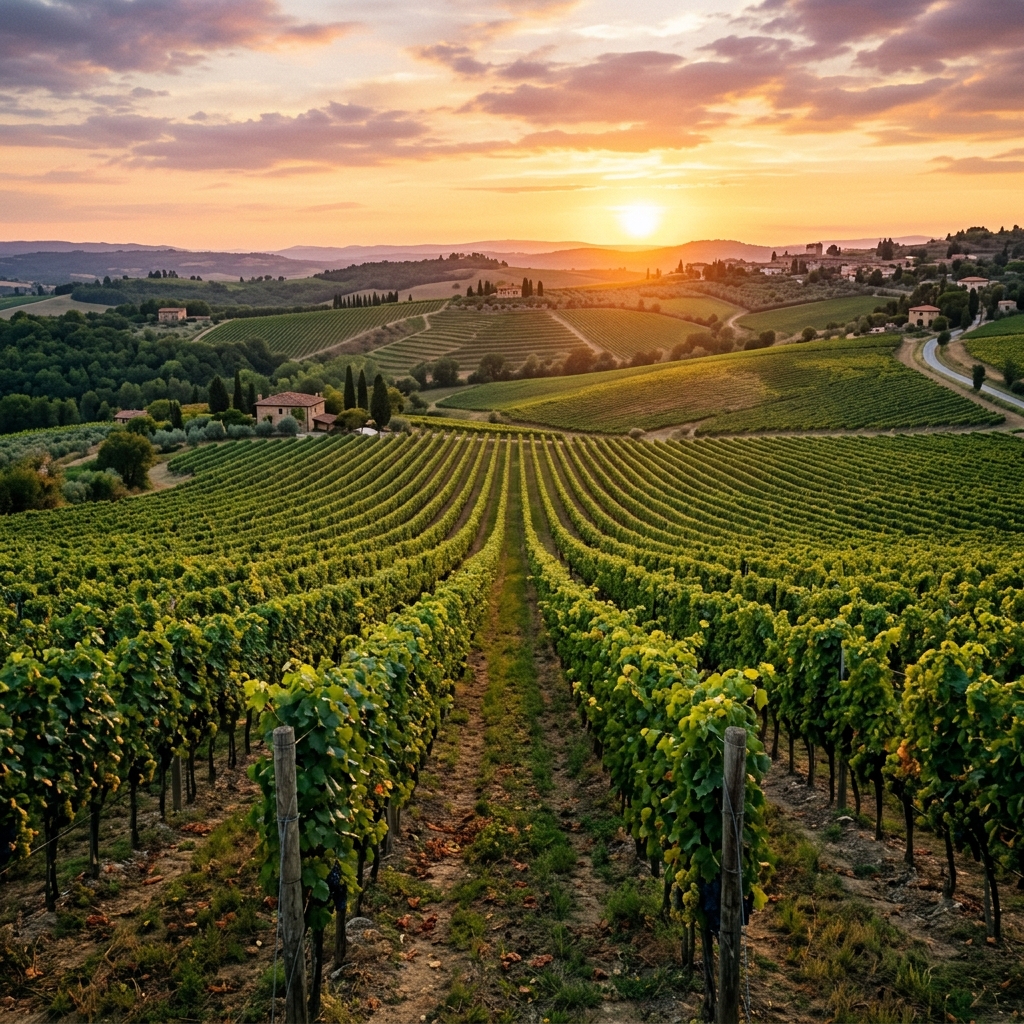
Viognier is an opulent, full-bodied white grape variety celebrated for intoxicating aromas of ripe apricot, white peach, honeysuckle, and ginger. Native to the Northern Rhône Valley (where it reaches its zenith in Condrieu), it offers a lavish, oily texture, moderate-to-low acidity, and warming alcohol.
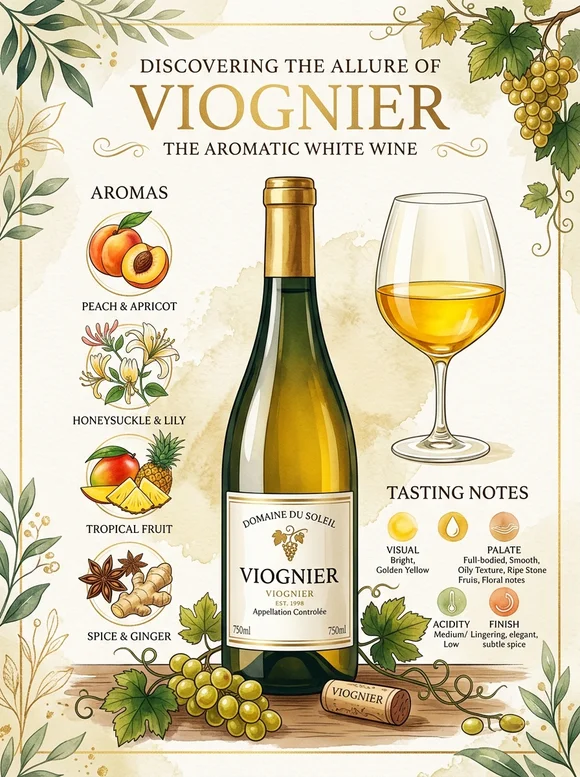
Taste Profile & Sensory Structure
Rating on 1–5 scaleKey Aromas & Flavor Descriptors
| Wine Style | White Wine |
|---|---|
| Origin / Homeland | Condrieu, Northern Rhône, France |
| Other Names | Viognier, Vionnier |
| Acidity Profile | 2/5 — naturally low and soft, bestowing a silken, oily palate coating |
| Alcohol Range | Generous: frequently 13.5–15.0% ABV, providing substantial weight and warmth |
| Condrieu Sanctuary | A minuscule 200-hectare appellation on steep granite terraces — the global gold standard for 100% Viognier |
| Serving Temperature | 10–12 °C (50–54 °F) — avoid chilling too cold to preserve its voluptuous aromatic bouquet |
Viognier is the white wine for red wine lovers. Voluptuous, exotic, and richly textured, it seduces the palate with ripe apricot, white peach, crushed ginger, and delicate floral honeysuckle, backed by an unctuous mouthfeel that few white grapes can rival.
Explore Viognier in Depth
Master this Northern Rhône jewel through our four comprehensive Academy guides: sensory analysis, steep granite terroirs, rich culinary pairings, and buyer selections.
Frequently Asked Questions
Is Viognier sweet?
Almost always completely dry. The illusion of sweetness is generated by the wine's intensely perfumed apricot, white peach, and honeysuckle aromatics combined with soft, low acidity and higher alcohol levels. The human palate interprets this rich, rounded warmth as fruit sweetness even when zero residual sugar remains.
Why was Viognier nearly extinct, and why is it expensive?
Viognier is a notoriously temperamental vine: it produces unpredictable, low yields, is prone to powdery mildew, and must be harvested at the exact razor-edge moment of ripeness (too early it is flavorless; one day too late it loses all acidity). By the late 1960s, barely 14 hectares remained in Condrieu. Its revival has created world-renowned, labor-intensive artisan wines.
Why is white Viognier co-fermented with red Syrah in Côte-Rôtie?
In the legendary Northern Rhône appellation of Côte-Rôtie, winemakers are legally permitted to co-ferment up to 20% white Viognier alongside dark Syrah grapes. Viognier stabilizes the red wine's color pigments through a biochemical process called co-pigmentation while contributing an ethereal floral violet and apricot perfume to the finished red wine.
Related Guides
- How to Recognize Viognier in the GlassVoluptuous body, apricot and honeysuckle aromas, and low acidity markers
- Where Viognier GrowsCondrieu, Château-Grillet, Languedoc, and California's Central Coast
- Food Pairing with ViognierCreamy seafood, spiced poultry, squash soups, and rich soft cheeses
- What to Buy (Viognier)Condrieu gems, Southern French values, and Australian Eden Valley picks
- Rhône ValleyThe historic sun-drenched terroir of Syrah, Grenache, and majestic Viognier
Last updated: September 19, 2026