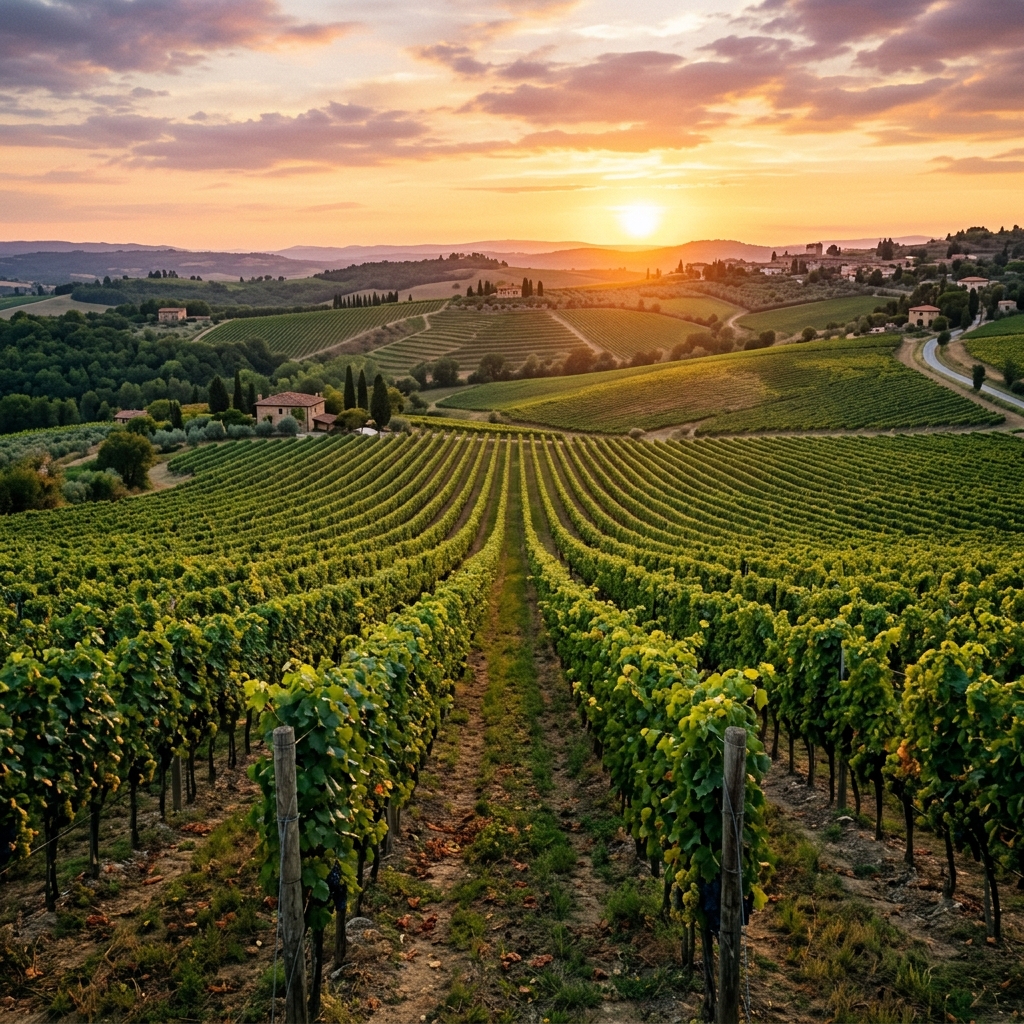
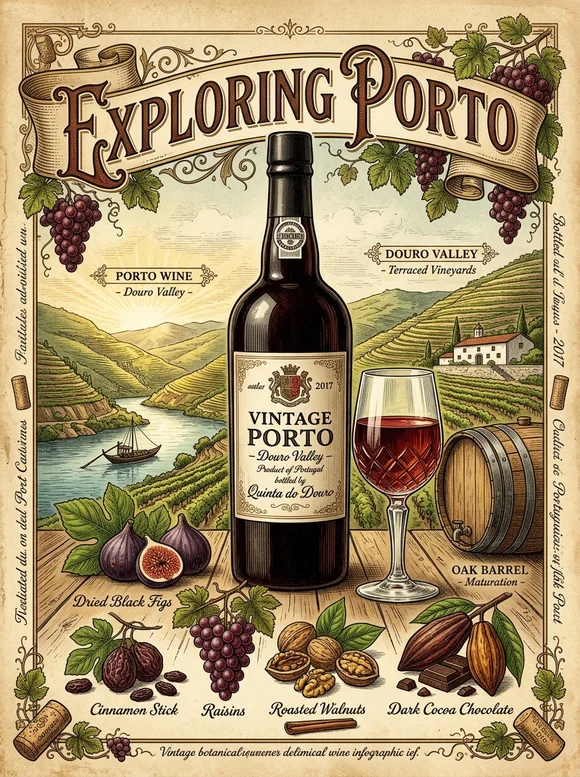
Port is Portugal's historic fortified sweet wine from the rugged, terraced schist hillsides of the Douro Valley. Fortified during fermentation with grape spirit (aguardente) to retain natural residual sugars and achieve 19–22% ABV, Port spans two distinct universes: luscious, berry-drenched reductive Ruby styles (Reserve, LBV, Vintage) and mellow, barrel-oxidized Tawny styles (10, 20, 30, 40 Years, Colheita) offering dried fig, walnut, and toffee.
Taste Profile & Sensory Structure
Rating on 1–5 scaleKey Aromas & Flavor Descriptors
| Wine Style | Red Wine |
|---|---|
| Origin / Homeland | Douro Valley, Portugal |
| Other Names | Port, Porto, Vinho do Porto, Douro Fortified |
| Alcohol by Volume | 19–22% ABV (fortified with 77% clear grape spirit / aguardente) |
| Signature Grape Blend | Touriga Nacional, Touriga Franca, Tinta Roriz (Tempranillo), Tinta Barroca, Tinto Cão |
| Maturation Styles | Ruby (bottle/large vat reductive aging) vs Tawny (small wooden pipas oxidative aging) |
| Ideal Serving Temperature | 14–16 °C (57–61 °F) for Tawny; 16–18 °C (61–64 °F) for Vintage & LBV; chilled (8–10 °C) for White Port |
Port Wine (Vinho do Porto) is one of the grandest fortified wines on Earth, born from the dramatic sun-baked schist terraces of Portugal’s Douro Valley. Fortified midway through fermentation with clear grape spirit to capture intense berry sweetness, Port evolves across decades into either ink-dark, fruit-explosive Ruby wines or amber-hued, hazelnut-scented Tawny masterpieces.
Explore Port Wine in Depth
Master Portugal's legendary fortified treasure through our four sommelier-curated Academy guides: sensory profile, Douro schist terroirs, Stilton & chocolate pairings, and buyer classifications.
Frequently Asked Questions
What is the fundamental difference between Ruby and Tawny Port?
The distinction lies in oxygen exposure during aging. Ruby Ports (including Reserve, Late Bottled Vintage, and Vintage) mature in massive vats or glass bottles with virtually no oxygen contact, preserving vibrant purple-ruby colors and explosive flavors of dark plum, blackberry, and chocolate. Tawny Ports spend decades in small 550-liter oak casks (pipas), undergoing gentle micro-oxidation that turns their hue amber-russet and imparts dried fig, walnut, maple, and toffee complexity.
When is Port fortified during winemaking?
Port is fortified during active alcoholic fermentation, typically when approximately half of the grape sugar has converted to alcohol (around 6–8% natural alcohol). High-proof neutral grape spirit (aguardente, 77% ABV) is added in a 1:4 ratio, instantly killing the yeast cells. This halts fermentation, preserving roughly 90–120 g/l of natural unfermented grape sugar while lifting the wine to 19–20% ABV.
How long can an opened bottle of Port last?
It depends entirely on the style. Because Tawny Ports are already oxidatively aged in wood, an opened bottle easily stays fresh for 1 to 3 months when recorked in the refrigerator. In contrast, Vintage Port behaves like fine dry red wine: once uncorked, it oxidizes quickly and should be consumed within 24 to 48 hours. LBV (Late Bottled Vintage) remains expressive for about 1 to 2 weeks.
Related Guides
- How to Recognize Port Wine in the GlassSensory breakdown of Ruby vs Tawny, viscosity, and tasting anatomy
- Where Port Wine GrowsDouro Valley schist slopes, Cima Corgo, and Vila Nova de Gaia lodges
- Food Pairing with Port WineStilton cheese, dark chocolate truffles, roasted nuts, and cigars
- What to Buy (Port Wine)LBV, 10 & 20 Year Tawny, Single Quinta, and collector Vintage Ports
- Douro Valley RegionExplore the world's oldest demarcated wine valley and UNESCO heritage
Last updated: September 20, 2026