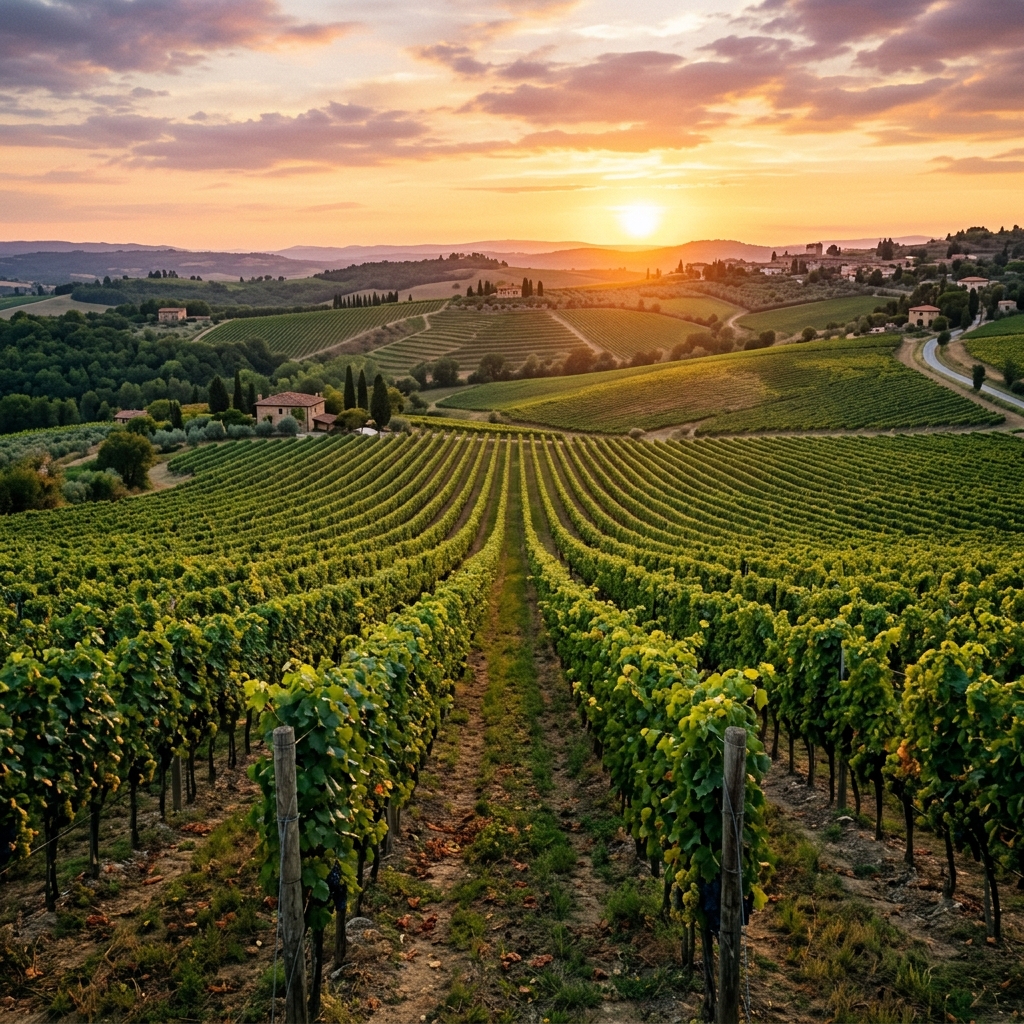
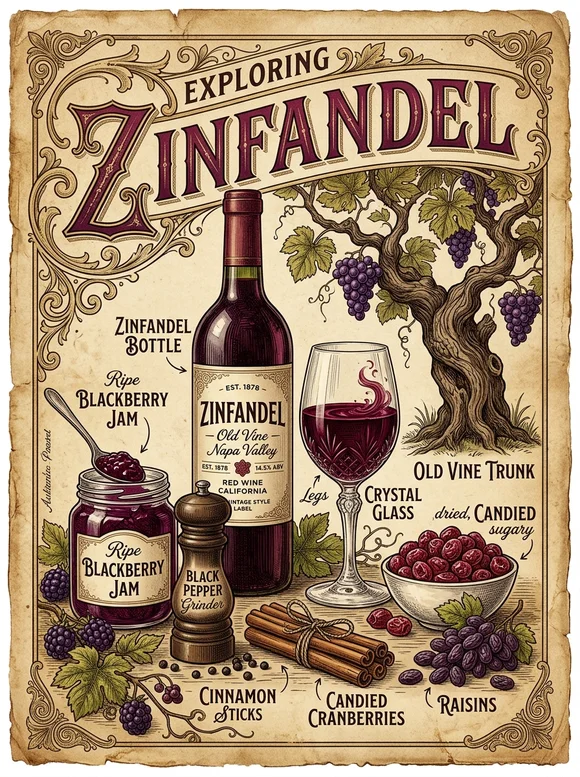
Zinfandel (genetically identical to Italy's Primitivo and Croatia's ancient Tribidrag) is California's celebrated powerhouse red grape. Boasting bold, hedonistic flavors of blackberry jam, sweet dried raisins, cracked black pepper, and campfire smoke, it delivers immense body and warming alcohol (frequently 15–16% ABV) without harsh tannins.
Taste Profile & Sensory Structure
Rating on 1–5 scaleKey Aromas & Flavor Descriptors
| Wine Style | Red Wine |
|---|---|
| Origin / Homeland | Croatia (Tribidrag) — global spiritual home: California, USA |
| Other Names | Zinfandel, Primitivo (Puglia, Italy), Tribidrag / Crljenak Kaštelanski (Croatia) |
| High Alcohol Range | Typically 14.5–16.0% ABV — among the most naturally potent dry red wines on Earth |
| Genetic Identity | DNA profiling confirmed Zinfandel, Italian Primitivo, and Croatian Tribidrag are the exact same grape |
| White Zinfandel Phenomenon | Mass-market sweet pink blush wine invented by Sutter Home in 1972; bears zero relation to serious red Zinfandel |
| Serving Temperature | 15–17 °C (59–62 °F) — slightly cooler serving tames its fiery alcohol warmth |
Zinfandel is California’s bold, swaggering viticultural champion. Unabashedly rich, intense, and deeply satisfying, it unleashes an avalanche of ripe blackberry jam, sweet dried figs, sweet cinnamon, and cracked black pepper, backed by a warming alcohol glow that makes it the king of the grill.
Explore Zinfandel in Depth
Master California's powerhouse through our four comprehensive Academy guides: sensory analysis, ancient bush-vine terroirs, barbecue gastronomy, and cellar picks.
Frequently Asked Questions
Are Zinfandel and Italian Primitivo the same grape?
Yes. Comprehensive genetic DNA fingerprinting by UC Davis professor Carole Meredith proved that California's Zinfandel, southern Italy's Primitivo (Puglia), and Croatia's ancient Tribidrag are genetically identical. Stylistically, California Old Vine Zinfandels tend to be more opulent, jammy, and barrel-spiced, whereas Italian Primitivos offer slightly rustier, sun-baked Mediterranean earthiness.
What is White Zinfandel?
White Zinfandel is an accidental commercial invention from 1972, created when a stuck fermentation at California's Sutter Home winery left residual sugar in a pale pink saignée run-off. It is a mass-market, sweet, inexpensive pink blush wine. Serious wine enthusiasts distinguish it entirely from bold, dry, complex red Zinfandel.
Why does red Zinfandel often taste distinctly sweet or jammy?
Zinfandel clusters ripen notoriously unevenly: a single bunch can contain green, ripe, and sun-shriveled raisin berries all at once. Because sugar levels are sky-high, yeast often leaves behind 4–8 g/L of natural residual sugar before giving up around 15.5% alcohol. This subtle residual sweetness, combined with luscious blackberry compote fruit, creates a luxurious jammy richness.
Related Guides
- How to Recognize Zinfandel in the GlassBlackberry jam, black pepper, high alcohol, and blind tasting keys
- Where Zinfandel GrowsLodi old vines, Dry Creek Valley, Paso Robles, and Puglia
- Food Pairing with ZinfandelBarbecue brisket, glazed ribs, bacon burgers, and pepperoni pizza
- What to Buy (Zinfandel)Century-old vines, benchmark Sonoma producers, and Italian values
- CaliforniaThe sunshine epicentre of Napa Valley, Sonoma, and ancient Zinfandel vineyards
Last updated: September 19, 2026