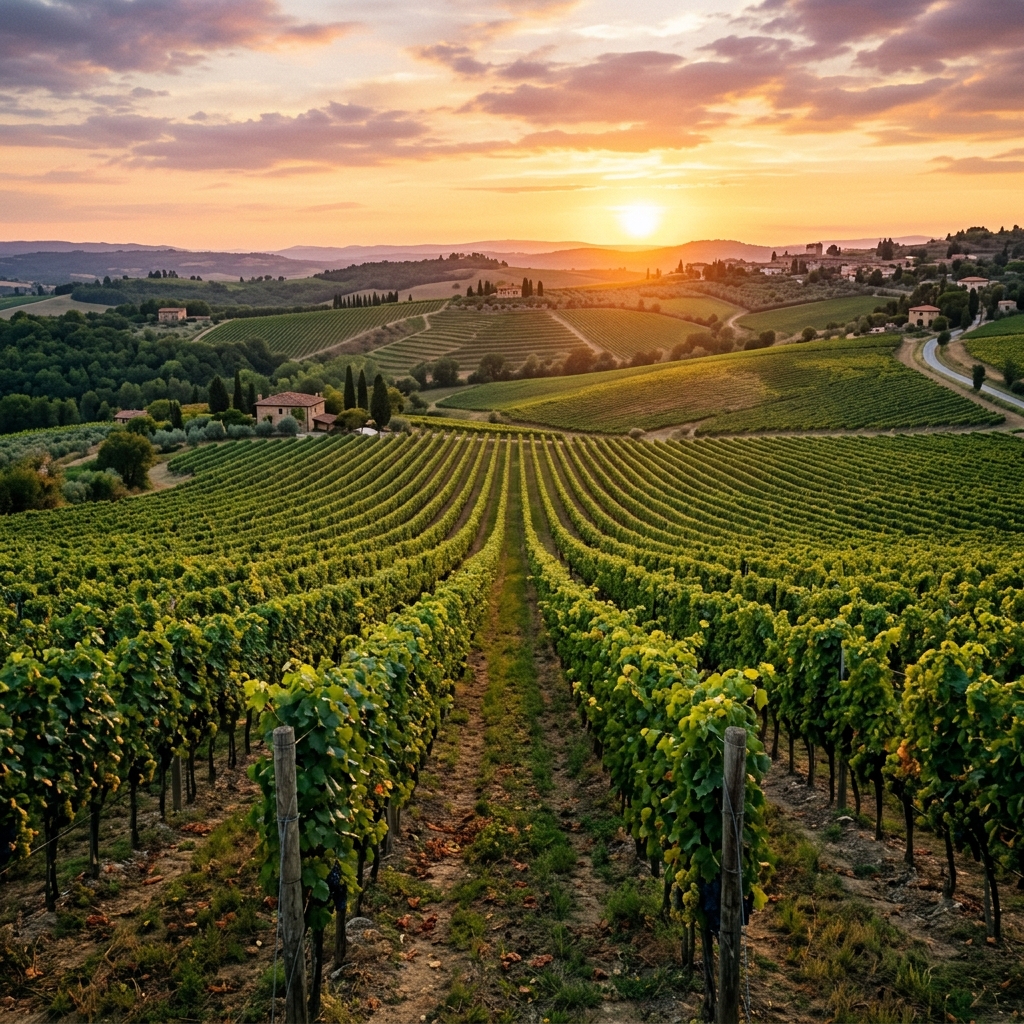
Torrontés (specifically Torrontés Riojano) is Argentina's indigenous signature white grape variety. Renowned for a fascinating sensory deception — an intensely floral, sweet perfume of white roses, jasmine, and Muscat grapes contrasted with a bone-dry, crisp, and refreshing citrus palate — it reaches supreme heights in the high-altitude desert vineyards of Cafayate in Salta.
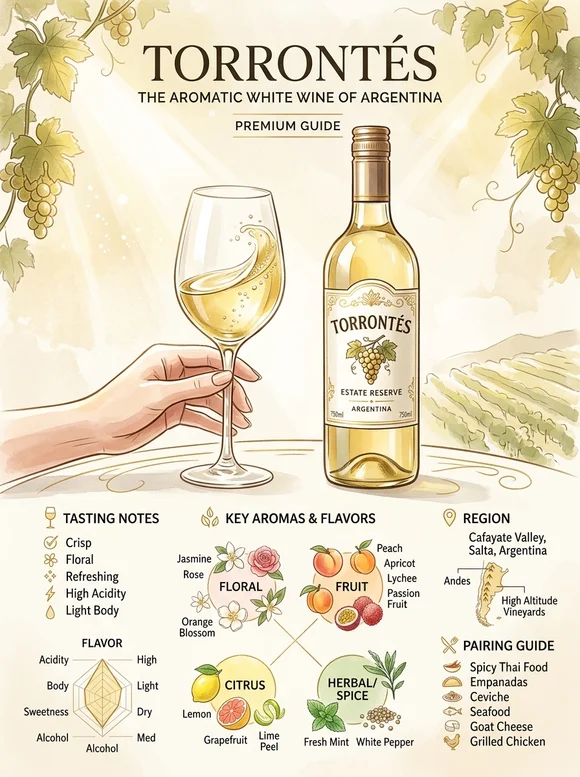
Taste Profile & Sensory Structure
Rating on 1–5 scaleKey Aromas & Flavor Descriptors
| Wine Style | White Wine |
|---|---|
| Origin / Homeland | Cafayate, Salta Province, Argentina |
| Other Names | Torrontés, Torrontés Riojano |
| High Altitude Record | Cafayate and Calchaquí Valleys range from 1,700 up to 3,111 meters (10,200 ft) — among the highest vineyards on Earth |
| The Aromatic Illusion | Heady, sweet perfume on the nose, but strictly bone-dry with refreshing citrus acidity on the palate |
| Serving Temperature | 7–9 °C (45–48 °F) — optimal temperature preserves crisp freshness and floral aromatics |
| Drink Young | Best consumed within 1–2 years of vintage to enjoy radiant mountain vibrancy |
Torrontés is Argentina’s great sensory enchantress. Grown in the extreme, sun-drenched altitudes of the Andes mountains, it bewitches the senses with an intoxicating bouquet of white roses, sweet jasmine, and exotic lychee, before surprising the palate with a refreshing, crisp, and bone-dry citrus vitality.
Explore Torrontés in Depth
Master Argentina's signature white through our four comprehensive Academy guides: sensory analysis, Andean high-altitude terroirs, empanada gastronomy, and buyer recommendations.
Frequently Asked Questions
Is Torrontés sweet or dry?
Almost always completely dry. The nose delivers an overwhelming illusion: intense perfumes of white roses, geranium, and sweet Muscat trick the human brain into anticipating dessert wine. But on the first sip, the wine is delightfully bone-dry, crisp, and citrusy, finishing with a subtle, appetizing touch of white grapefruit pith.
How does Torrontés differ from Muscat?
While they share parentage (Torrontés is an indigenous Argentine cross between Muscat of Alexandria and Criolla Chica) and high terpene levels, Muscat is usually produced in sweet, semi-sweet, or fizzy styles. Torrontés is vinified dry, possessing sharper mountain acidity, lower alcohol, and an unmistakable touch of refreshing grapefruit bitterness.
Why does Torrontés require extreme high altitudes?
In Salta's Cafayate, vineyards sit over a mile above sea level (1,700m–3,000m). Intense ultraviolet radiation thickens grape skins and concentrates dazzling floral terpenes, while freezing Andean mountain nights preserve crystalline natural acidity. In low, hot plains, Torrontés quickly turns flabby, coarse, and unpleasantly bitter.
Related Guides
- How to Recognize Torrontés in the GlassWhite rose perfume, grapefruit snap, dry finish, and tasting keys
- Where Torrontés GrowsSalta, Cafayate, La Rioja, and Mendoza
- Food Pairing with TorrontésEmpanadas salteñas, ceviche, spicy Thai curries, and goat cheese
- What to Buy (Torrontés)Calchaquí Valley benchmarks and top Salta producers
- Salta & CafayateExtreme high-altitude desert vineyards, vivid sunlight, and Torrontés
Last updated: September 20, 2026