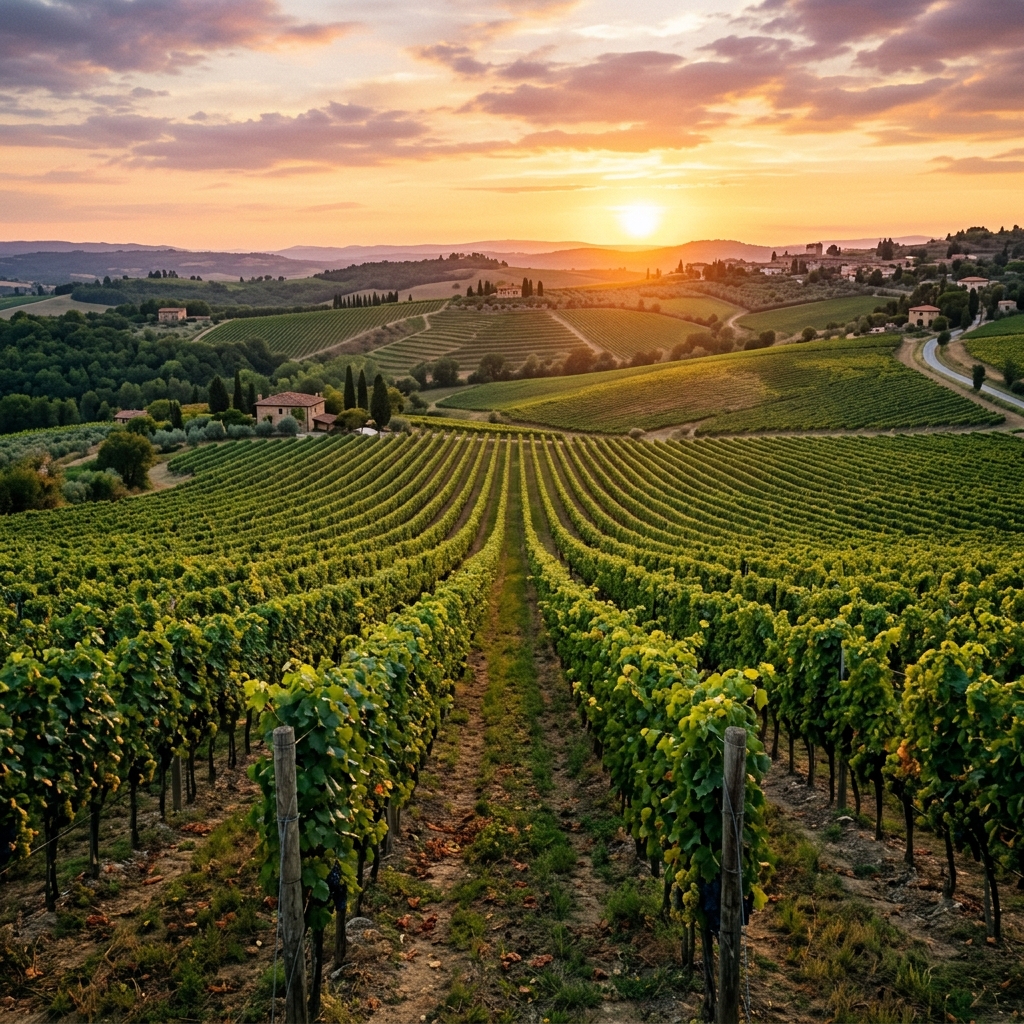
Nebbiolo is Piedmont's most revered indigenous red grape variety, renowned for producing Barolo ('the King of Wines') and Barbaresco. Famous for an enigmatic sensory paradox — a delicate, translucent garnet hue disguising formidable acidity and iron-fisted tannins — it enchants with legendary aromas of dried rose petals, tar, sour cherry, and truffles.
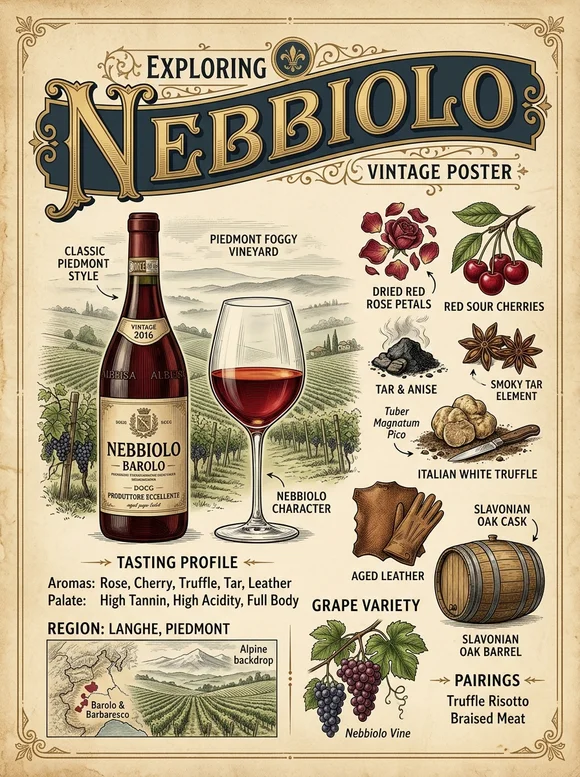
Taste Profile & Sensory Structure
Rating on 1–5 scaleKey Aromas & Flavor Descriptors
| Wine Style | Red Wine |
|---|---|
| Origin / Homeland | Piedmont, Northwestern Italy (Langhe, Roero, Alto Piemonte) |
| Other Names | Nebbiolo, Spanna (Gattinara, Ghemme), Chiavennasca (Valtellina), Picotendro (Valle d'Aosta) |
| The Optical Paradox | Deceptively pale, translucent garnet color paired with the highest tannin (5/5) and acidity (5/5) in Italy |
| Barolo Aging Law | Minimum 38 months aging (at least 18 in oak barrels); Riserva requires 62 months |
| Barbaresco Aging Law | Minimum 26 months aging (at least 9 in oak barrels) — generally softer and earlier-drinking than Barolo |
| Cellar Patience | Rarely approachable before 8–10 years of bottle aging; pinnacle vintages evolve for 30–50+ years |
Nebbiolo is Italy’s most intellectually demanding and rewarding grape. Named after the autumnal mists (nebbia) that blanket the Langhe hills during late October harvest, it presents an extraordinary symphony of wild roses, hot tar, tart red cherries, and autumnal truffles, encased in a monumental architectural structure of tannins and acidity.
Explore Nebbiolo in Depth
Master Italy's king of grapes through our four comprehensive Academy guides: sensory analysis, Langhe cru terroirs, truffle gastronomy, and cellar longevity.
Frequently Asked Questions
Why is Nebbiolo so pale in color yet so fierce in tannins?
Anthocyanins (color pigments) and polyphenolic tannins originate from different biological pathways in grape skins. Nebbiolo has naturally low concentrations of stable color pigments, resulting in a pale ruby hue that rapidly turns orange-garnet at the rim. However, its skins and seeds are packed with massive amounts of dense tannins, creating a shock for blind tasters who expect a delicate wine.
What is the difference between Barolo and Barbaresco?
Both are made from 100% Nebbiolo in neighboring zones of the Langhe hills. Barolo soils (Helvetian sandstone and limestone) and longer mandatory aging yield darker, more muscular, long-lived, and brooding wines. Barbaresco sits closer to the Tanaro River with slightly warmer soils, resulting in slightly finer tannins, perfume, and earlier elegance.
What does the classic descriptor 'Tar and Roses' mean?
It is the quintessential sensory hallmark of pure Nebbiolo: a soaring, delicate perfume of fresh red rose petals paired simultaneously with an earthy, mineral, resinous note reminiscent of hot asphalt or tar. With decade-long cellar maturity, this evolves into white truffles, dried porcini mushrooms, and forest floor.
Related Guides
- How to Recognize Nebbiolo in the GlassPale garnet color, ferocious tannins, tar and roses markers
- Where Nebbiolo GrowsBarolo crus, Barbaresco, Gattinara, and Valtellina
- Food Pairing with NebbioloWhite truffles, brasato al Barolo, venison, and Castelmagno
- What to Buy (Nebbiolo)Langhe Nebbiolo values, Barolo crus, and collector estates
- PiedmontThe fog-shrouded cradle of Barolo, Barbaresco, and white truffles
Last updated: September 19, 2026