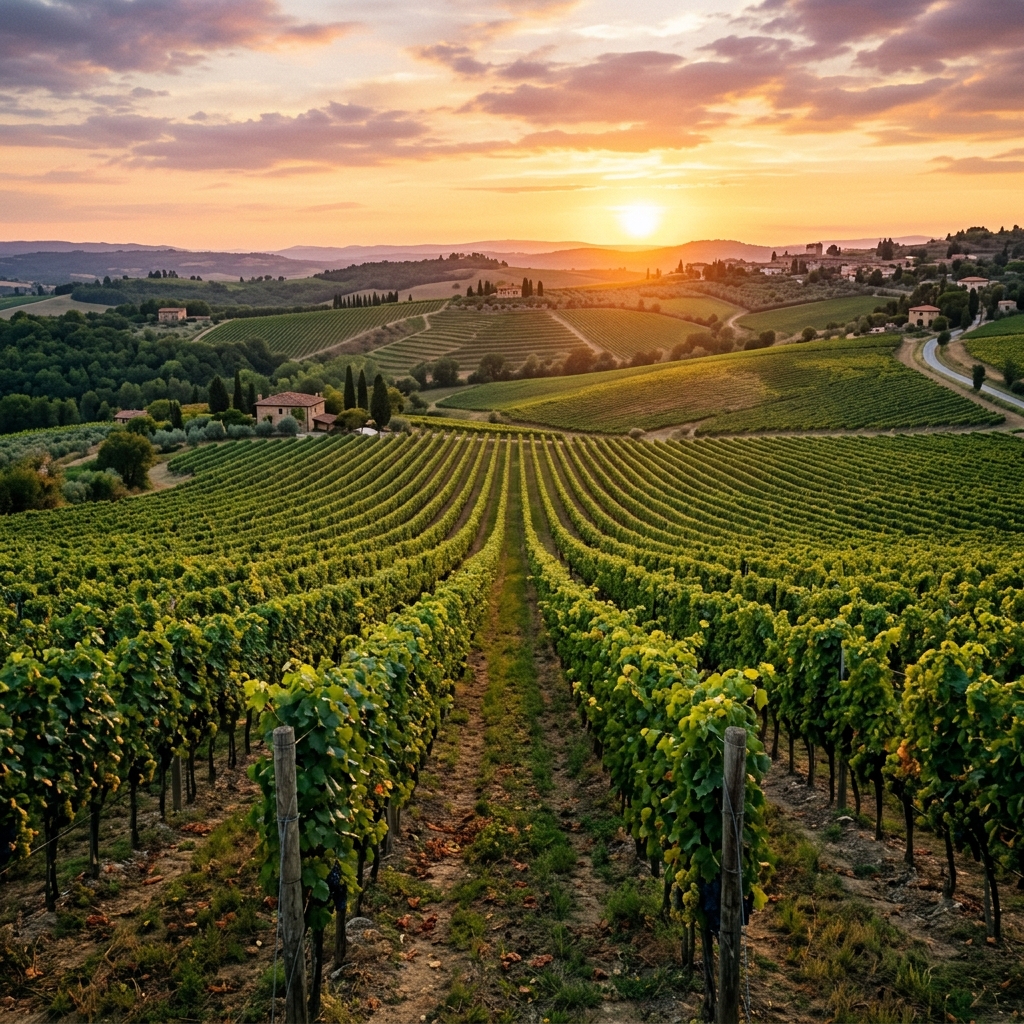
Cabernet Franc is an ancient, noble red grape variety and the genetic parent of Cabernet Sauvignon, Merlot, and Carmenère. Celebrated for aromatic finesse and refreshing natural acidity, it delivers vibrant notes of wild raspberry, redcurrant, fresh violet florals, pencil-lead graphite, and crushed green bell pepper.
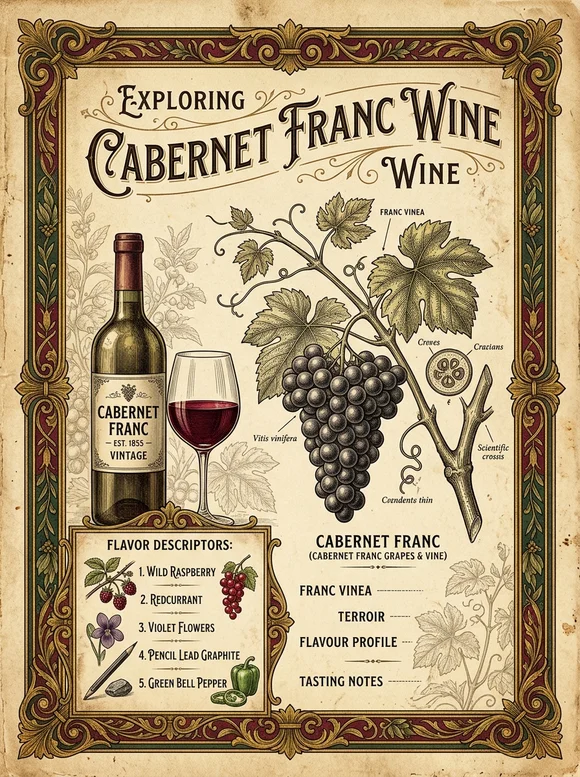
Taste Profile & Sensory Structure
Rating on 1–5 scaleKey Aromas & Flavor Descriptors
| Wine Style | Red Wine |
|---|---|
| Origin / Homeland | Basque Country / South-West France; benchmark single-varietal wines in Loire Valley (Chinon, Bourgueil) |
| Other Names | Cabernet Franc, Bouchet (Right Bank Bordeaux), Breton (Loire Valley) |
| Benchmark Terroirs | Loire Valley (Chinon, Bourgueil, Saumur-Champigny), Bordeaux Right Bank (Saint-Émilion), and Friuli (Italy) |
| Genetic Parentage | Direct biological father of Cabernet Sauvignon (crossed with Sauvignon Blanc) and Merlot |
| Glassware Selection | Medium-bowled Bordeaux Glass (captures delicate violet and graphite aromatics) |
| Serving Temperature | 14–16 °C (57–61 °F) — slightly cooler serving elevates red fruit and mineral tension |
Cabernet Franc is the refined aristocrat of the red wine world. As the biological progenitor of both Cabernet Sauvignon and Merlot, it offers unmatched aromatic delicacy — combining snappy red raspberries, delicate violet floral notes, pencil-lead graphite, and a refreshing savory spine that makes it a perennial sommelier favorite.
Explore Cabernet Franc in Depth
Master this aristocratic variety through our four comprehensive Academy guides: sensory analysis, limestone tuffeau terroirs, culinary pairings, and buyer selections.
Frequently Asked Questions
How does Cabernet Franc differ from Cabernet Sauvignon?
Cabernet Franc is lighter in body, paler in color, and less aggressive in tannins than its famous offspring. While Cabernet Sauvignon is dominated by heavy blackcurrant, cassis, and dense oak tannins, Cabernet Franc is brighter, more ethereal, and dominated by tart red raspberry, fresh violet flowers, and flinty pencil-lead graphite.
Where are the world's finest 100% Cabernet Franc wines made?
The spiritual capital of pure, unblended Cabernet Franc is France's Loire Valley — specifically the historic appellations of Chinon, Bourgueil, and Saumur-Champigny. Grown on ancient white tuffeau limestone cliffs, these wines possess legendary silkiness, savory graphite, and 20+ year aging potential.
Why does Cabernet Franc smell like green bell pepper?
Like its offspring Cabernet Sauvignon and Sauvignon Blanc, Cabernet Franc contains high natural levels of methoxypyrazines. In cooler terroirs like the Loire Valley, these compounds provide a delightful, refreshing savory edge of fresh bell pepper, crushed mint, and tomato leaf that makes the wine exceptionally food-friendly.
Related Guides
- How to Recognize Cabernet Franc in the GlassWild raspberry, graphite, pyrazine markers, and blind tasting keys
- Where Cabernet Franc GrowsChinon, Saumur-Champigny, Saint-Émilion, and Tuscany
- Food Pairing with Cabernet FrancDuck breast, herb-roasted veal, goat cheese, and ratatouille
- What to Buy (Cabernet Franc)Loire benchmark vignerons, Saint-Émilion crus, and buyer tips
- Loire ValleyThe royal kingdom of tuffeau limestone, Sancerre, and silky Chinon
Last updated: September 19, 2026