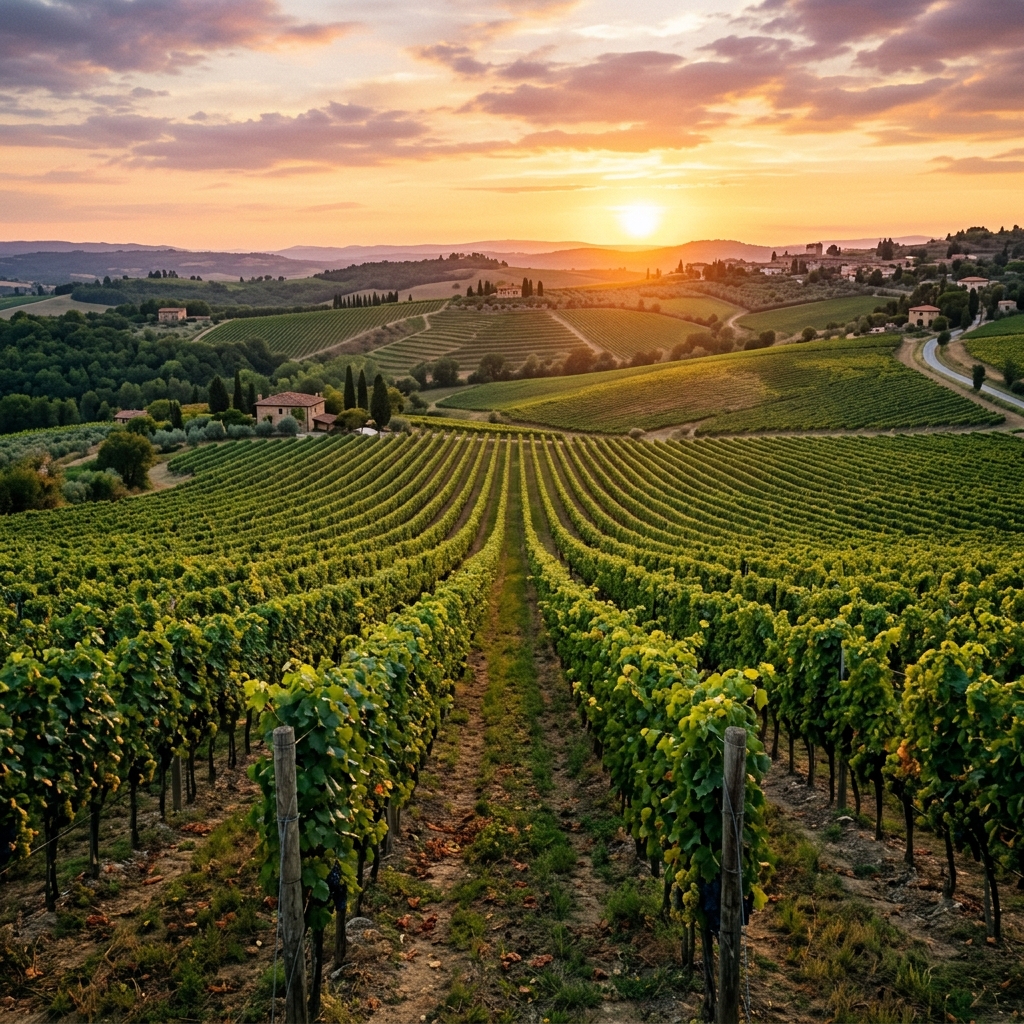
Chenin Blanc is an exceptionally versatile white grape variety gifted with piercing natural acidity and rich aromas of baked quince, yellow apple, raw honey, chamomile, and a distinct lanolin note. Indigenous to the Loire Valley and thriving in South Africa (where it is known as Steen), it produces breathtaking bone-dry wines, sparkling Crémants, and legendary sweet botrytized elixirs.
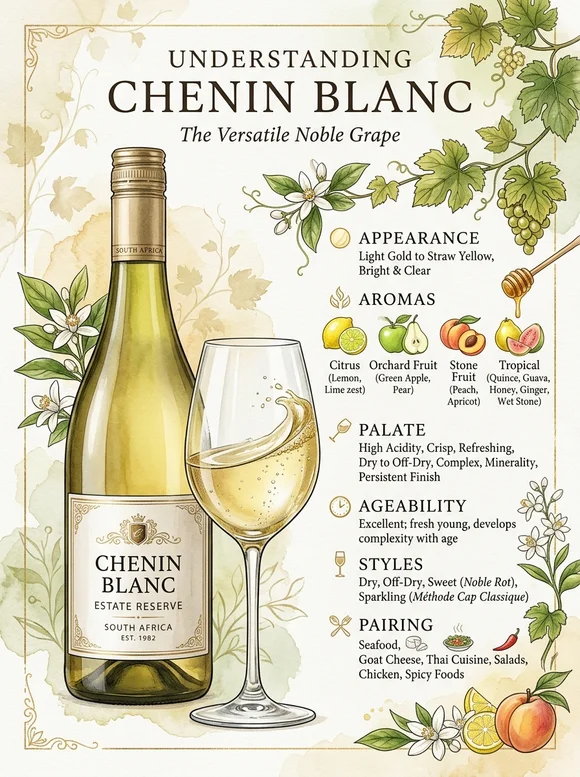
Taste Profile & Sensory Structure
Rating on 1–5 scaleKey Aromas & Flavor Descriptors
| Wine Style | White Wine |
|---|---|
| Origin / Homeland | Loire Valley, France (Anjou-Saumur, Touraine) |
| Other Names | Chenin Blanc, Steen (South Africa), Pineau de la Loire |
| Stylistic Spectrum | Sec (dry), Demi-Sec (off-dry), Moelleux (sweet), Doux (dessert), and sparkling Crémant de Loire |
| Benchmark Appellations | Vouvray, Savennières, Montlouis-sur-Loire, Coteaux du Layon, and Stellenbosch (South Africa) |
| Cellar Longevity | One of the most age-worthy white grapes on Earth — 20 to 50+ years for top Savennières and Moelleux |
| Serving Temperature | 8–10 °C (46–50 °F) for dry and sparkling; 10–12 °C for rich Moelleux |
Chenin Blanc is the chameleon genius of the white wine world. Able to express itself across an astonishing spectrum — from razor-sharp mineral dry wines in Savennières to luxurious botrytized honey in Coteaux du Layon and sunny tropical richness in South Africa — it never loses its trademark spine of electric, life-giving acidity.
Explore Chenin Blanc in Depth
Dive into our four specialized Academy guides: uncover tasting signatures, explore limestone tuffeau terroirs, pair with gourmet dishes, and navigate bottle selections.
Frequently Asked Questions
How do I know if a Vouvray or Loire Chenin Blanc is dry or sweet?
Check the label terminology: Sec indicates dry (<4–8 g/L sugar); Demi-Sec is gently off-dry; Moelleux is rich and sweet; Doux represents intense botrytized dessert nectar. If no term is specified on a Vouvray bottle, it is historically unpredictable, though modern producers usually default toward dry or off-dry.
Why does Chenin Blanc smell like wet wool or lanolin?
Aroma compounds derived from Chenin's phenolic structure impart a mild 'lanolin' or 'wet wool' scent, especially noticeable in young Loire versions. While surprising to novices, this earthy, artisanal facet rapidly evolves with cellar age into glorious notes of beeswax, acacia honey, dried hay, and toasted marzipan.
What is the difference between South African Chenin Blanc and French Loire Chenin?
South Africa (Steen) embraces warmer sunshine: wines exhibit richer tropical fruits (guava, ripe pineapple, baked peach), often kissed by gentle barrel fermentation and old-bush-vine depth. Loire Valley wines are leaner, mineral-laced, taut, and steely, characterized by razor acidity, flint, and savory chamomile.
Related Guides
- How to Recognize Chenin Blanc in the GlassHigh acidity, lanolin and quince markers, and blind tasting keys
- Where Chenin Blanc GrowsVouvray, Savennières, Swartland, and Stellenbosch
- Food Pairing with Chenin BlancPork chops, goat cheese, rich poultry, and apple tarte
- What to Buy (Chenin Blanc)Sec vs Moelleux, bush vine South Africa, and elite Vouvray estates
Last updated: September 19, 2026